
Photos from current listings. Actual item, color, and included accessories may vary.
Telephone Headset Buying Guide
Telephone headsets are wired or wireless audio endpoints designed to connect directly to desk phones, cordless handsets, or softphone adapters for hands-free calling. The primary trade-off is connector and amplifier compatibility versus acoustic isolation: a headset that does not match your phone's 2.5mm, 3.5mm, USB, or RJ9 interface is unusable regardless of build quality. The decision rule is simple—match the connector and microphone type to your exact phone model first, then choose monaural vs binaural and noise-cancelling tier based on ambient noise.
Median $44.25
Key takeaways
- Connector standard determines fit: 2.5mm plugs suit most cordless and small desk phones, 3.5mm suits smartphones and softphones, USB suits PC softphones, and RJ9/RJ11 modular jacks suit major desk-phone brands.
- Noise-cancelling microphones use either passive acoustic damping or active DSP; active models cut background noise by roughly 10-20 dB but require battery or USB power.
- Monaural (single ear) headsets keep one ear open for office awareness; binaural (dual ear) models improve focus and speech intelligibility in noisy call centers.
At a glance
- Category
- Business Phones & Headsets
- Last updated
- Nov 29, 2026
Current offers
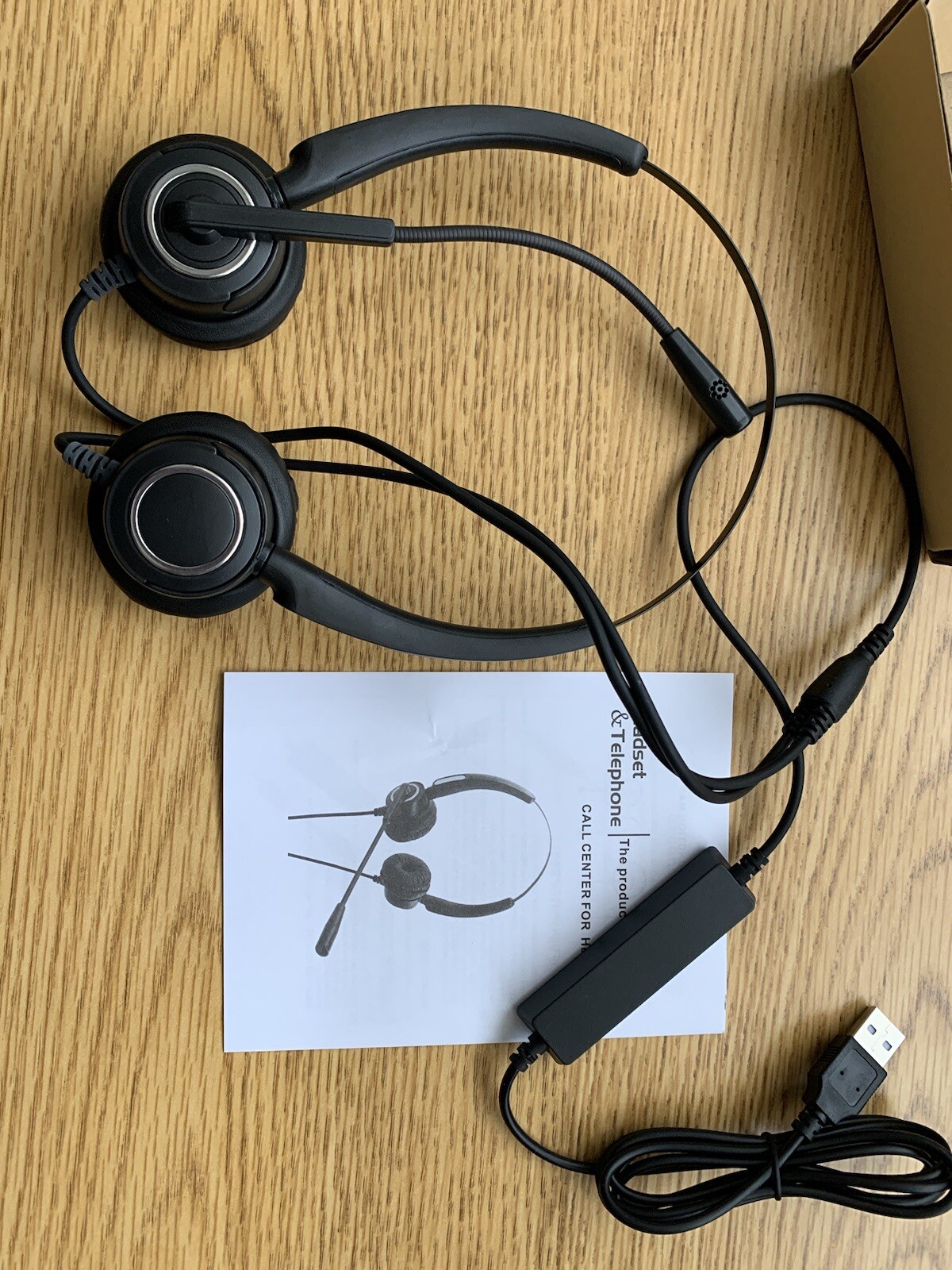 Telephone headset$25.00Last checked Nov 28, 2026View on eBay
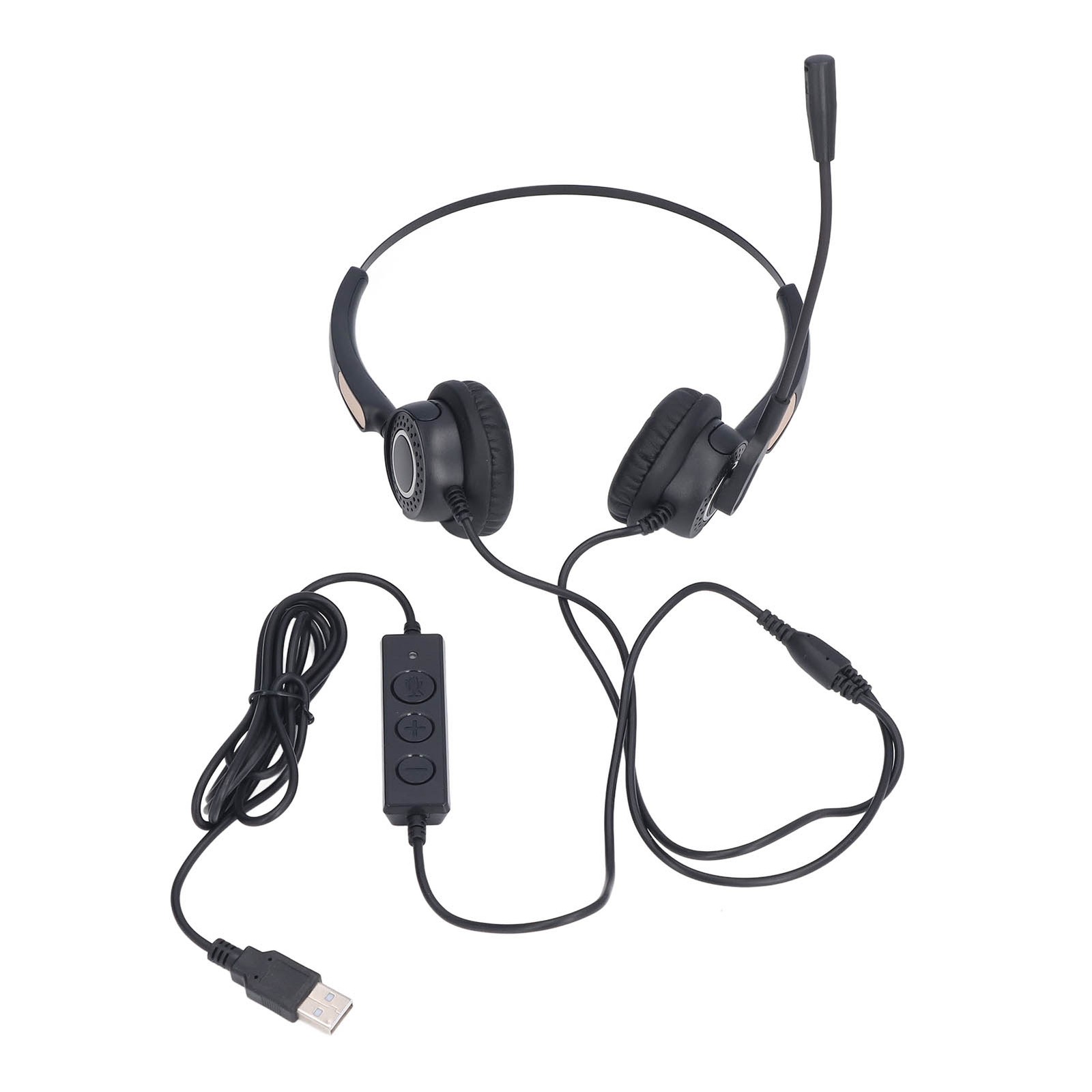 Wired Telephone Headset Noise Reduction Ergonomic Adjustable Volume Control BCGY$26.50View on eBay
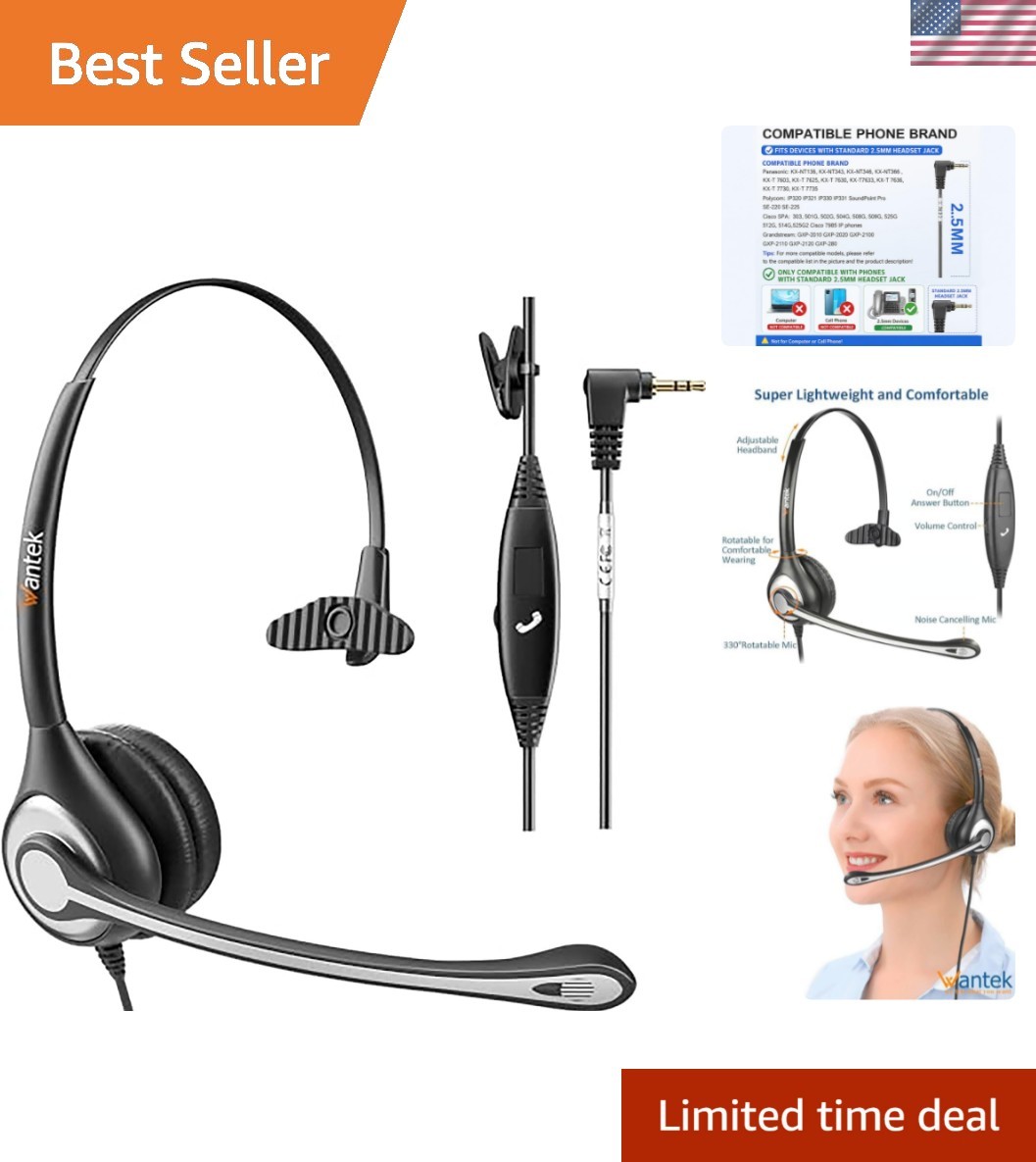 2.5mm Telephone Headset with Noise Control - Ideal for Office & Conference Use$61.99View on eBay
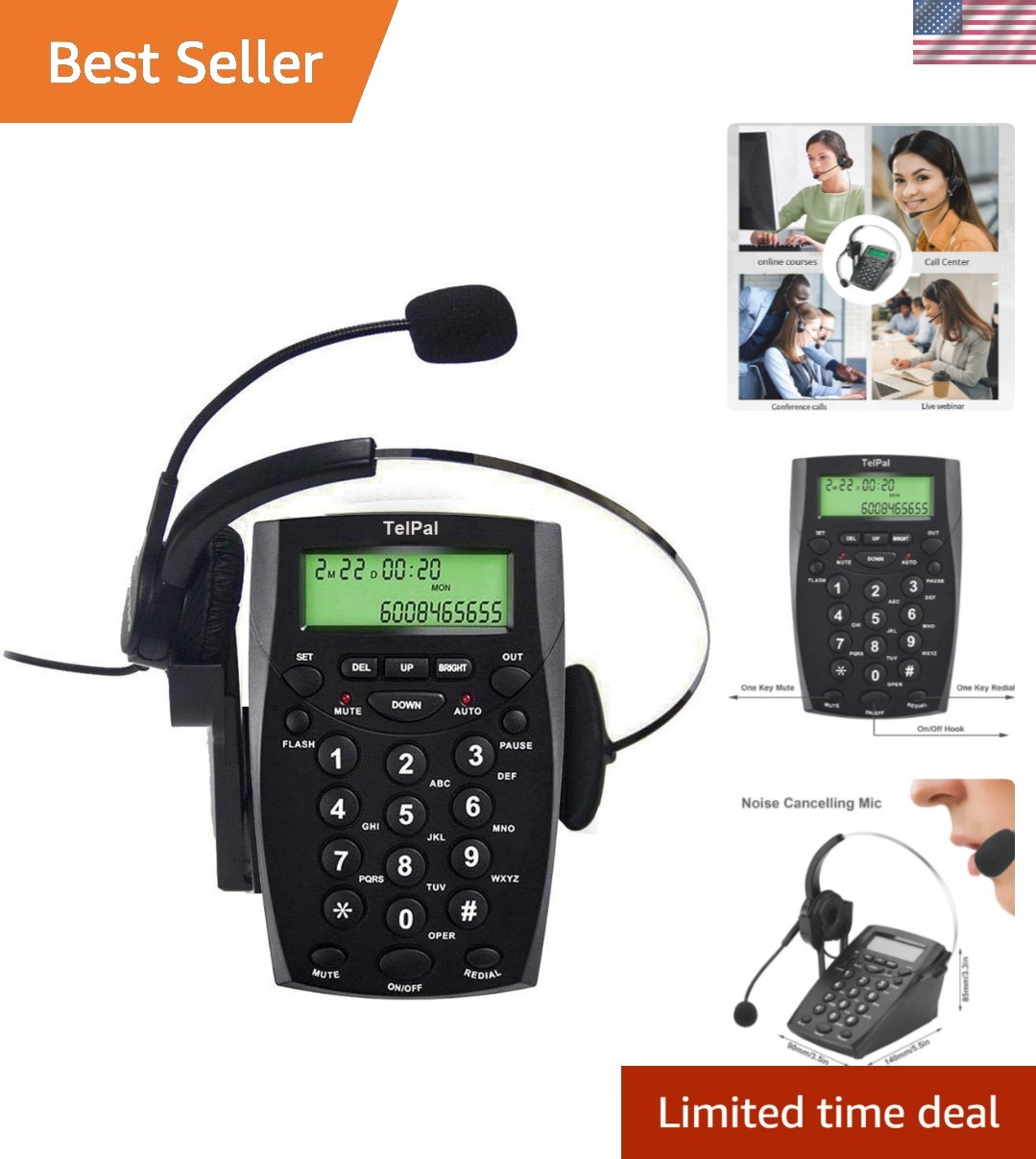 Noise Cancelling Monoral Headset Telephone - Ideal for Call Centers & Home Use$66.99View on eBay
Highlights
- Connector standard determines fit: 2.5mm plugs suit most cordless and small desk phones, 3.5mm suits smartphones and softphones, USB suits PC softphones, and RJ9/RJ11 modular jacks suit major desk-phone brands.
- Noise-cancelling microphones use either passive acoustic damping or active DSP; active models cut background noise by roughly 10-20 dB but require battery or USB power.
- Monaural (single ear) headsets keep one ear open for office awareness; binaural (dual ear) models improve focus and speech intelligibility in noisy call centers.
- Quick-disconnect (QD) cords and bottom-lead compatibility let one headset body swap between desk phone, USB, and softphone leads instead of buying separate units.
Best use cases
- Call-center and shared office desks: pick a binaural noise-cancelling headset with QD cord and acoustic shock protection; skip single-ear open models where background chatter degrades call quality.
- Home office with a cordless landline: choose a 2.5mm monaural headset with inline volume and mute; skip USB-only models unless your phone has a USB audio port.
- Softphone and VoIP desk-phone users: select USB or RJ9 depending on the phone's headset jack, and verify wideband audio support; skip 3.5mm mobile headsets that omit microphone gain control.
- Mobile and smartphone calling: a 3.5mm or USB-C headset with inline mic works, but skip 2.5mm models that physically will not seat in modern phones.
Buying tips
- Measure your phone's headset jack before buying: 2.5mm is about 3/32 inch, 3.5mm is about 1/8 inch, and RJ9 is a rectangular modular clip—each requires a different plug.
- Choose a headset with at least 270-degree boom rotation and a flexible microphone arm so the mic sits two finger-widths from your mouth for consistent noise pickup.
- For all-day wear, prioritize leatherette or foam ear pads with replaceable cushions and a headband tension adjuster; fixed thin plastic bands cause pressure points after about an hour.
- Match microphone type to environment: omni-directional mics pick up surrounding voices, so choose noise-cancelling or uni-directional mics in open offices and call centers.
Specs
| Connector Type | 2.5mm / 3.5mm / USB / RJ9 |
|---|---|
| Ear Fit | Monaural on-ear vs binaural over-ear |
| Microphone | Noise-cancelling boom, 270° rotate |
| Cord & QD | Straight cord or quick-disconnect lead |
Related searches
What to check before buying
- Confirm your phone's headset jack size and type (2.5mm, 3.5mm, USB, USB-C, or RJ9 modular) and whether it needs an amplifier.
- Measure headband and ear-pad fit: on-ear pads should sit flat without clamping, and over-ear cups should fully enclose the ear for isolation.
- Check cord length and routing: short cords suit handset replacement, while long cords or QD leads suit desk phones placed away from the user.
- Verify acoustic shock protection and hearing-safety limits if the headset will be shared or used on loud PSTN lines.
FAQ
Data sources: eBay / Amazon listings and product attribute feeds. Updated Nov 29, 2026.
Some links on this page are affiliate links. If you buy after clicking one, we may earn a commission at no extra cost to you. This does not change which products appear here or their order. Affiliate disclosure.