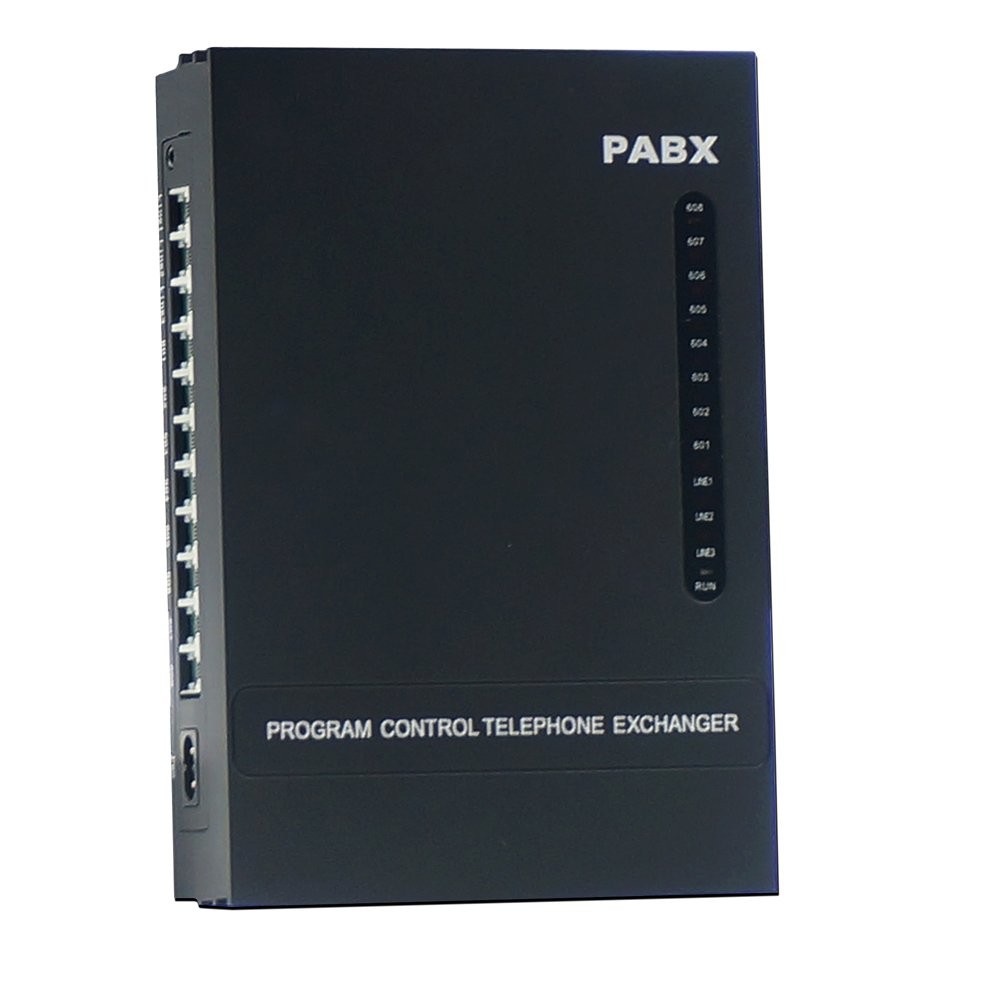

Photos from current listings. Actual item, color, and included accessories may vary.
Telephone System Buying Guide
A business telephone system is the switching core that connects desk phones, trunks, and voicemail—ranging from legacy analog PBX and key systems to modern IP-PBX and hosted VoIP gateways. The primary trade-off is between cheap analog/PSTN switching and scalable IP/SIP architecture: analog systems are simple but capped by copper pairs and no remote extensibility, while IP systems require network planning but scale cleanly. Choose a system whose extension and trunk capacity matches your current lines plus 30% headroom, and whose architecture (analog vs SIP) matches your carrier and cabling.
Key takeaways
- Extension/trunk math defines the tier: 2x8, 4x16, and 8x24 analog PBX units map directly to simultaneous outside lines vs internal extensions—undersizing trunks forces call queuing.
- Analog PBX (PABX) switches use FXO/FXS ports and standard RJ-11 copper; IP-PBX uses SIP trunks over Ethernet and needs PoE or local power at each desk phone.
- Hybrid systems support both PSTN trunks and SIP, letting you migrate without replacing every handset; pure analog units cannot accept SIP without an external ATA gateway.
At a glance
- Category
- Business Phones & Headsets
- Last updated
- Nov 29, 2026
Current offers
Highlights
- Extension/trunk math defines the tier: 2x8, 4x16, and 8x24 analog PBX units map directly to simultaneous outside lines vs internal extensions—undersizing trunks forces call queuing.
- Analog PBX (PABX) switches use FXO/FXS ports and standard RJ-11 copper; IP-PBX uses SIP trunks over Ethernet and needs PoE or local power at each desk phone.
- Hybrid systems support both PSTN trunks and SIP, letting you migrate without replacing every handset; pure analog units cannot accept SIP without an external ATA gateway.
- Voicemail and auto-attendant are separate modules or licenses on most systems; entry analog units often need an add-on voice card, while IP-PBX includes them in software.
Best use cases
- Best fit: a small office with 4–8 desks and 2–4 outside lines that already has analog wall jacks—pick a 2x8 or 4x16 analog PABX with built-in voicemail and skip IP entirely.
- Best fit: a growing office expecting remote workers or multiple sites—choose a SIP-based IP-PBX or hosted system with PoE switches and SIP trunking; skip analog PABX that locks you to copper.
- Wrong fit: a home office with one line—skip any PBX and use a multi-handset DECT cordless system; a switch adds cost without benefit.
- Wrong fit: a warehouse or multi-building campus on long copper runs—skip analog PABX and use IP phones on fiber-backed Ethernet, since loop length degrades analog signaling.
Buying tips
- Count outside lines (trunks) and desks (extensions) separately; a 2x8 system means 2 simultaneous outside calls and 8 internal extensions—never buy trunk capacity below your peak concurrent call count.
- Confirm carrier interface: analog PABX needs FXO loop-start trunks from your telco; SIP IP-PBX needs a SIP trunk provider and a router with QoS—mismatched interfaces require an ATA or gateway.
- Prefer systems with at least one free expansion slot or licensed upgrade path; capacity headroom of 30% avoids replacing the switch when you add 2–3 desks.
- Verify handset compatibility: analog PABX supports standard 2500-set or proprietary digital phones; IP-PBX requires SIP phones from the same vendor or standards-based SIP firmware.
Specs
| Switching Architecture | Analog PABX / IP-PBX / Hybrid |
|---|---|
| Trunk x Extension | 2x8, 4x16, 8x24 analog tiers |
| Trunk Interface | FXO loop-start / SIP RFC 3261 |
| Phone Interface | FXS analog / SIP over Ethernet |
Related searches
What to check before buying
- Measure your cable plant: count working RJ-11 wall jacks per desk; analog PABX needs one pair per extension, while IP needs Cat5e/Cat6 and PoE.
- Check power and grounding: analog PABX units need a grounded outlet and often a backup battery; IP-PBX needs a UPS and PoE budget for every phone.
- Confirm trunk delivery: verify your telco provides analog loop-start lines, or that your ISP supports SIP trunking with the codecs the PBX expects.
- Plan voicemail and auto-attendant: confirm whether the unit includes a voice module or requires an add-on card/license before you buy.
FAQ
Data sources: eBay / Amazon listings and product attribute feeds. Updated Nov 29, 2026.
Some links on this page are affiliate links. If you buy after clicking one, we may earn a commission at no extra cost to you. This does not change which products appear here or their order. Affiliate disclosure.