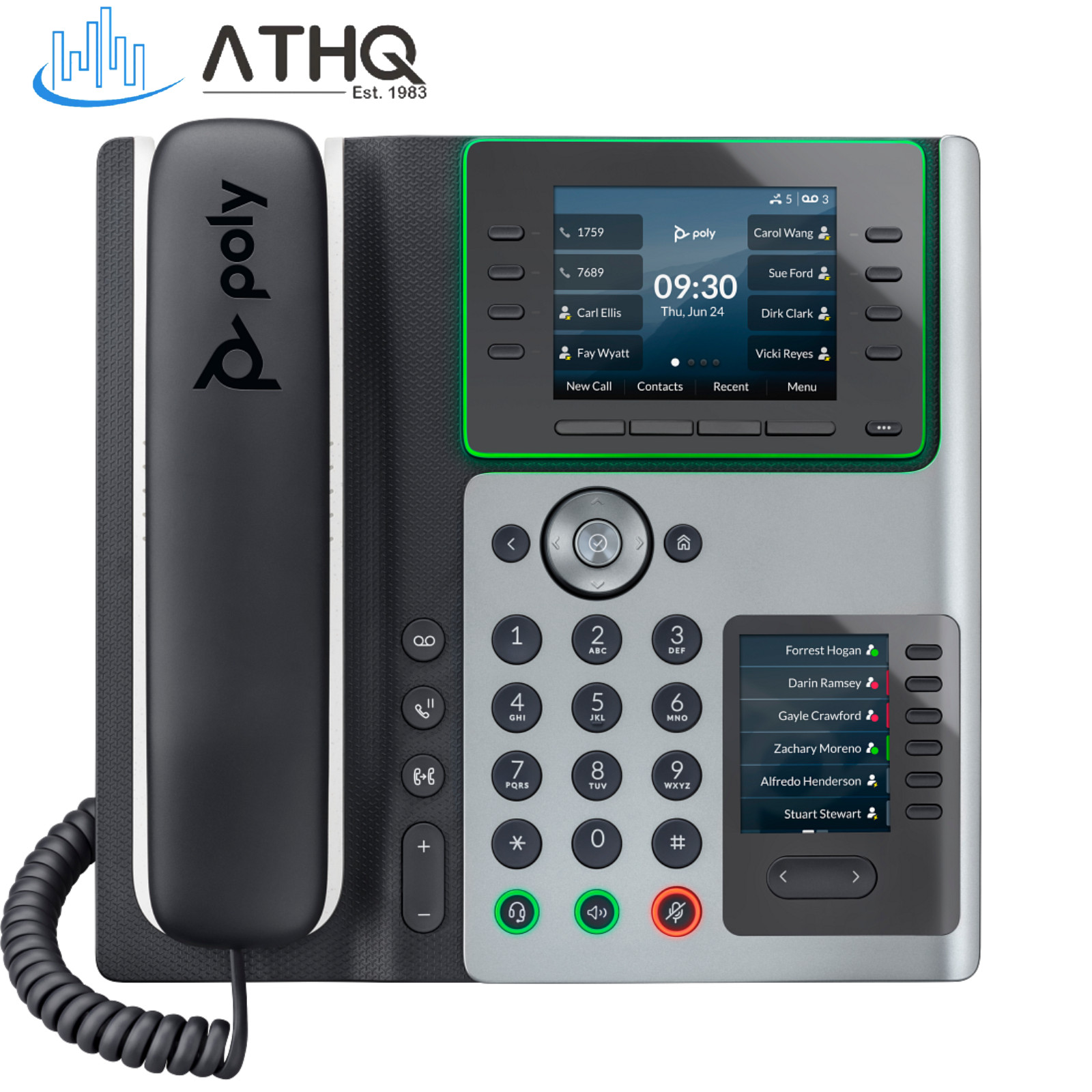

Photos from current listings. Actual item, color, and included accessories may vary.
Ip Phone System Buying Guide
An IP phone system is a VoIP-based telephony platform (SIP desk phones, hosted PBX, or on-premise call server) that routes calls over your data network instead of analog PSTN lines. The core trade-off is deployment architecture: hosted/cloud service with no server hardware versus an on-premise appliance that demands SIP trunking and PoE switching. Buy hosted for fast rollout and remote extensions; buy on-premise only when you need call-recording control or legacy handset reuse.
Key takeaways
- SIP (RFC 3261) is the interoperability standard — handsets must support SIP 2.0 to register with Asterisk, FreePBX, 3CX, or Broadsoft platforms.
- PoE 802.3af (15.4W) powers most desk phones; 802.3at (25.5W) is needed for color-screen executive models with Wi-Fi radios.
- Gigabit vs Fast Ethernet passthrough: a 10/100 phone caps the daisy-chained PC to 100 Mbps; choose Gigabit passthrough on any desk sharing a PC drop.
At a glance
- Category
- Business Phones & Headsets
- Last updated
- Nov 29, 2026
Current offers
Highlights
- SIP (RFC 3261) is the interoperability standard — handsets must support SIP 2.0 to register with Asterisk, FreePBX, 3CX, or Broadsoft platforms.
- PoE 802.3af (15.4W) powers most desk phones; 802.3at (25.5W) is needed for color-screen executive models with Wi-Fi radios.
- Gigabit vs Fast Ethernet passthrough: a 10/100 phone caps the daisy-chained PC to 100 Mbps; choose Gigabit passthrough on any desk sharing a PC drop.
- Handset tier differences: entry (Poly Edge E220, Yealink T31) = 2 SIP accounts, mono LCD; mid (Edge E450, T46U) = Wi-Fi/Bluetooth, color screen, 8+ line keys.
Best use cases
- Best fit: 1-25 seat office with existing Ethernet — deploy a hosted PBX plus Poly Edge E450 or Yealink T4-series handsets; no server, no analog lines.
- Best fit: warehouse or multi-building site — choose DECT or Wi-Fi SIP handsets (Poly Rove, Yealink W-series) over corded desk sets to avoid re-cabling.
- Wrong fit: single analog fax or alarm line — an IP system requires an ATA (e.g., Grandstream HT801) for each analog device; skip pure IP phones here.
- Wrong fit: 100+ seat contact center — consumer-grade hosted plans lack call queues and supervisor whisper; specify a call-center PBX tier with CRM integration.
Buying tips
- Count concurrent calls, not extensions: each G.711 call consumes ~87 kbps each way, so 10 concurrent calls need ~1.75 Mbps dedicated QoS bandwidth.
- Match phone power to switch: a 24-port 802.3af switch delivers 370W total — enough for 23 phones at 15.4W; over-subscribing forces midspan injectors.
- Reuse legacy handsets only if they speak SIP 2.0 and support the codecs (G.722, Opus) your PBX mandates; ShoreTel 230 sets need a ShoreTel/Mitel gateway.
- Choose Gigabit phones wherever a PC shares the wall jack — a 10/100 handset bottlenecks file transfers and video calls to 100 Mbps.
Specs
| System Type | Hosted cloud PBX vs on-premise SIP server |
|---|---|
| Signaling Standard | SIP 2.0 (RFC 3261), G.722/Opus codecs |
| Power Standard | PoE 802.3af 15.4W / 802.3at 25.5W |
| Handset Tier | Entry mono LCD → mid color Wi-Fi/BT |
Related searches
What to check before buying
- Measure desk runs: confirm each seat has a Cat5e/Cat6 drop within cable distance and a PoE switch port budgeted per phone.
- Verify SIP trunk or hosted seat count matches handset quantity, including lobby and conference-room sets.
- Check power: PoE injector or 802.3af/at switch per handset; cordless DECT bases need mains power and coverage survey.
- Confirm headset compatibility: 3.5mm/RJ9 ports on the phone or a USB adapter for softphone-style headsets.
FAQ
Data sources: eBay / Amazon listings and product attribute feeds. Updated Nov 29, 2026.
Some links on this page are affiliate links. If you buy after clicking one, we may earn a commission at no extra cost to you. This does not change which products appear here or their order. Affiliate disclosure.