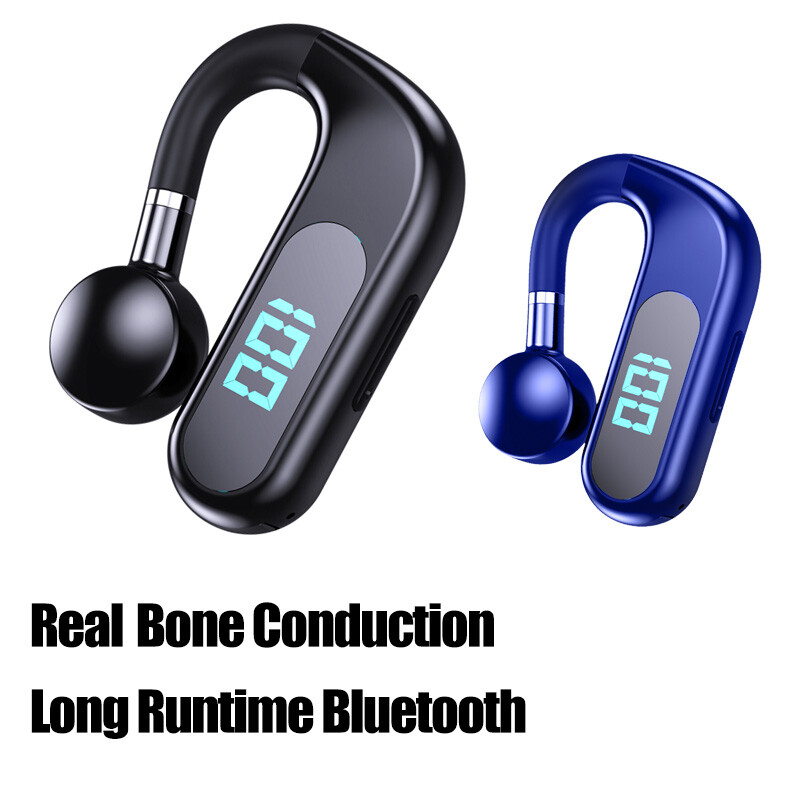

Photos from current listings. Actual item, color, and included accessories may vary.
Bluetooth Headphone Buying Guide
Bluetooth headphones for business use span two distinct architectures: over-ear ear-cup headsets with boom or beamforming mics for all-day desk and softphone work, and bone-conduction or open-ear sport headsets for situational awareness in mobile or field roles. The primary trade-off is microphone clarity and call isolation versus wearability and environmental awareness, driven by mic array count, Bluetooth codec support, and battery architecture. The decision rule: choose an ear-cup headset with a dedicated boom mic and multipoint pairing for primary call work; choose bone-conduction only when hearing your surroundings is a hard requirement and call quality is secondary.
Median $132.94
Key takeaways
- Ear-cup business headsets use either a boom mic on a flexible arm or a dual/quad beamforming mic array in the earcup; beamforming arrays isolate voice from keyboard and office noise better than single-mic designs.
- Bone-conduction headsets transmit via vibration through the cheekbone, leaving the ear canal open; they excel at situational awareness but pick up wind and ambient noise more than sealed ear-cup mics.
- Multipoint Bluetooth pairing (two devices simultaneously) is the single most important spec for hybrid workers switching between laptop softphone and mobile; single-point headsets force manual re-pairing.
At a glance
- Category
- Business Phones & Headsets
- Last updated
- Nov 29, 2026
Current offers
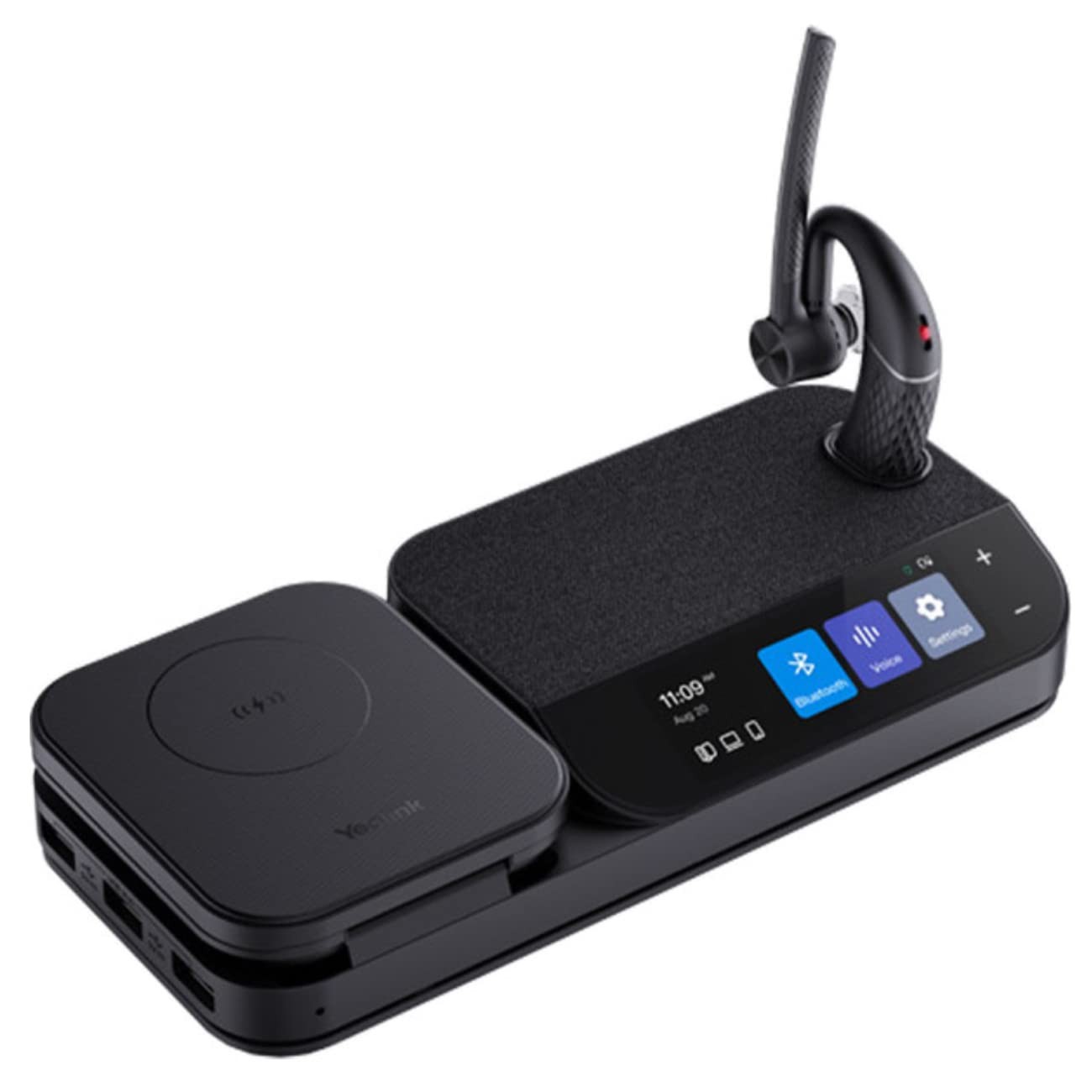
Highlights
- Ear-cup business headsets use either a boom mic on a flexible arm or a dual/quad beamforming mic array in the earcup; beamforming arrays isolate voice from keyboard and office noise better than single-mic designs.
- Bone-conduction headsets transmit via vibration through the cheekbone, leaving the ear canal open; they excel at situational awareness but pick up wind and ambient noise more than sealed ear-cup mics.
- Multipoint Bluetooth pairing (two devices simultaneously) is the single most important spec for hybrid workers switching between laptop softphone and mobile; single-point headsets force manual re-pairing.
- Battery ratings split by architecture: ear-cup business headsets typically rate 20-40 hours talk time, while bone-conduction models rate 6-10 hours playback, so match the rating to your shift length plus charging access.
Best use cases
- Best fit: choose an over-ear ear-cup headset with boom mic and multipoint for 6+ hours of daily softphone, Zoom, or Teams calls at a desk — sealed cups and a close mic beat open designs for voice clarity.
- Best fit: choose a bone-conduction headset for truckers, warehouse, or field staff who must hear alarms, coworkers, or traffic while on calls — skip it if your callers complain about background noise.
- Wrong fit: do not buy a sport bone-conduction headset as your primary office headset if your calls happen in open-plan noise; the open ear design leaks ambient sound into the mic path.
- Wrong fit: skip single-point Bluetooth headsets for hybrid work — if you alternate between a laptop and a phone daily, multipoint is non-negotiable and saves constant re-pairing.
Buying tips
- Match mic architecture to noise: a boom mic within 2-3 cm of the mouth outperforms an earcup beamforming array in loud rooms; beamforming arrays suit quiet offices and mobile use.
- Check Bluetooth version and codec support: Bluetooth 5.0+ with multipoint covers business softphones; SBC is universal, while aptX or LC3 improve audio but are not required for call clarity.
- Size ear-cup headsets by earcup inner dimensions and headband clamp: over-ear cups need at least 6 cm inner height to clear the ear; on-ear designs clamp tighter and fatigue sooner over 4-hour blocks.
- For bone-conduction, confirm the band style suits your headgear: behind-neck bands fit under hard hats and caps, while temple-arm designs conflict with safety glasses and helmets.
Specs
| Headset Type | Over-ear cups vs bone-conduction |
|---|---|
| Mic Design | Boom mic vs beamforming array |
| Bluetooth Pairing | Multipoint (2 devices) vs single-point |
| Talk Time | Ear-cup 20-40 hr / bone-conduction 6-10 hr |
Related searches
What to check before buying
- Confirm your softphone platform: USB-A or USB-C dongle support and native Teams/Zoom certification determine whether the headset's mic and answer/hang-up buttons work natively or need workarounds.
- Measure your headset-to-device distance: Class 2 Bluetooth reaches about 10 m line-of-sight; walls and cubicles cut this, so a USB dongle on the desk beats relying on laptop internal Bluetooth.
- Check charging access during your shift: bone-conduction models with 6-10 hour ratings need a mid-shift charge for 12-hour trucking or field shifts; ear-cup models at 20-40 hours usually cover a full shift.
- Verify ear-cup compatibility with hearing aids, glasses, and headwear: on-ear and over-ear cups press on temples and aid behind-the-ear microphones, so test clamp and cup depth if you wear either.
FAQ
Data sources: eBay / Amazon listings and product attribute feeds. Updated Nov 29, 2026.
Some links on this page are affiliate links. If you buy after clicking one, we may earn a commission at no extra cost to you. This does not change which products appear here or their order. Affiliate disclosure.