
Photos from current listings. Actual item, color, and included accessories may vary.
Portable Money Counter Buying Guide
Portable money counters are compact, battery- or USB-powered bill counters and mixed-denomination validators used for cash drawers, mobile sales, and small mailrooms. The core trade-off is between simple friction-fed bill counting (fast, but requires sorted, crisp notes) and value-counting with dual detection (slower, but handles mixed denominations and rejects counterfeits). Choose friction-fed single-denomination counting only for fresh, sorted currency; choose a value counter with UV/magnetic/optical sensing if you handle mixed notes or need counterfeit protection.
Median $77.69
Key takeaways
- Counting mechanism: friction roller feed (single denomination, needs sorted bills) vs. value-counting with denomination recognition and mixed-note batch totals.
- Counterfeit detection tiers: UV fluorescent ink check, magnetic ink verification (MG), and optical/image sensing — UV-only is entry level; MG plus UV is the practical minimum for retail cash.
- Speed and capacity ratings: typical portable units run 600–1,500 notes per minute with 50–200 note hoppers; higher speed means less jamming only if rollers are rubber and serviceable.
At a glance
- Category
- Cash Handling & Mailroom
- Last updated
- Nov 29, 2026
Current offers
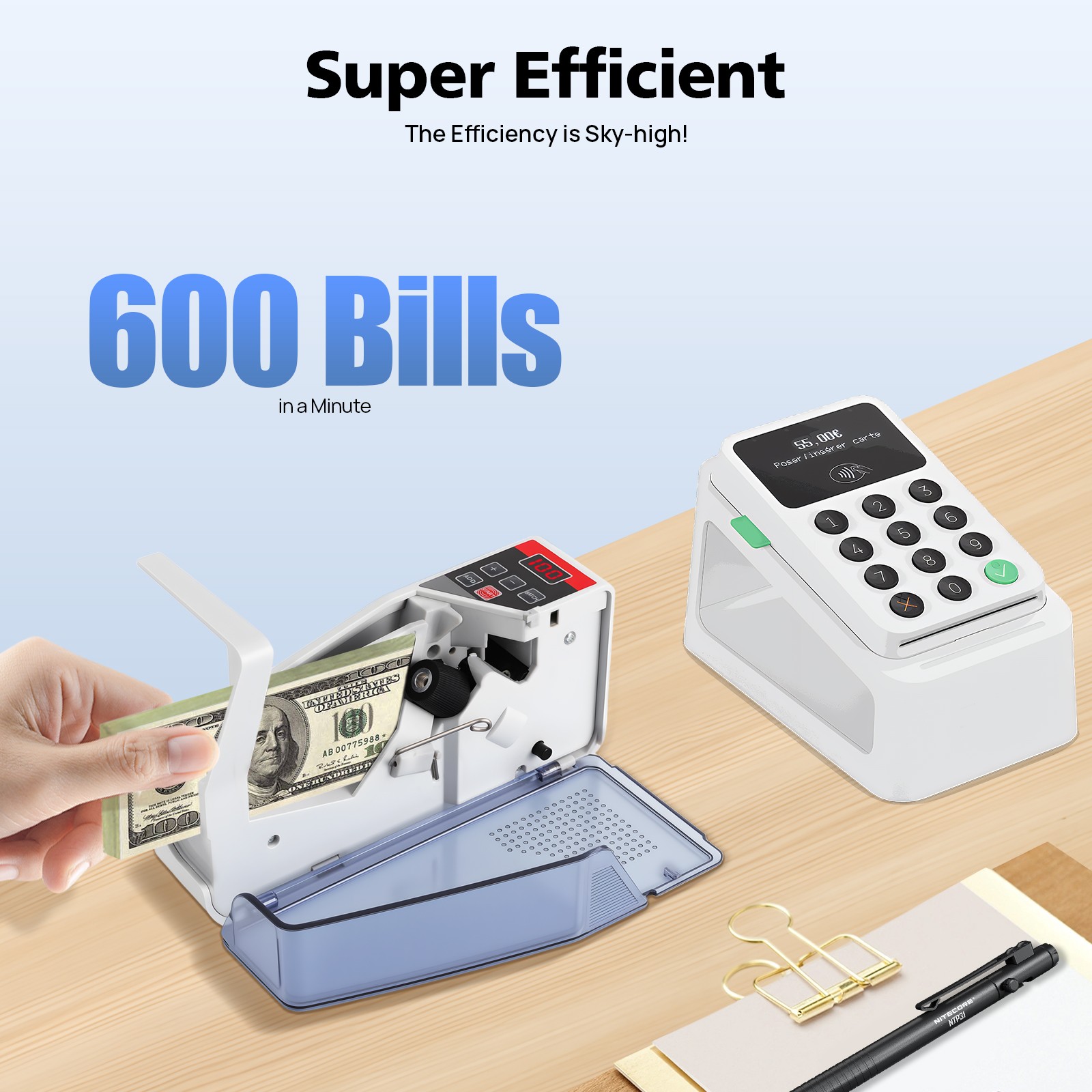 Money Counter Machine Currency Cash Bank Counterfeit Detector Cash Counting$43.95Last checked Nov 28, 2026View on eBay
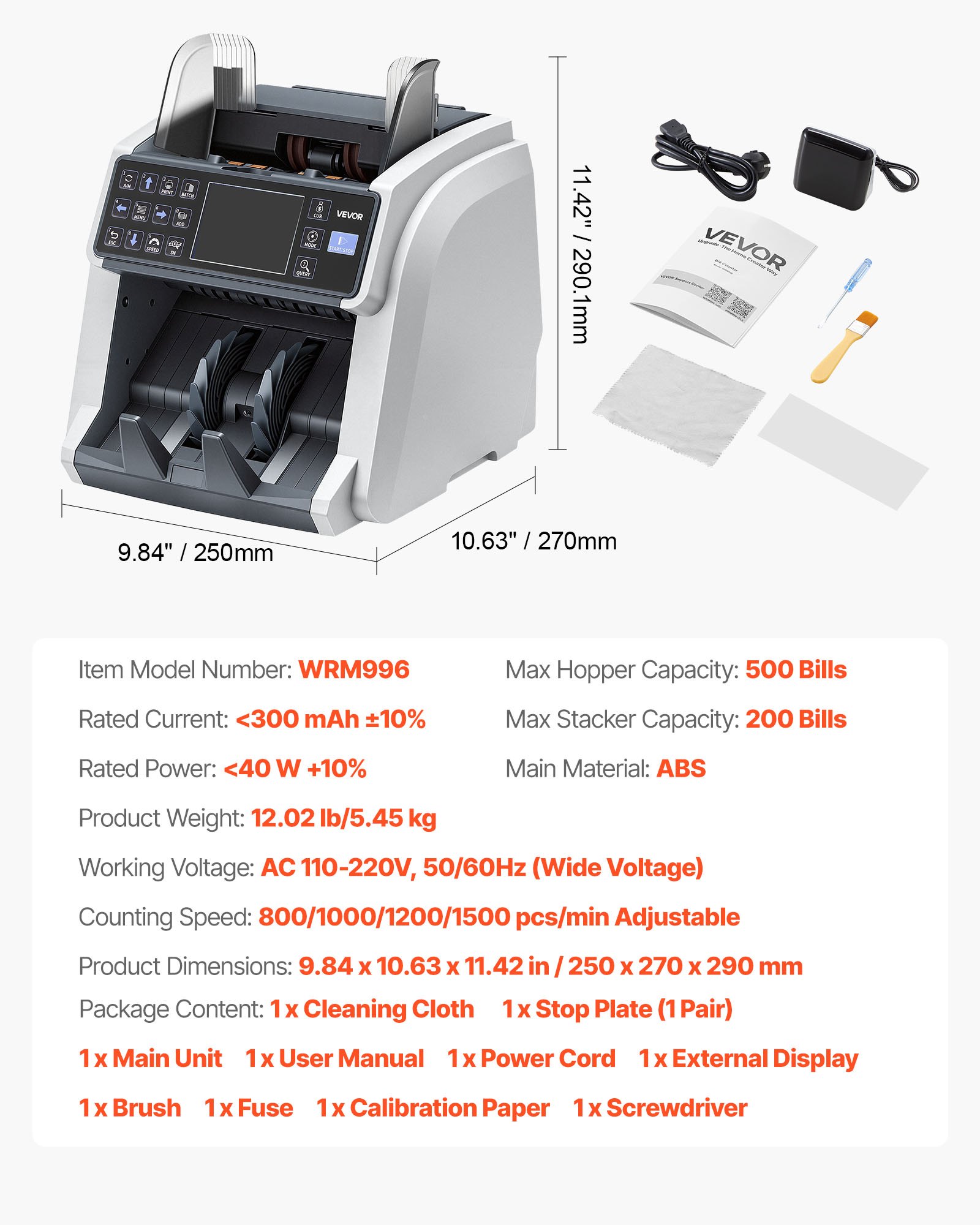 Money Counter Machine, Mixed Denomination Bill Cash With CIS/UV/MG/IR/DD/DBL/HLF/CHN Counterfeit Detection, Multi-Currency Support, Counting External Display$423.99View on Mallflare
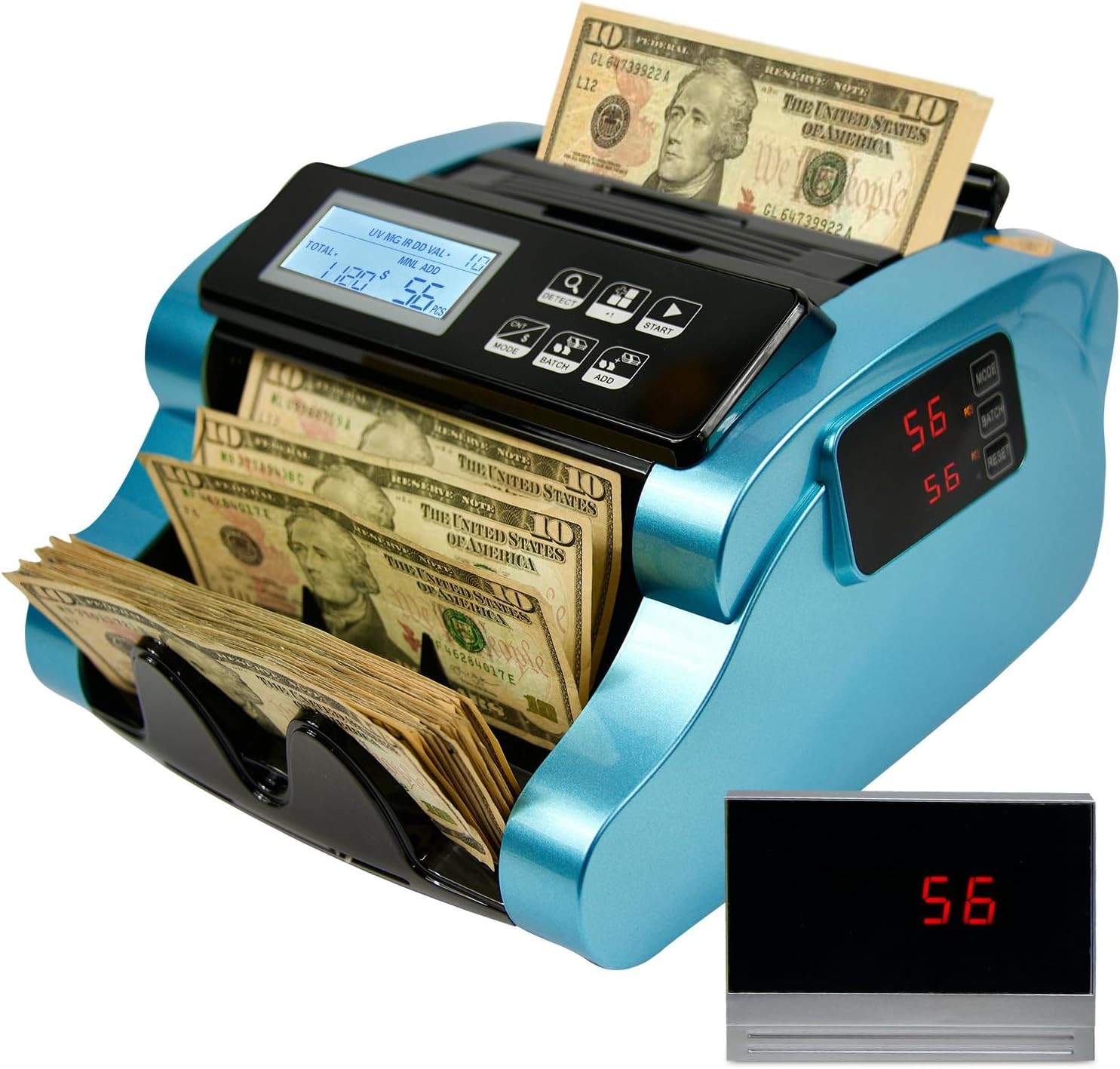 Money Counter Machine 1000 Bills/Min High-Speed Bill Counter with UV/MG/IR/DD$76.59Last checked Nov 28, 2026View on eBay
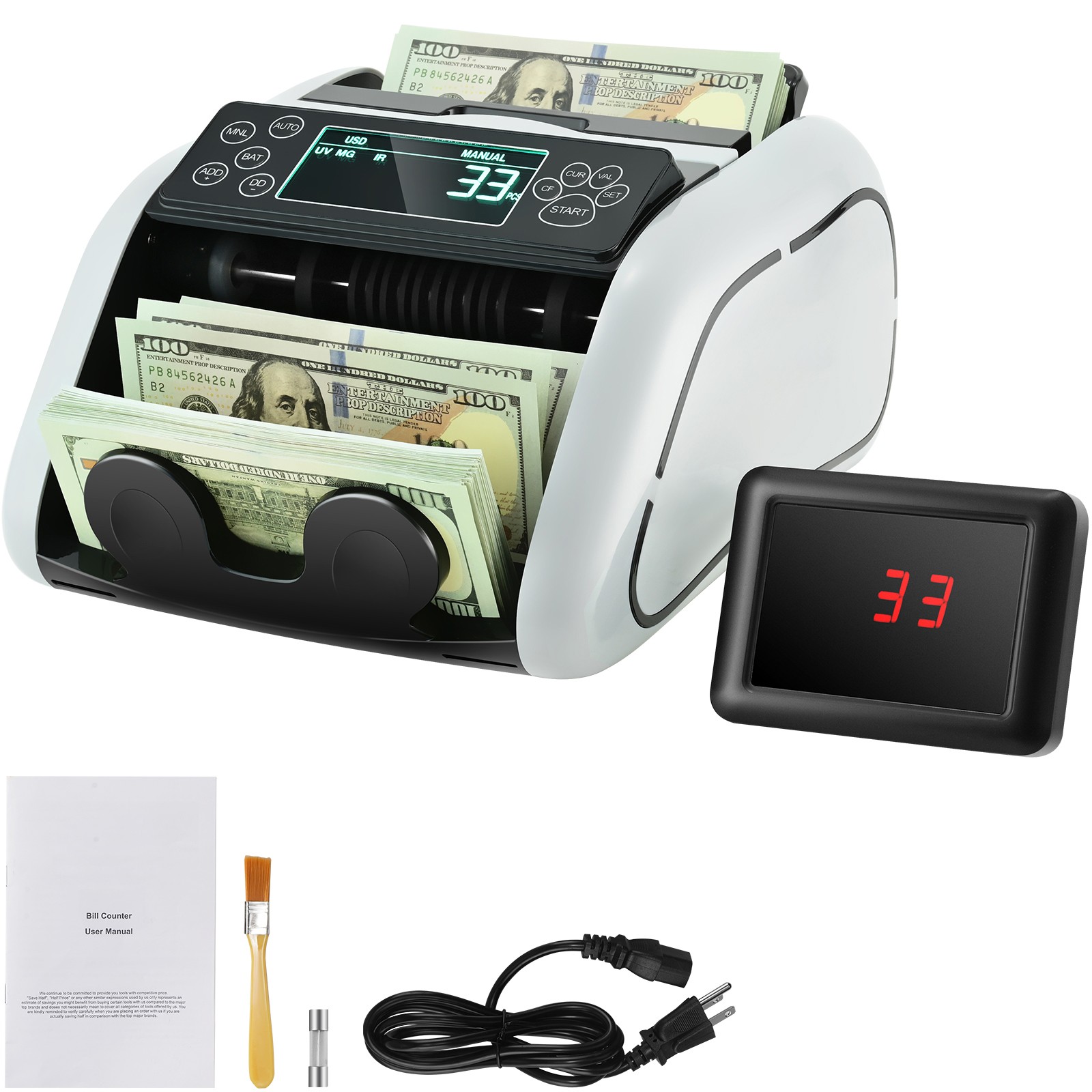 Uimoso Money Counter Machine Bill Counter with UV MG IR DD Counterfeit Detection$77.69Last checked Nov 28, 2026View on eBay
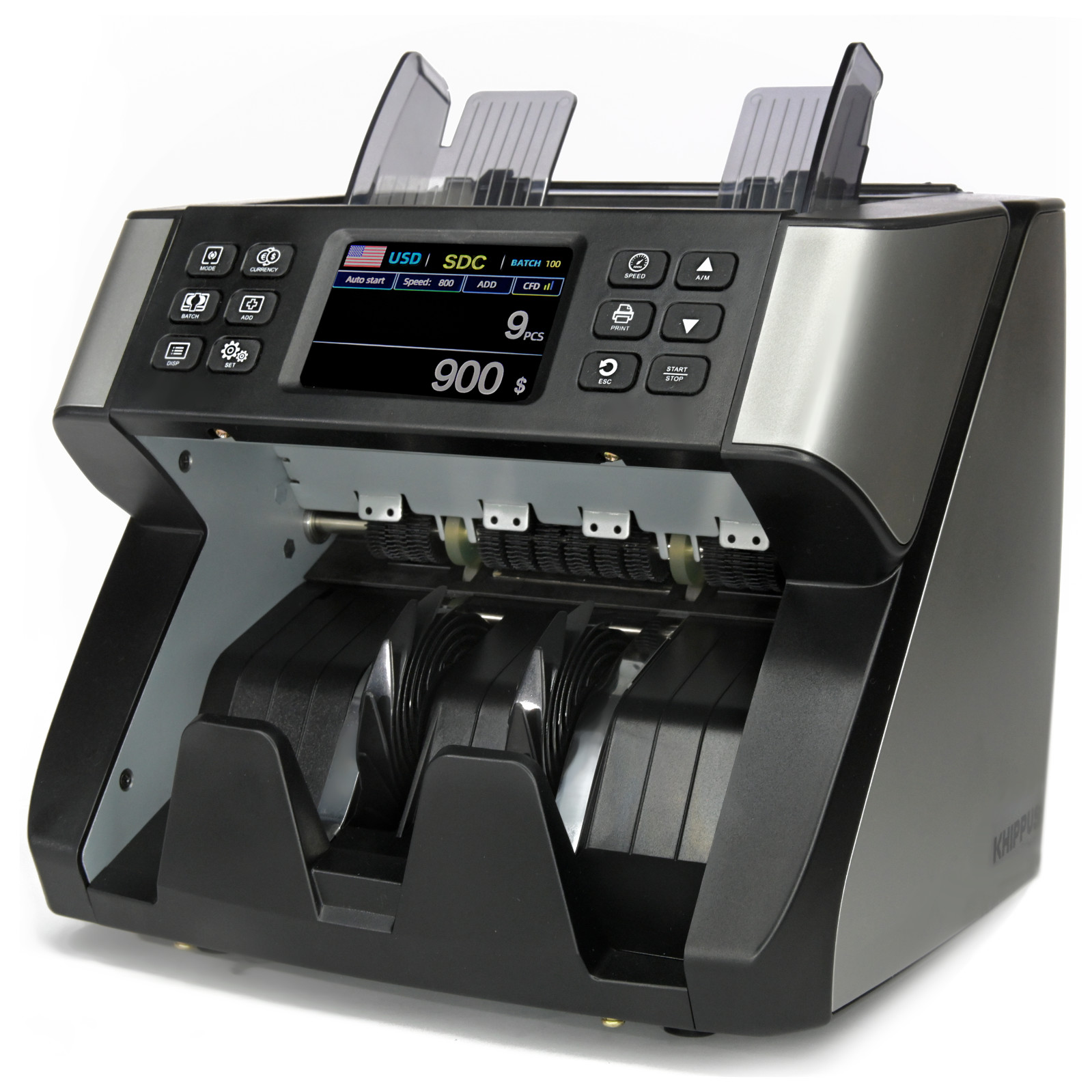 Money Counter Machine Mixed Bill Value Denomination Counting KHIPPUS Pro5500$391.94Last checked Nov 17, 2026View on eBay
Highlights
- Counting mechanism: friction roller feed (single denomination, needs sorted bills) vs. value-counting with denomination recognition and mixed-note batch totals.
- Counterfeit detection tiers: UV fluorescent ink check, magnetic ink verification (MG), and optical/image sensing — UV-only is entry level; MG plus UV is the practical minimum for retail cash.
- Speed and capacity ratings: typical portable units run 600–1,500 notes per minute with 50–200 note hoppers; higher speed means less jamming only if rollers are rubber and serviceable.
- Power architecture: rechargeable lithium-ion or NiMH battery packs vs. USB-C/AC adapter — battery runtime of 4–8 hours suits mobile use; AC-only units are desk-bound.
Best use cases
- Best fit: retail cash drawers and market stalls counting sorted same-denomination stacks — pick a friction-fed single-denomination counter with UV detection; skip value-counting models to save cost and complexity.
- Best fit: small mailroom or mobile sales handling mixed bills — pick a value counter with denomination recognition and MG+UV detection so batch totals are automatic and counterfeit notes are flagged.
- Wrong fit: high-volume bank or casino cash rooms processing tens of thousands of notes daily — skip portable units and choose a desktop heavy-duty counter with larger hopper and stacker.
- Wrong fit: worn, crumpled, or mixed-condition currency — skip friction-fed counters (jams and miscounts) and choose a model with adjustable roller pressure and straight-path feed.
Buying tips
- Match hopper capacity to batch size: a 100-note hopper suits small tills; for 200+ note batches choose a 200-note hopper to avoid stopping mid-count.
- Insist on magnetic (MG) plus UV detection for any retail or mailroom use — UV-only detectors miss many sophisticated counterfeits and are not sufficient for customer-facing cash handling.
- Check the feed path: straight-path friction feed with rubber rollers handles folded or slightly worn bills better than curved paths, which jam more on used currency.
- Confirm battery runtime and charging standard: lithium-ion packs with USB-C charging give 4–8 hours of cordless use; NiMH packs are heavier and slower to charge.
Specs
| Counting Type | Bill counter vs. value counter |
|---|---|
| Counterfeit Detection | UV / MG / optical image sensing |
| Speed & Hopper | 600–1,500 notes/min; 50–200 note hopper |
| Power Source | Rechargeable battery vs. AC/USB-C |
Related searches
What to check before buying
- Measure your desk or counter footprint and confirm the unit's dimensions plus clearance for the stacker — portable counters typically need 10–14 inches of depth.
- Verify your currency version and size: some value counters support only one currency family; confirm the model recognizes your specific denomination series and bill dimensions.
- Check power compatibility: confirm the included AC adapter matches your mains voltage (100–240V) and plug type, or that USB-C charging is supported for cordless use.
- Plan for consumables and service: rubber feed rollers and belts wear out; confirm replacement roller kits are available for the model before buying.
FAQ
Data sources: eBay / Amazon listings and product attribute feeds. Updated Nov 29, 2026.
Some links on this page are affiliate links. If you buy after clicking one, we may earn a commission at no extra cost to you. This does not change which products appear here or their order. Affiliate disclosure.