
Photos from current listings. Actual item, color, and included accessories may vary.
Bill Counter Buying Guide
A bill counter is a motorized machine that automates currency counting and counterfeit screening, replacing manual sorting for high-volume cash handlers. The primary trade-off is between basic single-denomination counters with UV/MG sensors and advanced mixed-denomination value counters with CIS imaging, where the latter adds full-color scanning and denomination recognition at a higher cost. Buy a CIS-based mixed-denomination model if you handle varied bills; choose a friction-roller single-denomination counter only for uniform stacks and tight budgets.
Median $234.82
Key takeaways
- Counting speed ranges from 1000 to 1900 bills per minute; higher speeds suit high-volume environments but require careful bill conditioning.
- Counterfeit detection tiers: UV (ultraviolet) catches paper fluorescence; MG (magnetic) checks ink; IR (infrared) verifies paper composition; DD (dimensional) measures thickness and size.
- CIS (Contact Image Sensor) enables mixed-denomination value counting by scanning full bill images for denomination and orientation.
At a glance
- Category
- Cash Handling & Mailroom
- Last updated
- Nov 29, 2026
Current offers
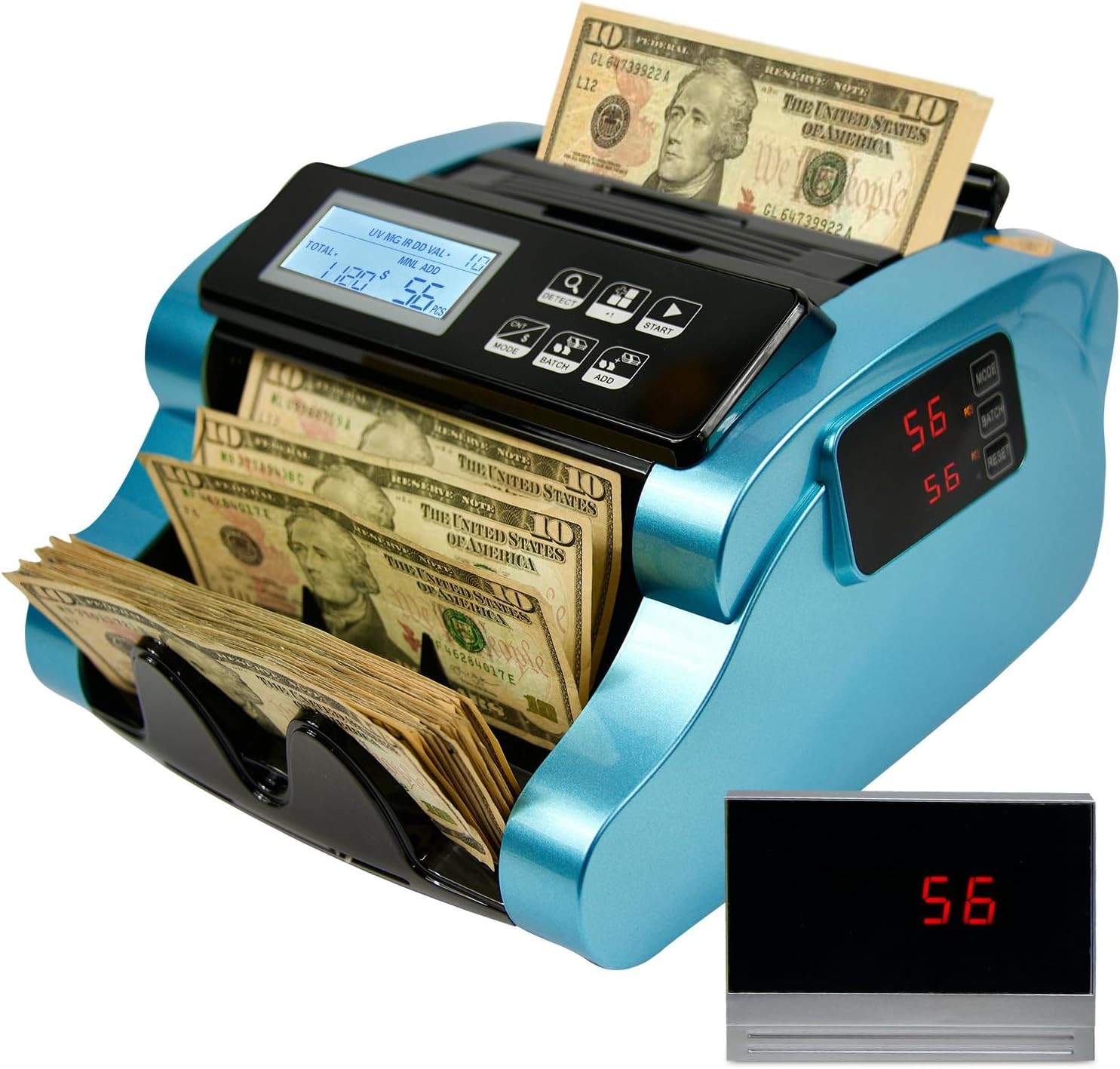 Money Counter Machine 1000 Bills/Min High-Speed Bill Counter with UV/MG/IR/DD$76.59Last checked Nov 28, 2026View on eBay
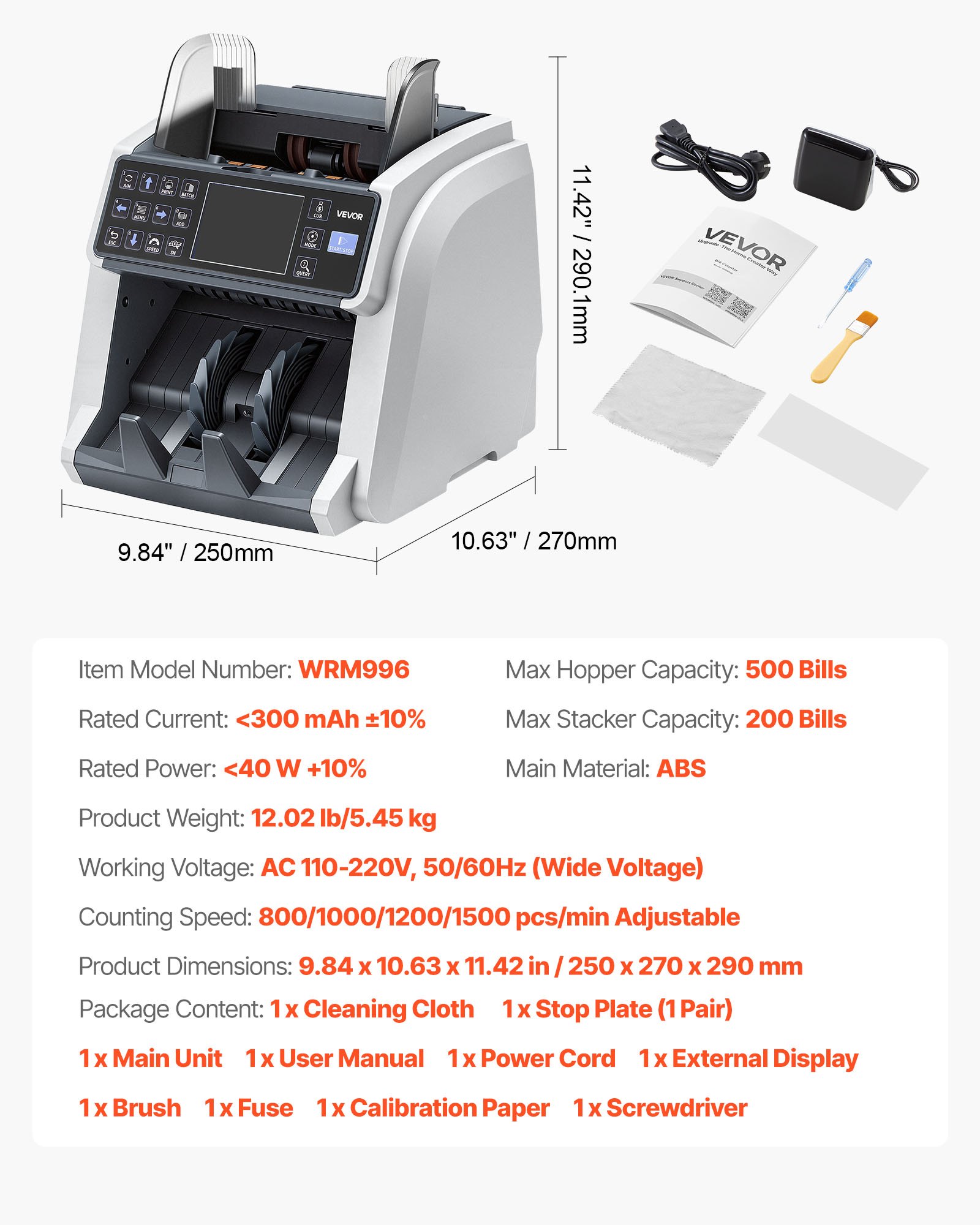 Money Counter Machine, Mixed Denomination Bill Cash With CIS/UV/MG/IR/DD/DBL/HLF/CHN Counterfeit Detection, Multi-Currency Support, Counting External Display$423.99View on Mallflare
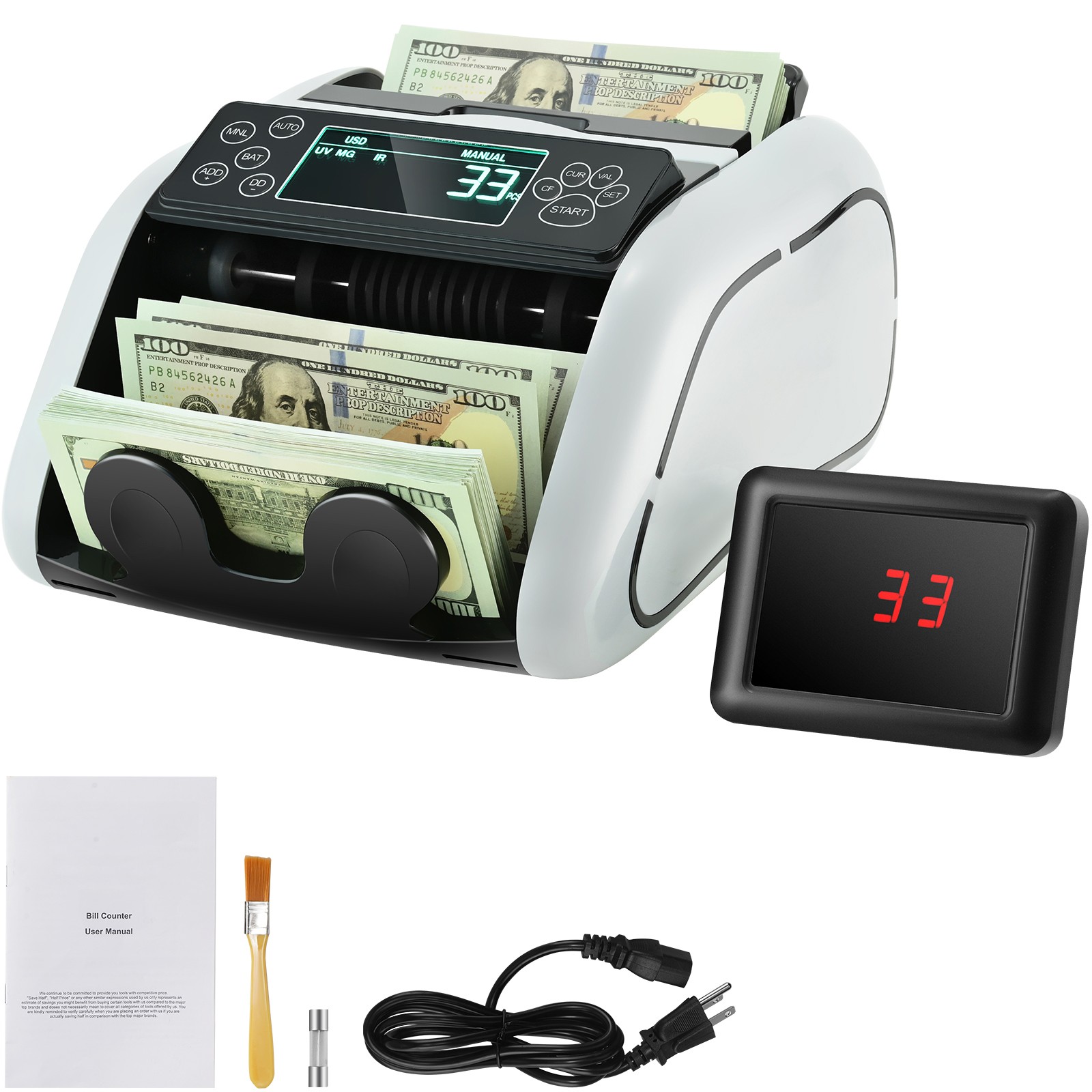 Uimoso Money Counter Machine Bill Counter with UV MG IR DD Counterfeit Detection$77.69Last checked Nov 28, 2026View on eBay
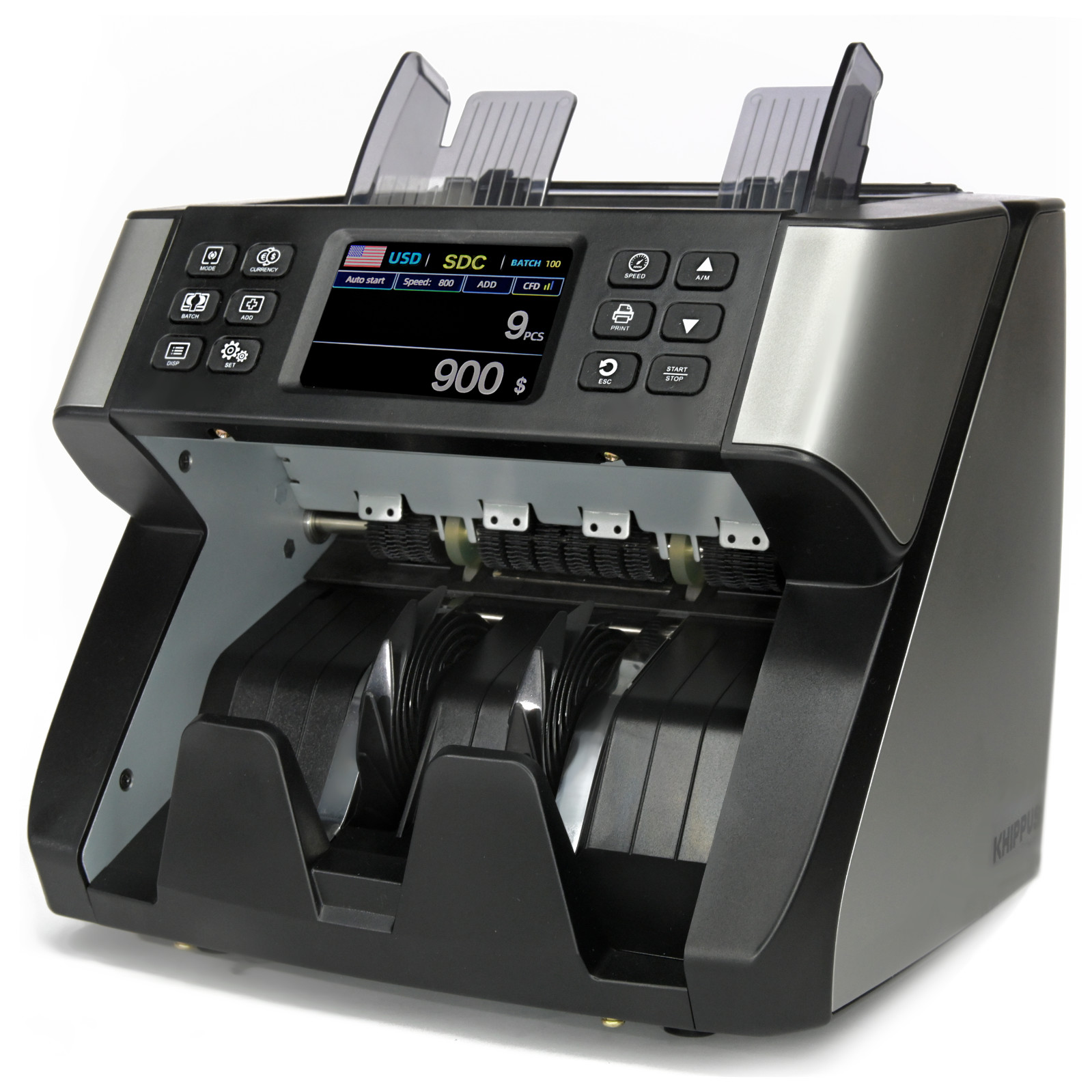 Money Counter Machine Mixed Bill Value Denomination Counting KHIPPUS Pro5500$391.94Last checked Nov 17, 2026View on eBay
Highlights
- Counting speed ranges from 1000 to 1900 bills per minute; higher speeds suit high-volume environments but require careful bill conditioning.
- Counterfeit detection tiers: UV (ultraviolet) catches paper fluorescence; MG (magnetic) checks ink; IR (infrared) verifies paper composition; DD (dimensional) measures thickness and size.
- CIS (Contact Image Sensor) enables mixed-denomination value counting by scanning full bill images for denomination and orientation.
- Friction-roller feed handles most bills but can misfeed worn or curled notes; vacuum or air-feed models reduce jams in poor-condition stacks.
Best use cases
- Best fit for retail cash offices and small banks: a 1000-bills/min single-denomination counter with UV/MG/IR/DD—skip CIS if you pre-sort by denomination.
- Best fit for check cashing and multi-currency handlers: a CIS-equipped mixed-denomination value counter that reports totals by denomination—skip single-denomination models.
- Best fit for high-volume cash centers: a 1500+ bills/min model with a large hopper (300+ bills) and stacker—skip compact 100-bill hoppers that need constant reloading.
- Wrong fit for occasional low-volume users: a basic counter without counterfeit detection saves cost but offers no UV/MG/IR protection; pair with manual verification.
Buying tips
- Match hopper capacity to batch size: 100-bill hoppers suit small tills; 300–500 bill hoppers reduce reloads in high-volume settings.
- Choose CIS if you need mixed-denomination totals; friction-roller single-denomination counters require pre-sorted stacks.
- Verify counterfeit detection includes at least UV and MG; add IR and DD for better security against bleached or printed fakes.
- Confirm voltage and plug standard for your region (120V US vs 220–240V EU) and check that spare parts like rollers are available.
Specs
| Counting Speed | 1000–1900 bills/min |
|---|---|
| Counterfeit Detection | UV/MG/IR/DD (CIS adds imaging) |
| Denomination Mode | Single-denomination vs mixed (CIS) |
| Hopper Capacity | 100–500 bills |
Related searches
What to check before buying
- Measure available counter space: typical units are 10–14 inches wide and 10–12 inches deep; allow clearance for hopper and stacker.
- Check your typical bill condition: worn or humid notes need a counter with adjustable roller pressure or air-feed to avoid jams.
- Confirm power: 120V/60Hz for North America, 220–240V/50Hz for Europe; some models ship with selectable voltage.
- Verify compatibility with your currency: CIS models may need region-specific firmware for denomination recognition.
FAQ
Data sources: eBay / Amazon listings and product attribute feeds. Updated Nov 29, 2026.
Some links on this page are affiliate links. If you buy after clicking one, we may earn a commission at no extra cost to you. This does not change which products appear here or their order. Affiliate disclosure.