
Photos from current listings. Actual item, color, and included accessories may vary.
Money Counter Buying Guide
A money counter is a motorized bill-handling machine that counts currency at high speed and, in better tiers, authenticates notes using UV, magnetic, infrared, and size sensors. The core trade-off is simple: cheap plastic single-pocket counters count fast but detect poorly and jam on worn bills, while mixed-denomination value counters cost more and need CIS sensors to read denominations reliably. Buy a single-denomination counter only if you sort bills first; buy a mixed-denomination model with CIS if you need value totals and counterfeit rejection out of the box.
Median $77.69
Key takeaways
- Counting speed separates tiers: entry counters run 600-1000 bills/min, while mixed-denomination CIS models typically count 800-1200 bills/min and add value summation per batch.
- Detection sensor sets scale from basic UV only to UV+MG+IR+DD, with CIS adding full-image denomination reading; DD (dimensional) and DBL/HLF catch double feeds and half notes.
- Hopper and stacker capacity determines batch workflow: compact units hold 200-300 notes in the hopper, full-size units hold 500+ and reduce reload stops.
At a glance
- Category
- Cash Handling & Mailroom
- Last updated
- Nov 29, 2026
Current offers
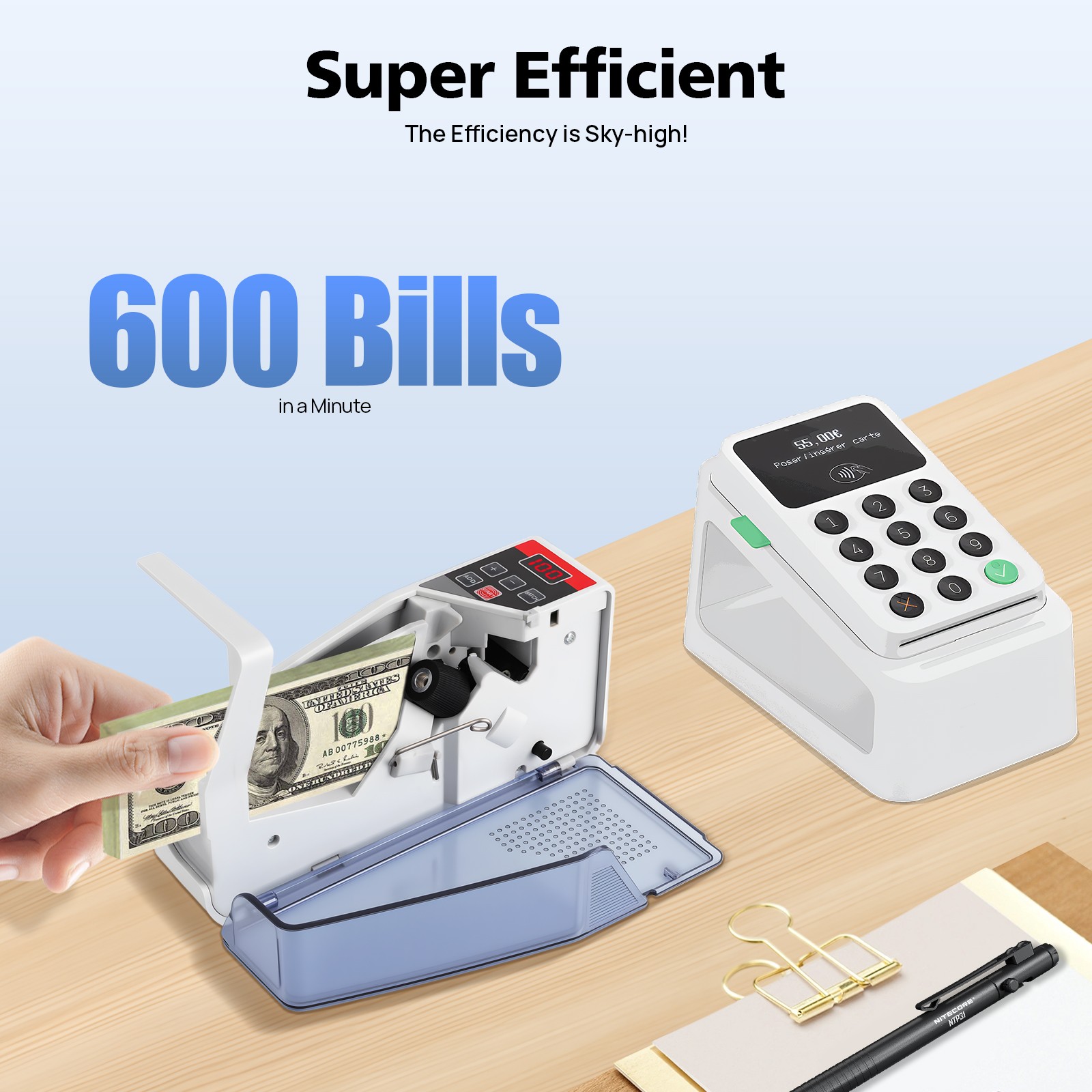 Money Counter Machine Currency Cash Bank Counterfeit Detector Cash Counting$43.95Last checked Nov 28, 2026View on eBay
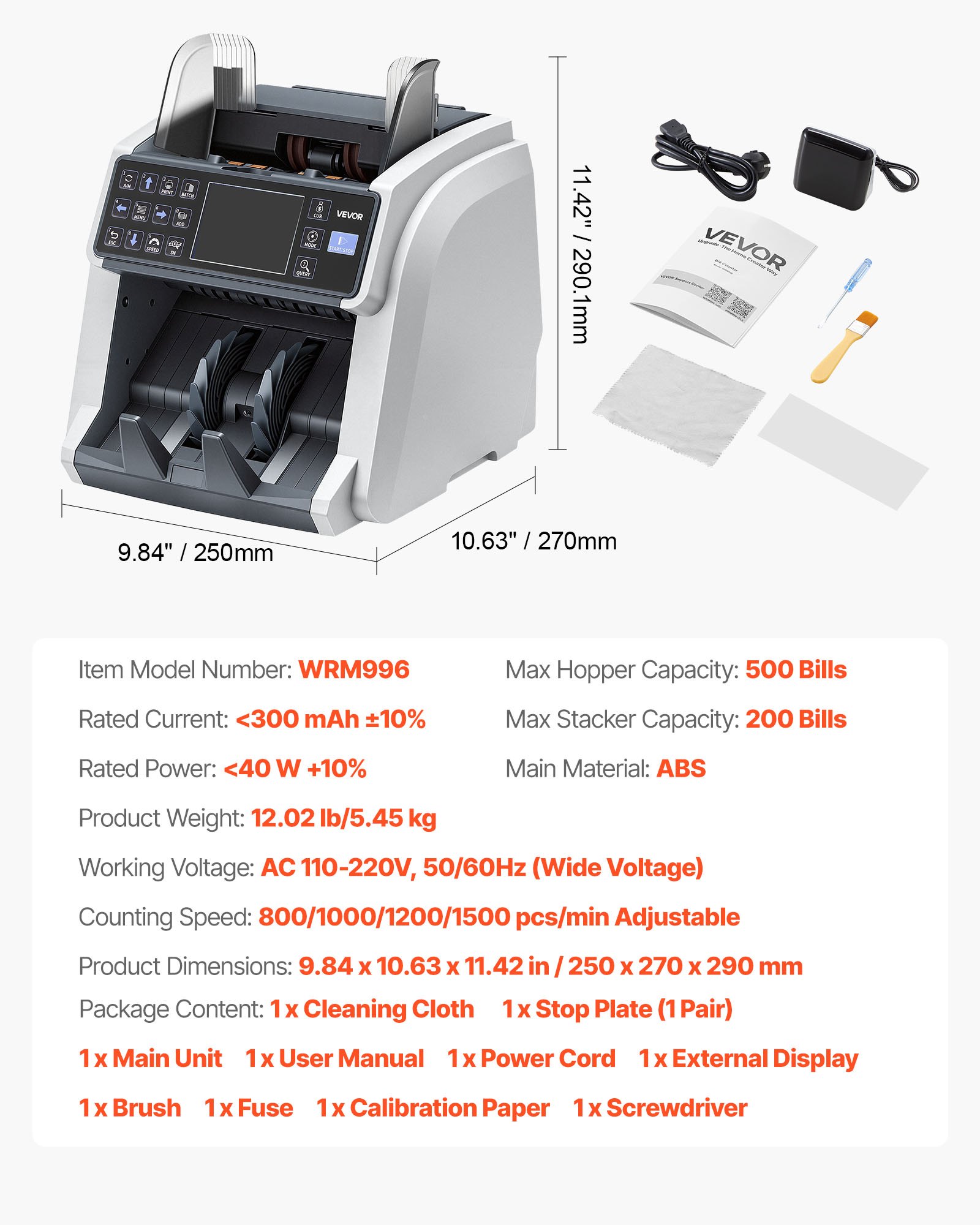 Money Counter Machine, Mixed Denomination Bill Cash With CIS/UV/MG/IR/DD/DBL/HLF/CHN Counterfeit Detection, Multi-Currency Support, Counting External Display$423.99View on Mallflare
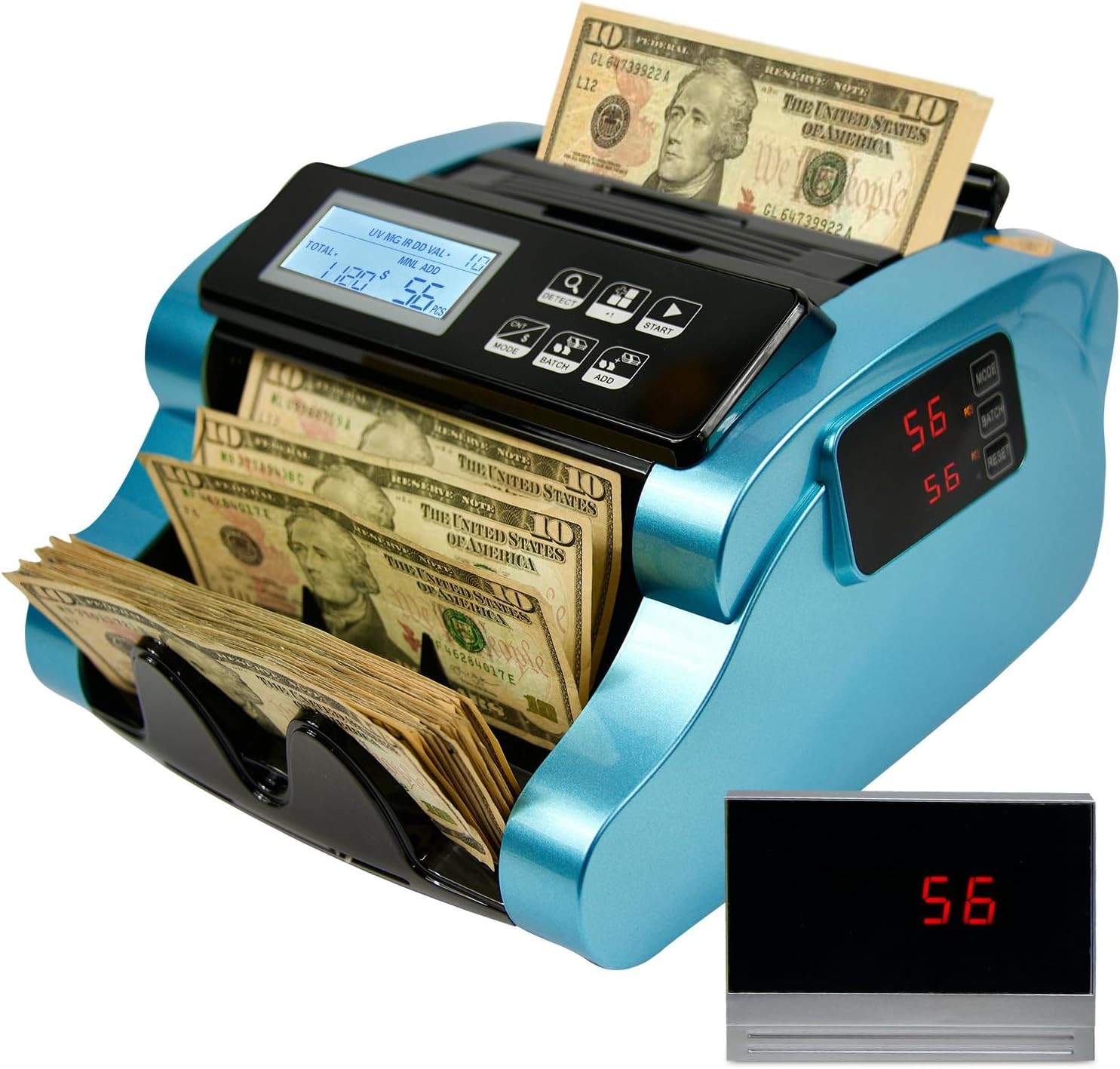 Money Counter Machine 1000 Bills/Min High-Speed Bill Counter with UV/MG/IR/DD$76.59Last checked Nov 28, 2026View on eBay
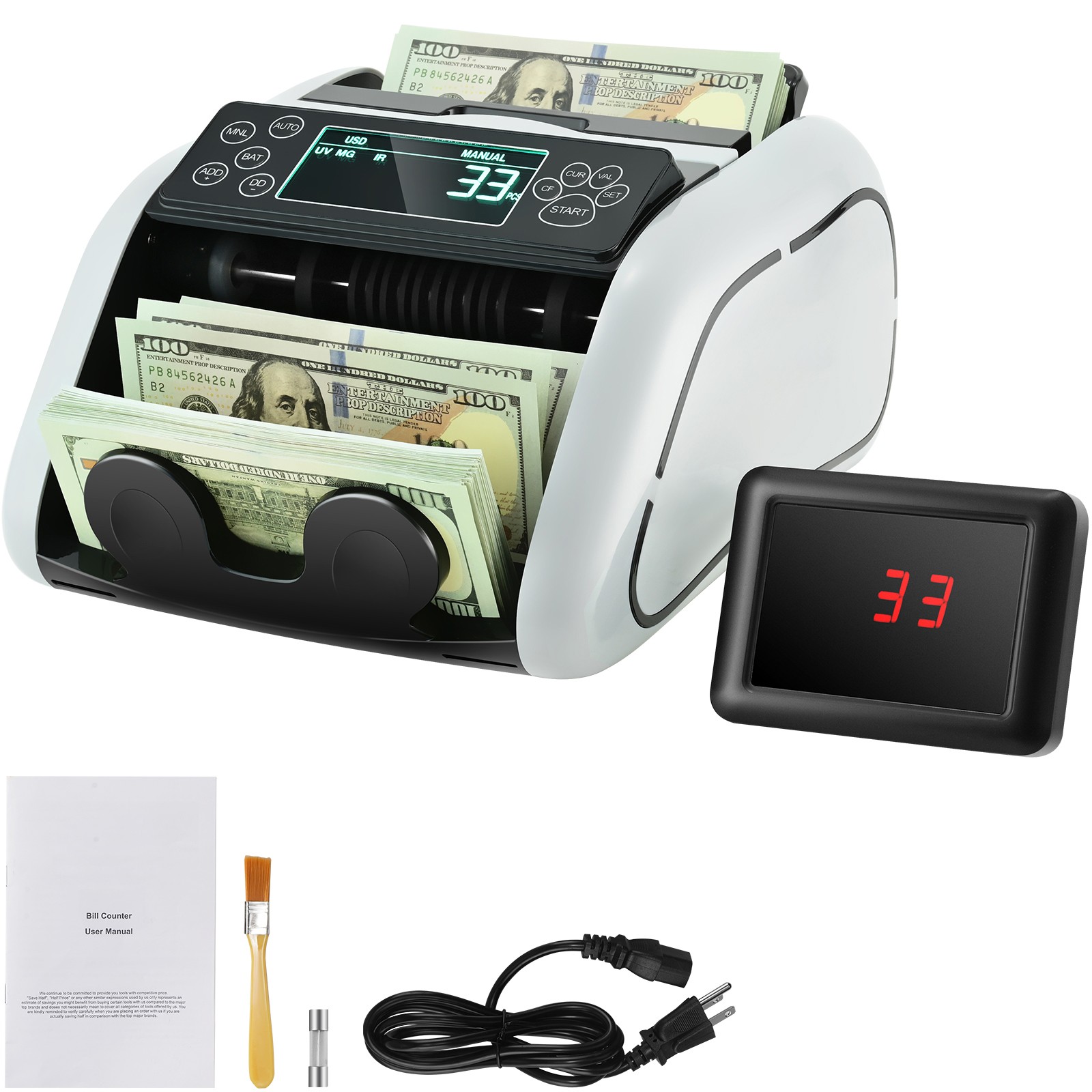 Uimoso Money Counter Machine Bill Counter with UV MG IR DD Counterfeit Detection$77.69Last checked Nov 28, 2026View on eBay
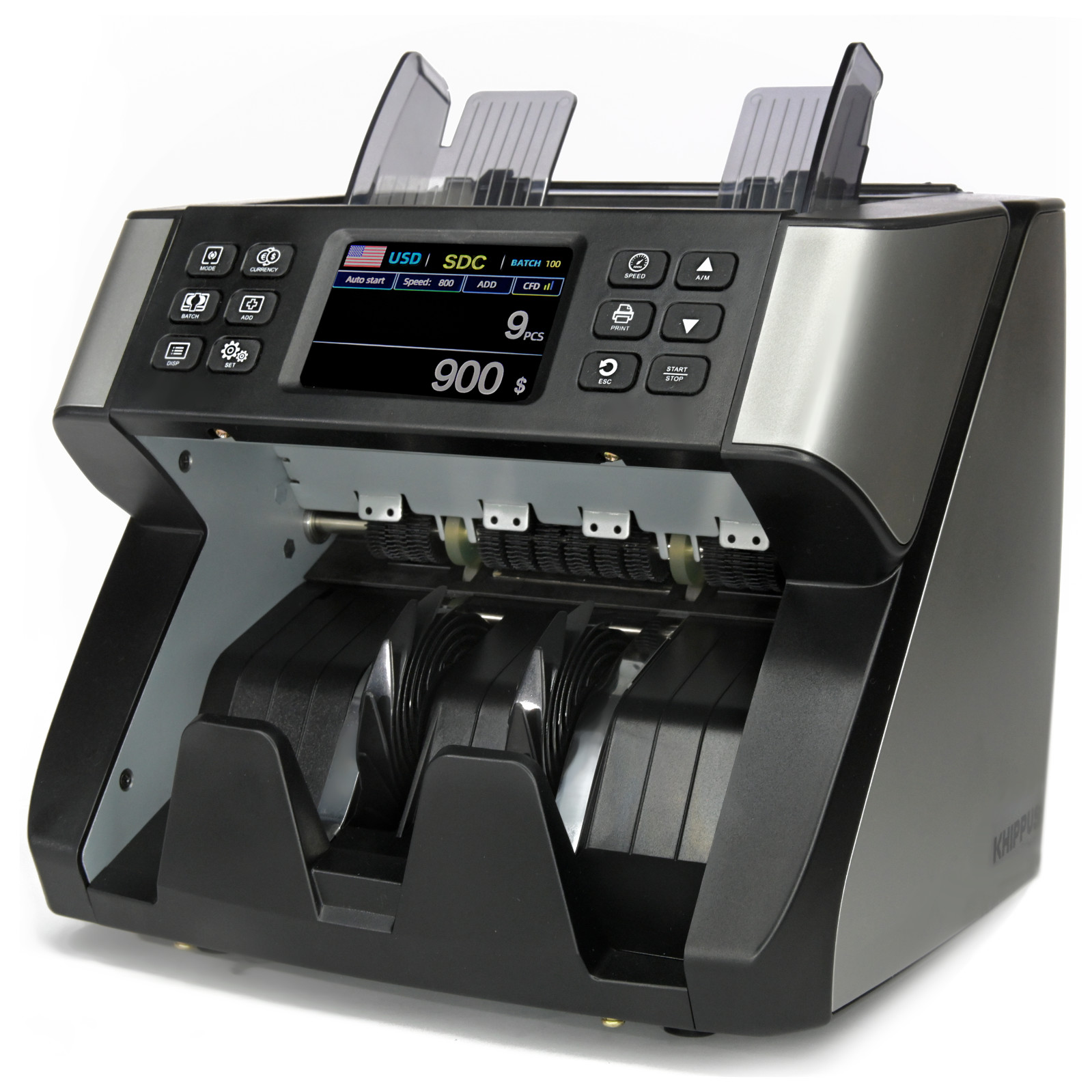 Money Counter Machine Mixed Bill Value Denomination Counting KHIPPUS Pro5500$391.94Last checked Nov 17, 2026View on eBay
Highlights
- Counting speed separates tiers: entry counters run 600-1000 bills/min, while mixed-denomination CIS models typically count 800-1200 bills/min and add value summation per batch.
- Detection sensor sets scale from basic UV only to UV+MG+IR+DD, with CIS adding full-image denomination reading; DD (dimensional) and DBL/HLF catch double feeds and half notes.
- Hopper and stacker capacity determines batch workflow: compact units hold 200-300 notes in the hopper, full-size units hold 500+ and reduce reload stops.
- Build grade drives durability: plastic housings dominate budget units, while metal chassis and rubber rollers rated for continuous use prevent misfeeds on worn, humid, or curled bills.
Best use cases
- Best fit: small retail or market stalls counting one denomination at a time — pick a 1000 bills/min plastic-body counter with UV+MG and skip mixed-denomination value features.
- Best fit: busy cash offices handling mixed notes and needing batch totals — choose a CIS mixed-denomination counter with UV/MG/IR/DD and DBL/HLF detection, not a single-pocket speed counter.
- Wrong fit: high-volume bank or armored-car operations — budget plastic counters with UV-only detection and 200-note hoppers will jam and fail audit; specify metal-chassis, 500+ hopper, CIS models.
- Wrong fit: buyers wanting counterfeit certainty on modern polymer or high-security notes — UV-only counters miss magnetic and infrared features; require MG+IR+CIS at minimum.
Buying tips
- Match counter type to workflow: single-denomination counters require pre-sorted bills; mixed-denomination CIS counters read and total different values in one pass, saving a sorting step.
- Use detection as the durability filter: UV-only is the weakest tier; UV+MG+IR+DD plus DBL/HLF covers magnetic ink, infrared, size, double-feed, and half-note checks.
- Size the hopper to batch volume: 200-300 note hoppers suit daily till counts, while 500+ note hoppers and 1000+ bills/min speed suit end-of-day bulk processing.
- Choose roller and chassis materials for climate: rubber rollers and metal chassis resist humid, curled bills better than plastic feed paths, reducing jams in tropical or damp rooms.
Specs
| Counter Type | Single-denomination vs mixed CIS |
|---|---|
| Counting Speed | 600-1200 bills/min |
| Detection Suite | UV / MG / IR / DD / CIS / DBL-HLF |
| Hopper Capacity | 200-300 vs 500+ notes |
Related searches
What to check before buying
- Confirm desk footprint and clearance for the hopper and stacker; full-size counters need roughly 30 cm of depth plus open space to load and unload.
- Verify the counter supports your currency size and security features — UV, MG, and IR thresholds are calibrated per note series and polymer substrates.
- Check power standard: most counters ship 110V or 220V; confirm plug type and voltage match your outlet before ordering.
- Ensure you have the companion parts: power cable, cleaning brush, and spare rubber rollers; worn rollers are the top cause of misfeeds and double counts.
FAQ
Data sources: eBay / Amazon listings and product attribute feeds. Updated Nov 29, 2026.
Some links on this page are affiliate links. If you buy after clicking one, we may earn a commission at no extra cost to you. This does not change which products appear here or their order. Affiliate disclosure.