
Photos from current listings. Actual item, color, and included accessories may vary.
Heavy Duty Cash Box Buying Guide
A heavy duty cash box is a welded or reinforced steel depository with a lock, slot, or keypad designed to resist prying, cutting, and impact in high-traffic cash environments. The core trade-off is gauge thickness and locking mechanism versus portability — thin sheet-metal boxes bend at the lid seam, while true heavy-duty units use 12–14 gauge steel and hardened deadbolts. The decision rule: buy only if the door or lid has an internal hinge and a relocking or anti-pry bar; skip any box rated below 16 gauge or held shut by a simple cam lock.
Median $122.49
Key takeaways
- Heavy duty cash boxes start at 14 gauge (2.0 mm) steel; 12 gauge is the tier for daily commercial deposits and drop safes, while 16–18 gauge sheet metal is consumer-grade and pries open at the lid seam.
- Lock grade matters more than size: a UL-listed Group II combination or hardened steel deadbolt with anti-drill plate resists picking and drilling; standard cam locks with exposed screws fail in seconds.
- Drop safes use a one-way front slot with an internal baffle so cash cannot be fished out; cash boxes use a full-open lid — the slot architecture is the dividing line between deposit security and simple storage.
At a glance
- Category
- Cash Handling & Mailroom
- Last updated
- Nov 28, 2026
Current offers
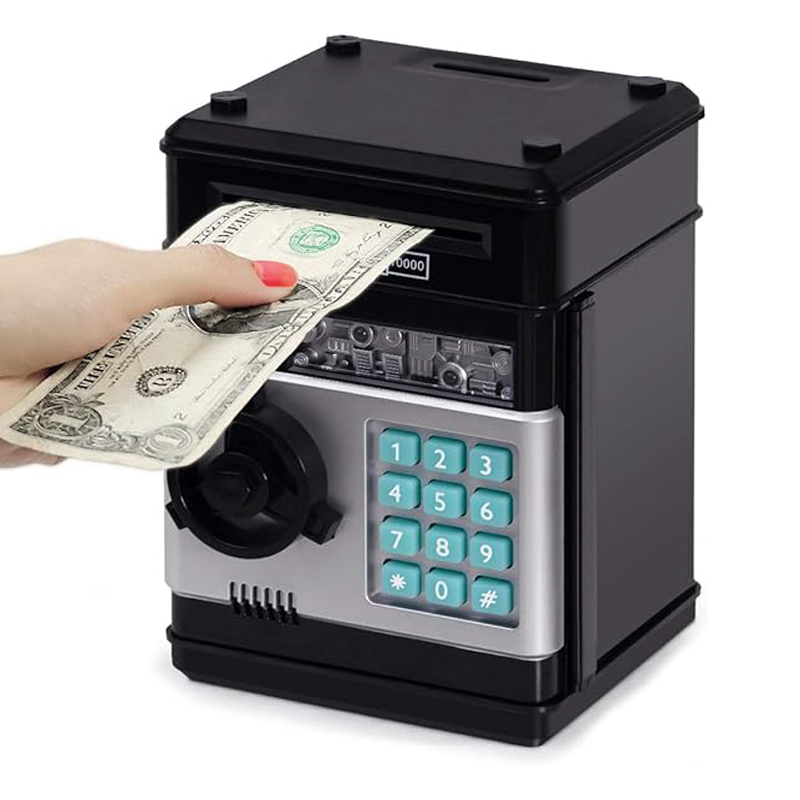 Electronic Bank, Mini ATM Password Money Cash Coins Saving Box For Kids, Cartoon Safe Box$30.99View on Mallflare
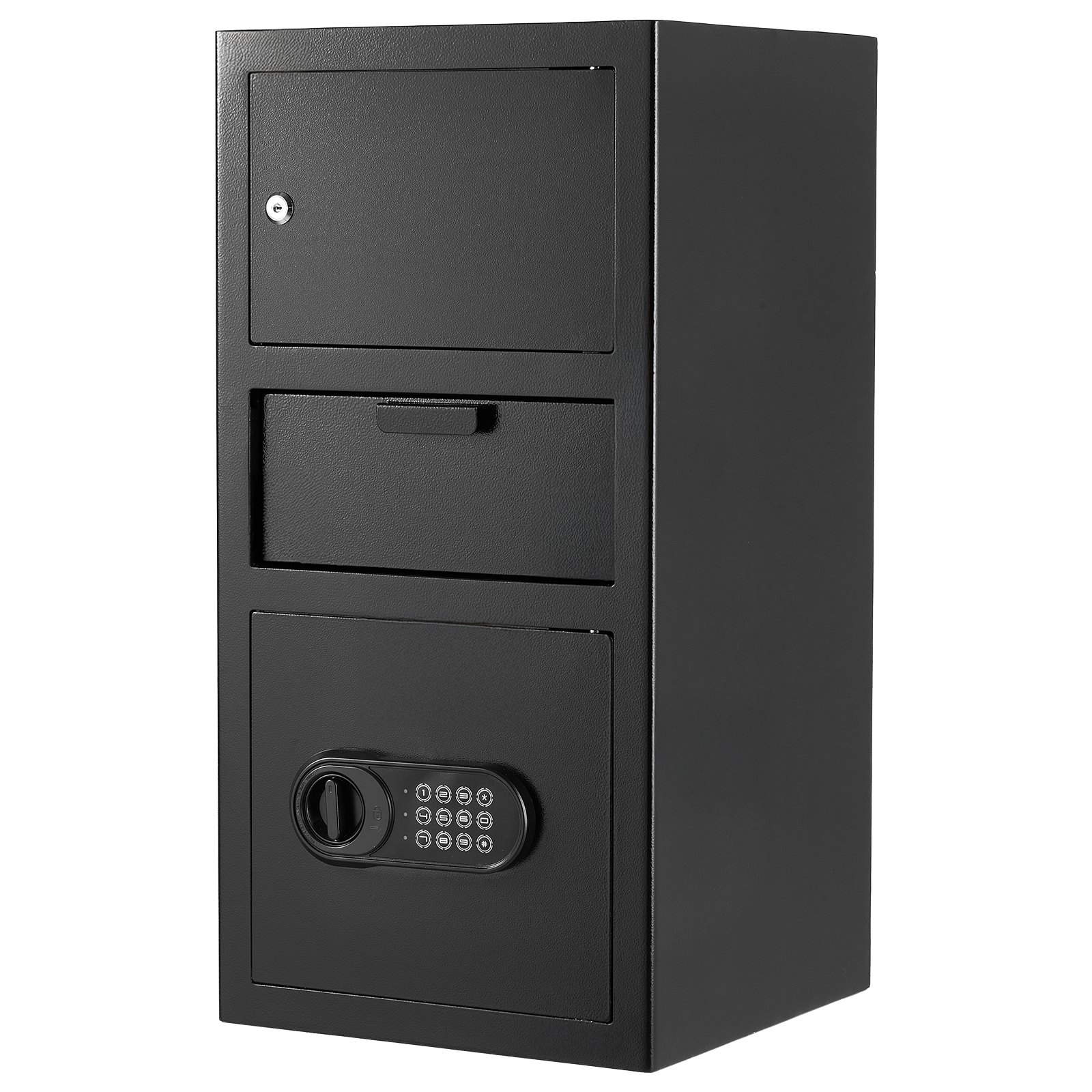 3.6 Cubic Feet Drop Safe, Large Capacity Front Slot Box With Digital Keypad, Heavy Duty 3 Tiers Cash Depository Box Spare Keys For Bank Slip, Jewelry, Document, Bill, Black$213.99View on Mallflare
Highlights
- Heavy duty cash boxes start at 14 gauge (2.0 mm) steel; 12 gauge is the tier for daily commercial deposits and drop safes, while 16–18 gauge sheet metal is consumer-grade and pries open at the lid seam.
- Lock grade matters more than size: a UL-listed Group II combination or hardened steel deadbolt with anti-drill plate resists picking and drilling; standard cam locks with exposed screws fail in seconds.
- Drop safes use a one-way front slot with an internal baffle so cash cannot be fished out; cash boxes use a full-open lid — the slot architecture is the dividing line between deposit security and simple storage.
- Internal tier count (2 vs 3 tiers) sets bill and coin separation capacity; 3-tier drop safes hold stacked deposit bags without crushing, while 2-tier units fit smaller daily cash volumes.
Best use cases
- Choose a 3.6 cu ft 3-tier drop safe for retail back offices, gas stations, or restaurants taking multiple daily deposits — the front slot and tiered interior separate bills, coins, and envelopes without reopening the main door.
- Choose a 1.2 cu ft 2-tier drop safe for small shops, food trucks, or pop-up stalls where floor space is tight and daily cash volume is moderate; skip it if you need to store large deposit bags or rolled coin.
- Skip heavy duty drop safes entirely for personal or low-volume use — a 16 gauge lockbox with a keyed cam lock is lighter, cheaper, and adequate when cash is removed nightly.
- Pick a slot-style depository over a flat cash box whenever employees must deposit without accessing the main compartment; pick a flat cash box only when one person counts and reconciles the full drawer.
Buying tips
- Measure the door opening and interior depth before buying: 1.2 cu ft units typically fit under a counter at roughly 12–14 inches tall, while 3.6 cu ft drop safes need 20+ inches of vertical clearance and a reinforced floor or shelf.
- Match the lock to your threat model: digital keypads with audit trails suit multi-employee retail, while mechanical combination or dual-key locks suit single-manager operations where battery failure is unacceptable.
- Check the steel gauge and door thickness in the spec sheet — 12 gauge body with a 1/4-inch plate door is the commercial floor; anything listed only as 'heavy duty' without gauge numbers is consumer sheet metal.
- Confirm the slot dimensions accept your deposit envelopes or bags; front slots under 1 inch tall reject thick bank bags, and internal baffles that are too shallow allow fishing with a wire.
Specs
| Body Steel Gauge | 12-14 ga heavy duty / 16-18 ga light |
|---|---|
| Lock Type | Digital keypad / combo / dual-key deadbolt |
| Deposit Architecture | Front slot drop safe vs full-open lid |
| Interior Tiers | 2-tier compact / 3-tier deposit separation |
Related searches
What to check before buying
- Measure your counter or floor footprint and the vertical clearance to the shelf above — 3.6 cu ft drop safes are typically 20–24 inches tall and cannot be tucked under a standard register counter.
- Confirm the mounting surface can take anchor bolts; heavy duty drop safes ship with pre-drilled floor holes and should be bolted down, not left freestanding.
- Verify the lock power source: digital keypads need battery replacement access and a low-battery override, while mechanical locks need no power but require key control discipline.
- Check interior tier height against your deposit bags and rolled coin — 2-tier units have taller compartments, 3-tier units prioritize separation over bulk storage.
FAQ
Data sources: eBay / Amazon listings and product attribute feeds. Updated Nov 28, 2026.
Some links on this page are affiliate links. If you buy after clicking one, we may earn a commission at no extra cost to you. This does not change which products appear here or their order. Affiliate disclosure.