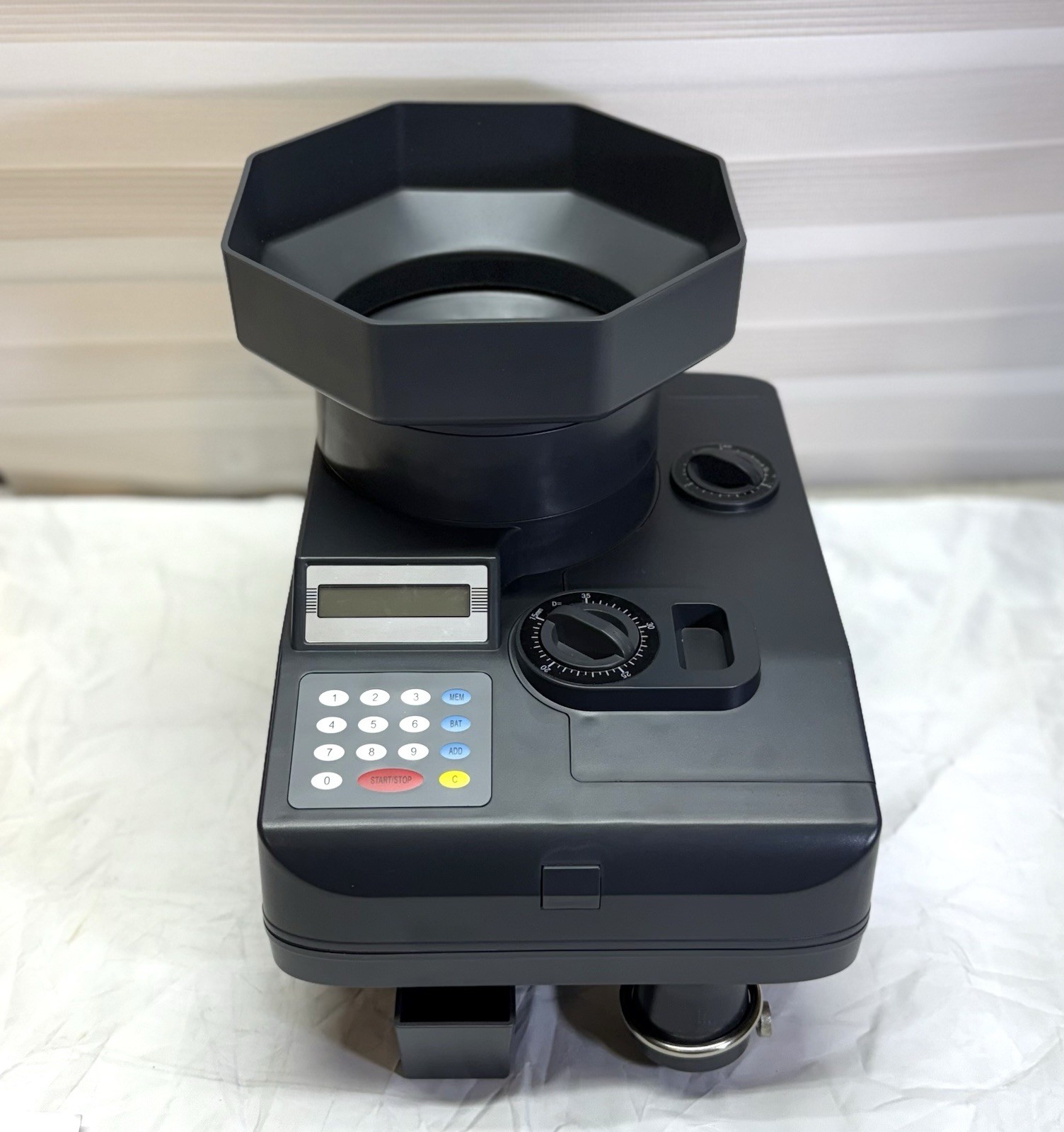

Photos from current listings. Actual item, color, and included accessories may vary.
Coin Counting Machine Buying Guide
A coin counting machine automates sorting, counting, and often wrapping loose change, replacing slow manual trays with motorized sorters. The core trade-off is throughput and coin-mix accuracy versus wrapping automation and build durability: entry machines count only, while commercial units sort at high speed and handle mixed denominations without jams. The decision rule is simple—buy a count-only sorter for occasional home or small-retail volume, and step up to a friction-drive or hopper-fed commercial sorter with wrapping capability only when daily mixed-coin volume exceeds a few hundred coins.
Key takeaways
- Sorter architecture splits into gravity-rail sorters (calibrated off-set rails, no moving parts, near-zero jams) and friction-disc sorters (motorized disc spinning coins past sensors, higher speed but sensitive to dirt and bent coins).
- Counting accuracy depends on coin diameter and thickness calibration: single-denomination tray counters are accurate to ±1 coin, while mixed-hopper sorters typically guarantee 99.9%+ per-denomination accuracy only when coins are clean and deburred.
- Wrapping automation is the biggest tier jump: count-only machines stop at totals, while friction-drive units with tube or paper-roll wrappers add mechanical complexity that drives most service calls.
At a glance
- Category
- Cash Handling & Mailroom
- Last updated
- Nov 28, 2026
Current offers
Highlights
- Sorter architecture splits into gravity-rail sorters (calibrated off-set rails, no moving parts, near-zero jams) and friction-disc sorters (motorized disc spinning coins past sensors, higher speed but sensitive to dirt and bent coins).
- Counting accuracy depends on coin diameter and thickness calibration: single-denomination tray counters are accurate to ±1 coin, while mixed-hopper sorters typically guarantee 99.9%+ per-denomination accuracy only when coins are clean and deburred.
- Wrapping automation is the biggest tier jump: count-only machines stop at totals, while friction-drive units with tube or paper-roll wrappers add mechanical complexity that drives most service calls.
- Coin capacity and hopper size define batch workflow—small hoppers under 300 coins suit home jars, while commercial hoppers above 1,000 coins reduce reload cycles for cash-office and laundry-room use.
Best use cases
- Home jar or piggy-bank clearing: pick a compact count-only friction sorter with a removable coin cup; skip commercial hopper units, whose size and calibration demand are wasted at low volume.
- Small retail, laundromat, or vending route: choose a mixed-denomination friction sorter with a large hopper and optional tube wrappers; skip gravity-rail units, which are slower for daily mixed batches.
- Cash office or bank back-counter: specify a heavy-duty friction-drive sorter with bag-strap or paper-roll wrapping and jam-recovery reverse; skip consumer-grade plastic-body units, which wear out under continuous duty.
- Foreign or obsolete coin handling: choose a manual gravity-rail sorter with adjustable rails or a count-only tray; skip fixed-calibration friction sorters, which are factory-set to one currency's coin geometry.
Buying tips
- Match sorter type to coin mix: gravity-rail sorters handle mixed denominations with almost no jams but are slower; friction-disc sorters are faster but need clean, unbent coins to hold accuracy.
- Confirm currency calibration before purchase—friction sorters are factory-set for a specific coin set (e.g., US clad, Euro, UK), and cross-currency use requires a manufacturer recalibration kit, not a software toggle.
- Size the hopper to your batch: under 300 coins for household use, 300–1,000 for small retail, and over 1,000 for cash-office throughput; undersizing the hopper creates constant reload delays.
- Prioritize jam-recovery reverse and a removable debris tray on any friction-drive unit—bent coins and lint are the top cause of miscounts, and reverse plus cleanout cuts downtime.
Specs
| Sorter Type | Gravity-rail vs friction-disc |
|---|---|
| Counting Mode | Mixed-denomination vs single-tray |
| Hopper Capacity | Under 300 / 300–1,000 / 1,000+ coins |
| Wrapping | Count-only vs tube / paper-roll |
Related searches
What to check before buying
- Measure your counter or safe space: commercial sorters with wrappers often exceed 12 in width and 15 lb, so confirm footprint and weight capacity before choosing a tier.
- Verify your coin currency and denomination set matches the sorter's factory calibration; mixed foreign coins or silver dollars need adjustable-rail or manual models.
- Check power requirements: most commercial friction sorters run on standard 120V AC (US) or 230V (EU) with included adapters, while compact units may use batteries or USB power.
- Confirm companion supplies for wrapping tiers—paper rolls or preformed tubes are model-specific, so match the wrapper type to the machine before buying.
FAQ
Data sources: eBay / Amazon listings and product attribute feeds. Updated Nov 28, 2026.
Some links on this page are affiliate links. If you buy after clicking one, we may earn a commission at no extra cost to you. This does not change which products appear here or their order. Affiliate disclosure.