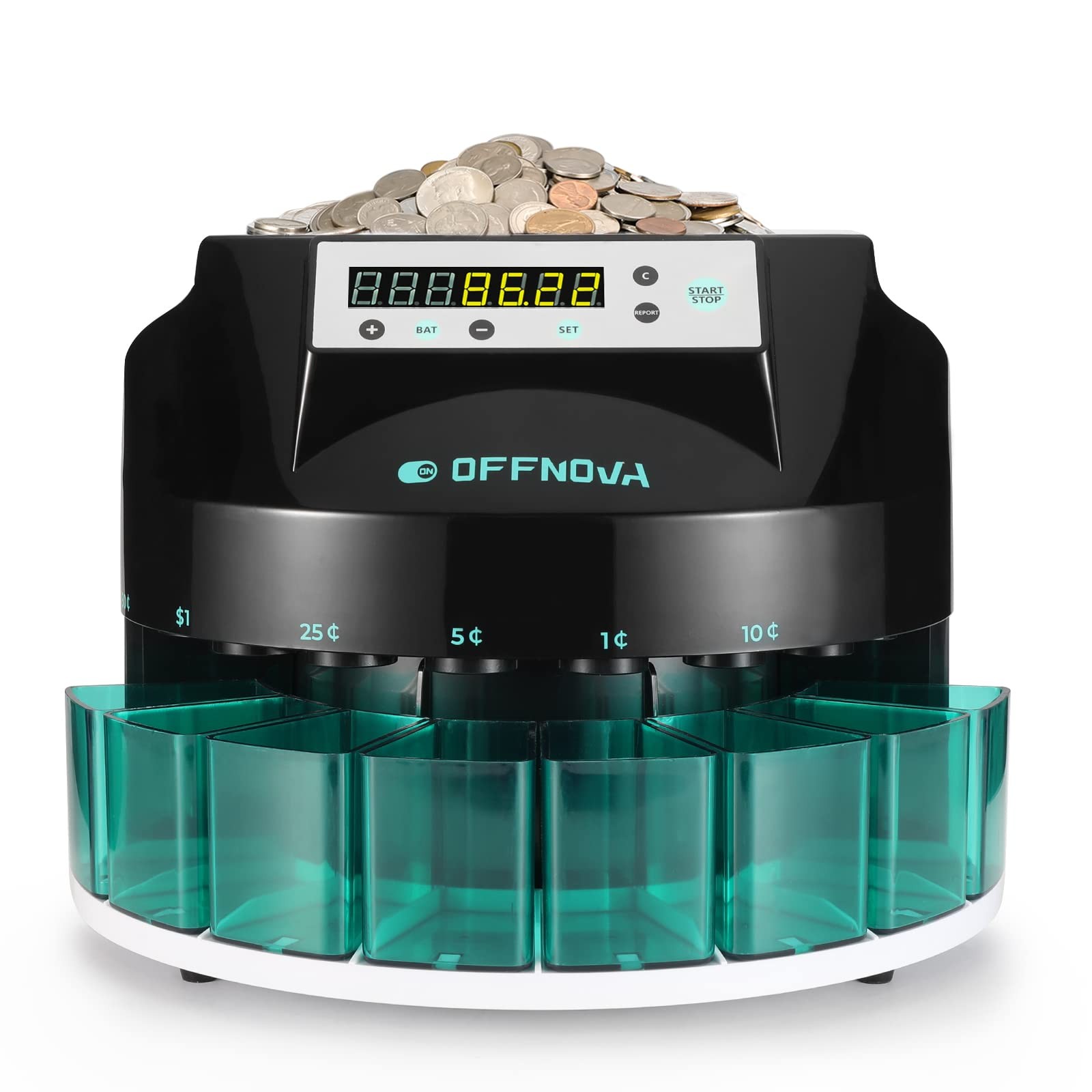

Photos from current listings. Actual item, color, and included accessories may vary.
Automatic Coin Counter Buying Guide
An automatic coin counter is a motorized hopper-fed machine that sorts, counts, and often batches mixed coins, replacing manual tray-and-tube counting for cash-heavy operations. The core trade-off is throughput and durability: consumer-grade plastic units with brushed motors and fixed coin tubes versus commercial units with metal gearing, adjustable/removable tubes, and jam-resistant feed mechanisms. Buy commercial-grade with removable coin tubes and a jam-clearing reverse mode if you process daily mixed coin; otherwise a basic top-load consumer counter is sufficient for light household or small-retail use.
Key takeaways
- Feed mechanism: top-load gravity hopper vs front-load angled tray; angled trays reduce coin bridging and jams at higher volumes, while gravity hoppers are cheaper and fine for light use.
- Motor and gearing: commercial counters use metal gears and DC motors rated for continuous duty; consumer units use plastic gears and brushed motors that wear out under daily volume.
- Coin tube configuration: fixed pre-sized tubes only handle one currency and wear; removable/adjustable tube sets accommodate different diameters and let you swap for bagging or wrapping.
At a glance
- Category
- Cash Handling & Mailroom
- Last updated
- Nov 28, 2026
Current offers
Highlights
- Feed mechanism: top-load gravity hopper vs front-load angled tray; angled trays reduce coin bridging and jams at higher volumes, while gravity hoppers are cheaper and fine for light use.
- Motor and gearing: commercial counters use metal gears and DC motors rated for continuous duty; consumer units use plastic gears and brushed motors that wear out under daily volume.
- Coin tube configuration: fixed pre-sized tubes only handle one currency and wear; removable/adjustable tube sets accommodate different diameters and let you swap for bagging or wrapping.
- Detection method: optical sensors paired with tube diameter sizing give accurate sorting; counterfeit/foreign-coin rejection relies on diameter and sometimes magnetic/weight sensing on higher tiers.
Best use cases
- Best fit: retail cash offices, laundromats, vending route operators, and church/mailroom donation processing — choose a mixed-coin sorter with removable tubes and batch/bagging modes for daily volume.
- Best fit: small shop or household jar counting once a week — a basic top-load counter with fixed tubes is adequate and far cheaper; skip commercial features you won't use.
- Wrong fit: high-volume arcade or transit operations needing continuous cycle counting — a consumer plastic-gear counter will jam and wear; step up to a heavy-duty commercial sorter with metal gearing and jam reverse.
- Wrong fit: international or multi-currency environments — fixed-tube single-currency counters cannot sort mixed denominations; choose a model with adjustable or swappable tube sets.
Buying tips
- Match hopper capacity to batch size: small top-load hoppers (typically a few hundred coins) suit jar-counting; larger angled-tray hoppers reduce refill pauses for office and retail use.
- Choose removable coin tubes sized for your currency's coin set; fixed tubes must match your national coin diameters exactly or sorting will misclassify coins.
- Prioritize a jam-clearing reverse button and an error/foreign-coin rejection indicator; these directly cut downtime and mis-sorts in daily operation.
- For wrapping or bagging workflows, confirm the counter supports batch stop (coin count per bag) and that tube outputs align with standard coin wraps or bags.
Specs
| Feed Type | Top-load hopper vs angled tray |
|---|---|
| Motor/Gearing | Metal gears (commercial) vs plastic |
| Coin Tubes | Fixed vs removable/adjustable sets |
| Jam Handling | Reverse mode + foreign-coin reject |
Related searches
What to check before buying
- Measure your available counter or table space and check the machine's footprint and weight, as commercial sorters are substantially larger and heavier than consumer units.
- Confirm the model is set for your country's coin denominations and currency; fixed-tube models cannot be adapted after purchase.
- Check the power requirement matches your mains voltage and plug standard, especially if importing a unit.
- Verify whether coin tubes, bags, or wrapping supplies are included or must be purchased separately, and that replacements are available.
FAQ
Data sources: eBay / Amazon listings and product attribute feeds. Updated Nov 28, 2026.
Some links on this page are affiliate links. If you buy after clicking one, we may earn a commission at no extra cost to you. This does not change which products appear here or their order. Affiliate disclosure.