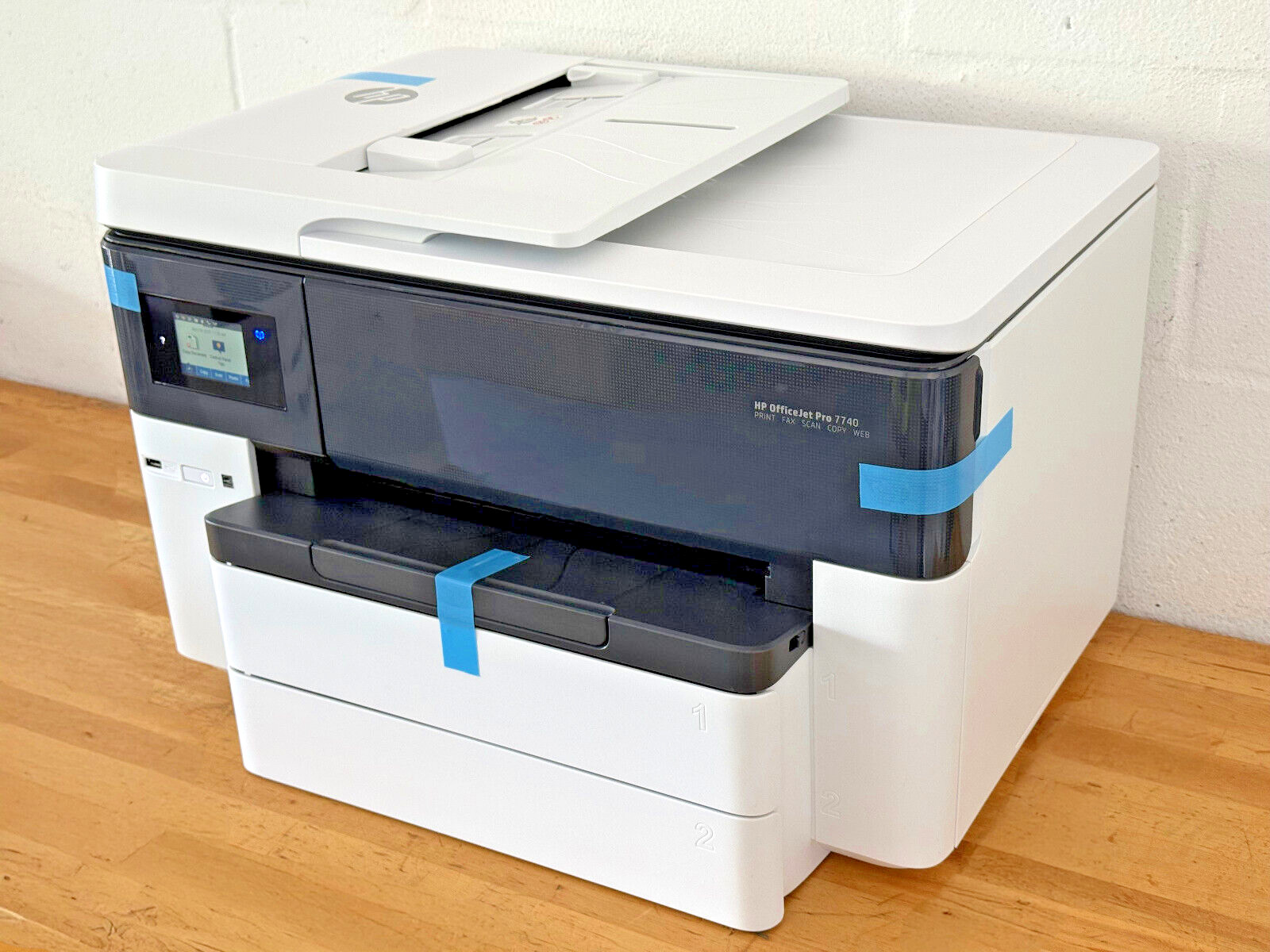

Photos from current listings. Actual item, color, and included accessories may vary.
Wide Format Printer Buying Guide
Wide-format printers and plotters cover everything from 13-inch photo all-in-ones to 44-inch roll-fed CAD machines, and the core trade-off is architecture: cartridge-based inkjet clogs on low volume, while pigment ink in high-capacity tanks or wide roll systems delivers durable outdoor and plan output. Buy a tank-based or pigment-ink model for regular printing, and only choose a cartridge plotter or sublimation bundle when you have a specific transfer or CAD workflow.
Median $383.17
Key takeaways
- Ink architecture split: EcoTank/Supertank models use refillable pigment or dye reservoirs (lowest cost per page); Stylus Pro and DesignJet use replaceable cartridges or thermal heads with higher running costs.
- Roll width classes: 13-inch (A3+), 17-inch (B/A3), 24-inch (D-size CAD), 36-inch (E-size), and 44-inch (large-format photo/proof) define the maximum sheet and roll you can feed.
- Printhead technology: piezoelectric (Epson) handles dye, pigment, and sublimation ink across the same chassis; thermal (HP) requires HP-formulated cartridges and is tuned to line/CAD output.
At a glance
- Category
- Wide-Format Printers & Plotters
- Last updated
- Nov 23, 2026
Current offers
Highlights
- Ink architecture split: EcoTank/Supertank models use refillable pigment or dye reservoirs (lowest cost per page); Stylus Pro and DesignJet use replaceable cartridges or thermal heads with higher running costs.
- Roll width classes: 13-inch (A3+), 17-inch (B/A3), 24-inch (D-size CAD), 36-inch (E-size), and 44-inch (large-format photo/proof) define the maximum sheet and roll you can feed.
- Printhead technology: piezoelectric (Epson) handles dye, pigment, and sublimation ink across the same chassis; thermal (HP) requires HP-formulated cartridges and is tuned to line/CAD output.
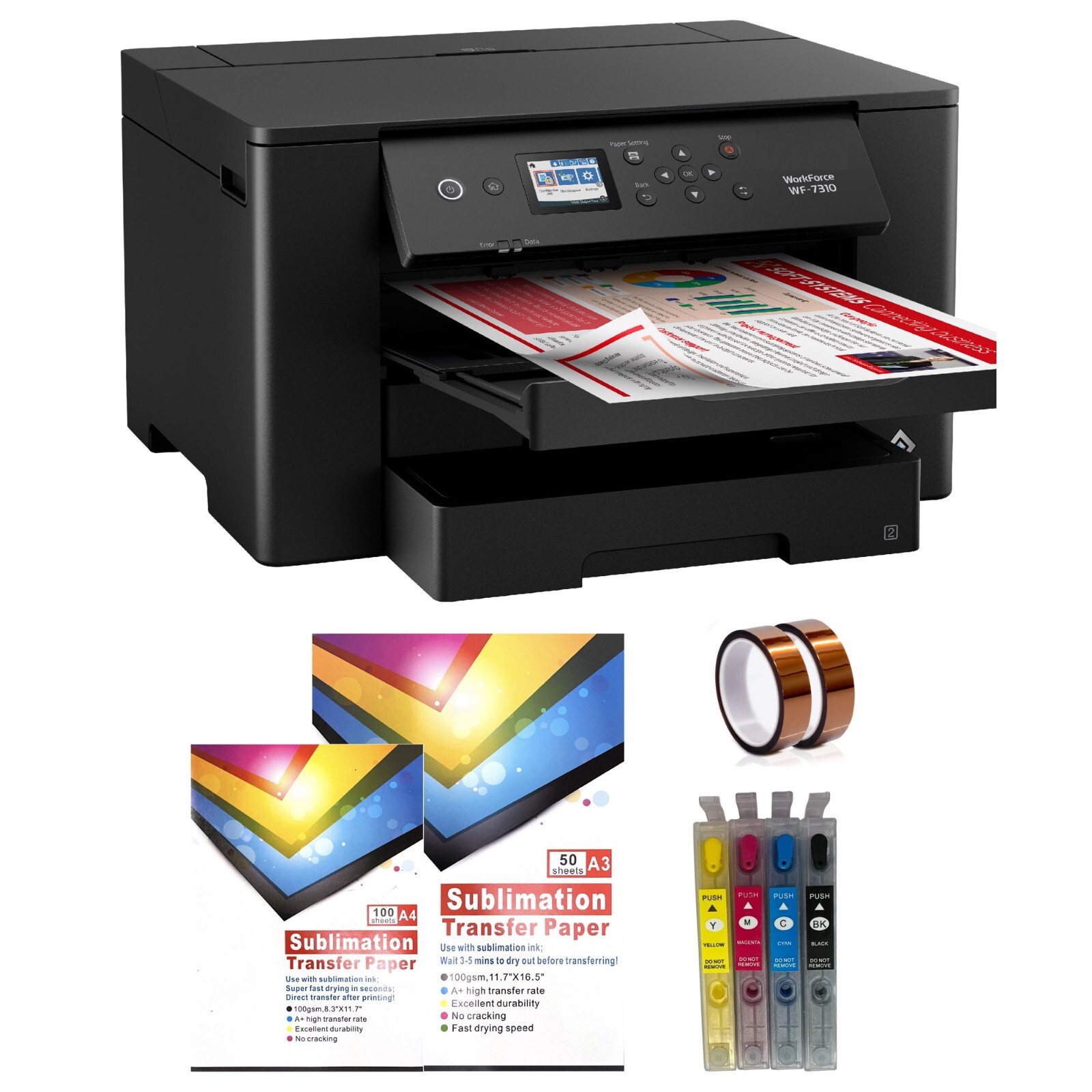
- Sublimation conversion requires a dedicated printer with no prior dye ink residue; bundles pair an A3 chassis with sublimation paper and heat-press transfer for apparel and hard goods.
Best use cases
- Best fit for home office and small studio: a 13-inch EcoTank or Supertank all-in-one (ET-8550 class) prints borderless A3+ photos and documents with refillable tanks and no cartridge churn.
- Best fit for CAD, architectural plans, and posters: a 24-inch roll plotter (DesignJet T650 class) with pigment ink and a stand gives D-size sheet output and cut-sheet feeding from a single room corner.
- Best fit for volume sublimation and transfer: an A3 sublimation bundle (WF-7310 class) with dedicated sublimation ink and heat-press compatibility, not a converted everyday printer with dye residue.
- Wrong fit: buying a 44-inch cartridged photo plotter (Stylus Pro 9880 class) for occasional prints—large cartridges sit idle, waste ink on clean cycles, and demand weekly nozzle checks.
Buying tips
- Measure the roll span before choosing: a 24-inch plotter needs about 30 inches of side clearance, while 44-inch models need roughly 55 inches and a floor stand footprint.
- Match ink type to output life: pigment ink for plans and outdoor posters, dye ink for glossy photo saturation, and dedicated sublimation ink for transfer—never mix dye into a sublimation chassis.
- Count monthly volume: below about 50 pages a month favors tank models with user-replaceable heads; above that, roll-fed cartridge plotters with serviceable heads justify their cost.
- Confirm PC connection and driver support: CAD plotters rely on USB or Ethernet with HP-GL/2 and PostScript drivers, while all-in-ones add Wi-Fi and mobile printing for mixed office use.
Specs
| Max Roll Width | 13 / 17 / 24 / 36 / 44 in |
|---|---|
| Ink System | Refillable tank vs cartridge |
| Ink Type | Dye / pigment / sublimation |
| Printhead Tech | Piezoelectric vs thermal |
Related searches
What to check before buying
- Measure door width and room depth—a 24-inch plotter with stand needs a clear path at least 28 inches wide, and 44-inch machines need 50 inches or more.
- Check voltage and plug standard for your region; imported wide-format units may ship 120V or 220V and require a matching outlet or step-up transformer.
- Verify the roll core size (2-inch or 3-inch) and spindle compatibility, plus whether the model includes a stand and output tray before ordering.
- Confirm you have a heat press and transfer workflow for sublimation bundles; printers alone cannot transfer to fabric or coated blanks.
FAQ
Data sources: eBay / Amazon listings and product attribute feeds. Updated Nov 23, 2026.
Some links on this page are affiliate links. If you buy after clicking one, we may earn a commission at no extra cost to you. This does not change which products appear here or their order. Affiliate disclosure.