
Photos from current listings. Actual item, color, and included accessories may vary.
Heavy Duty Platform Scale Buying Guide
A heavy-duty platform scale pairs a rugged steel or aluminum platform with a high-capacity load cell to weigh parcels, freight, livestock, or bulk goods beyond typical bathroom-scale limits. The core trade-off is capacity versus resolution and platform stiffness: higher weight ratings demand thicker decks and multi-point load cells, which can reduce readability at low weights. Choose a scale rated at least 20% above your heaviest routine load with a division (increment) fine enough for your lightest shipment; avoid scales that quote capacity with no stated load-cell count or deck thickness.
Median $152.99 · New listings
Key takeaways
- Platform construction: formed steel decks (2-3 mm) with four corner load cells resist off-center loading; single-point aluminum cells flex and drift under uneven freight placement.
- Capacity-to-resolution ratio: a 440 lb (200 kg) scale typically reads in 0.1 lb or 0.05 kg increments; scales above 660 lb (300 kg) often jump to 0.2 lb/0.1 kg, so verify the display division against your lightest parcel.
- Load cell type and count: four half-bridge or full-bridge strain-gauge cells in a summing junction give stable corner-to-corner readings; single-cell designs are only suitable for centered, boxed loads.
At a glance
- Category
- Digital & Platform Scales
- Last updated
- Nov 29, 2026
Current offers
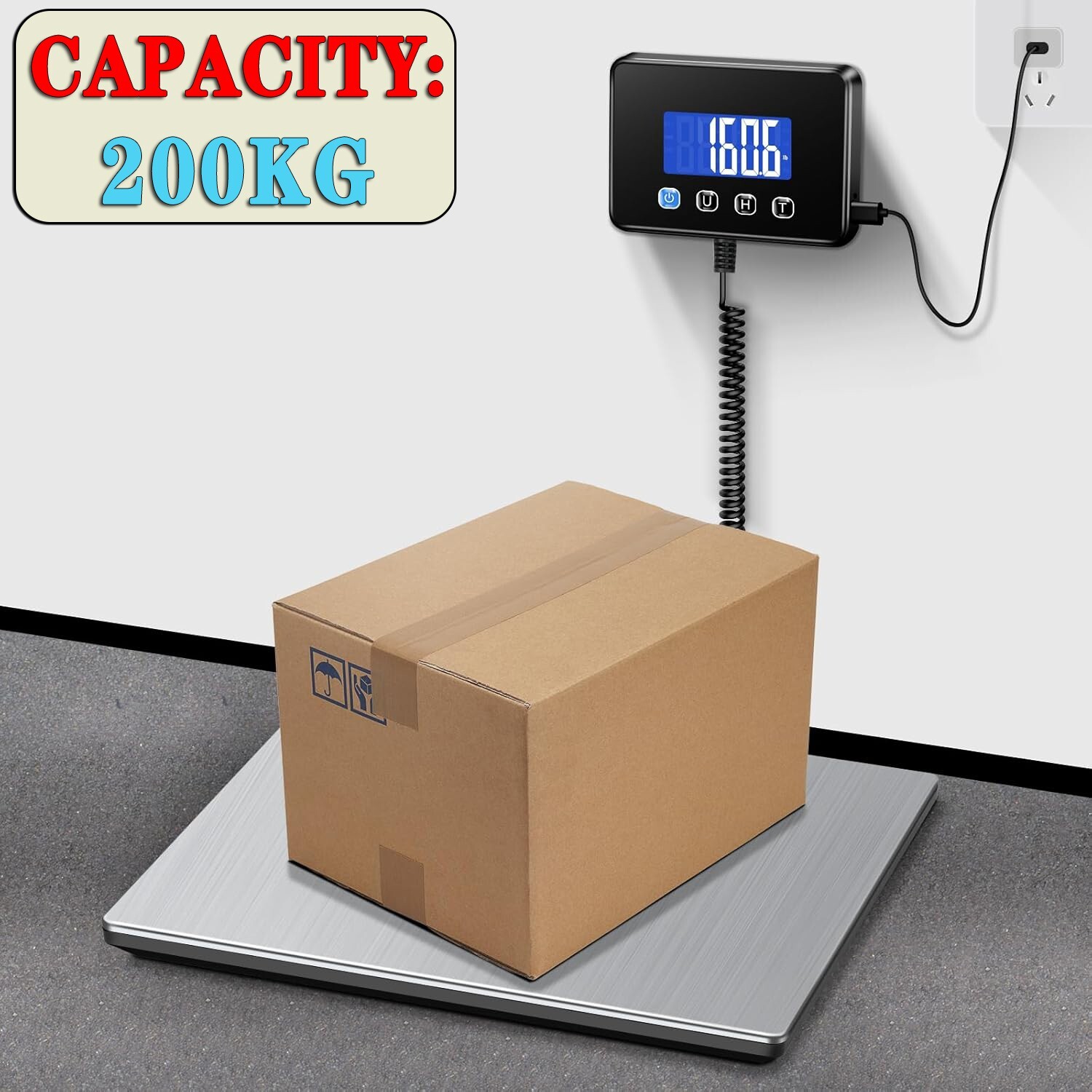 440LB Heavy Duty Digital Postal Parcel Scales Platform Postage Shipping Weighing$32.99Last checked Nov 28, 2026View on eBay
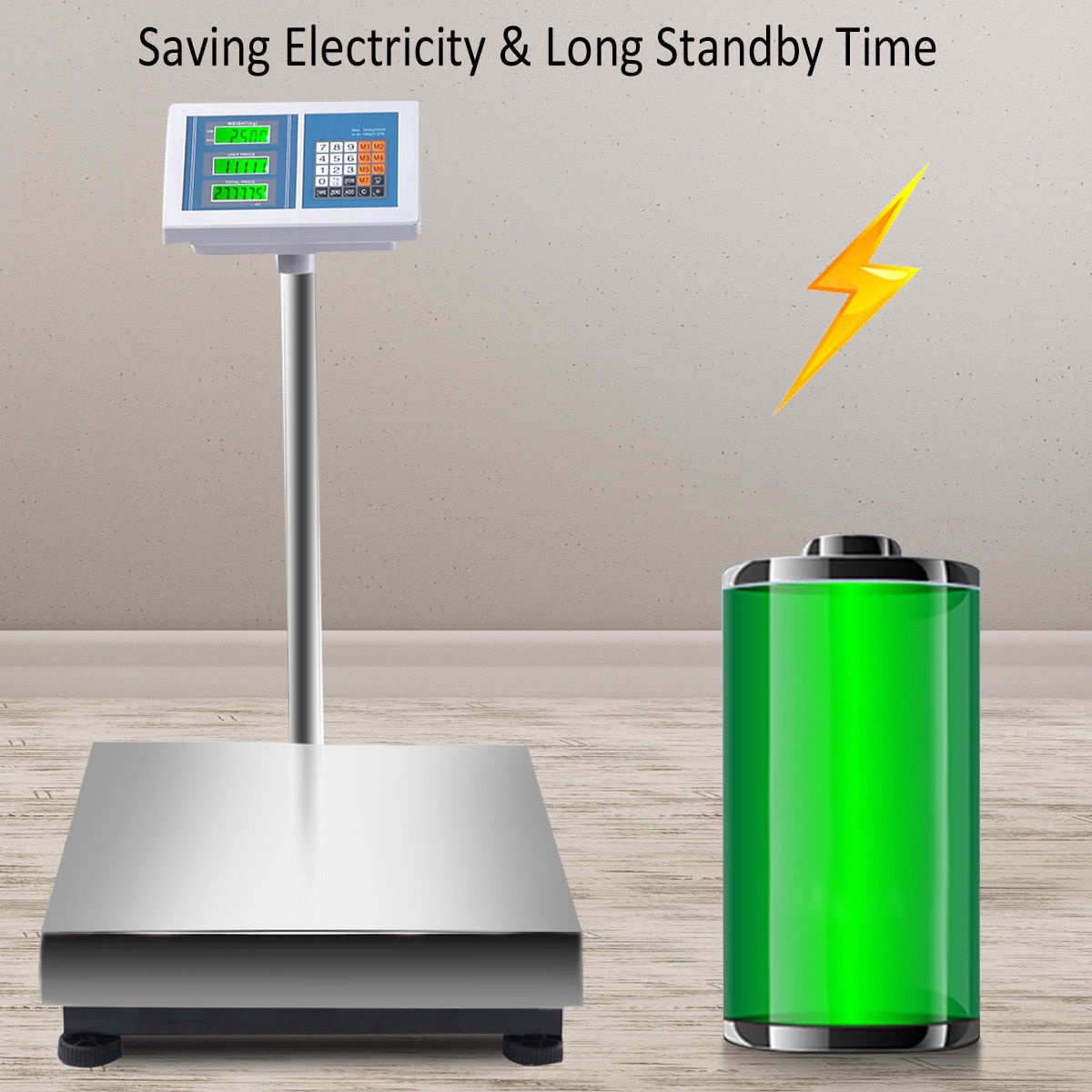 660 Lbs Weight Computing Digital Floor Platform Scale$152.99View on Mallflare
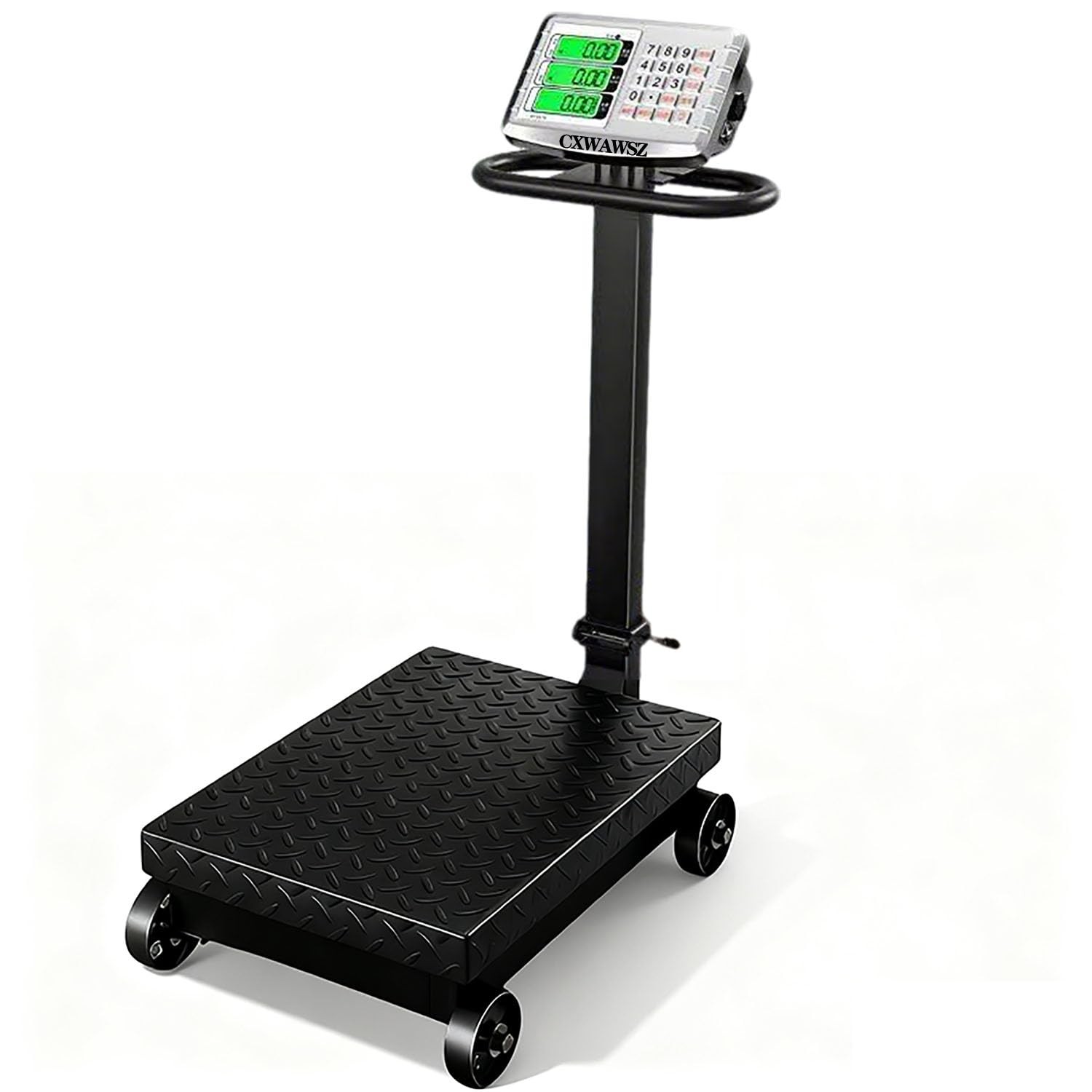 CXWAWSZ 660lb Industrial Platform Scale with Wheels Foldable, LB/KG$279.12New · Last checked Nov 24, 2026View on eBay
Highlights
- Platform construction: formed steel decks (2-3 mm) with four corner load cells resist off-center loading; single-point aluminum cells flex and drift under uneven freight placement.
- Capacity-to-resolution ratio: a 440 lb (200 kg) scale typically reads in 0.1 lb or 0.05 kg increments; scales above 660 lb (300 kg) often jump to 0.2 lb/0.1 kg, so verify the display division against your lightest parcel.
- Load cell type and count: four half-bridge or full-bridge strain-gauge cells in a summing junction give stable corner-to-corner readings; single-cell designs are only suitable for centered, boxed loads.
- Interface tiers: basic models offer lb/kg toggle and tare only; shipping-grade units add RS-232 or USB output and hold/average modes for integration with carrier software.
Best use cases
- Parcel and e-commerce shipping: pick a 440-660 lb platform with 0.1 lb resolution and tare/hold; skip high-capacity 1,000 lb decks whose 0.2-0.5 lb increments misreport small poly mailers.
- Freight, pallet, and crate weighing: choose a 1,000-2,000 lb low-profile platform with four load cells and a remote display; skip postal-style flat scales that lack ramp clearance and corner-cell stability.
- Livestock and bulk agricultural weighing: select a platform with a hold/average function and a cage or chute mount; skip consumer postal scales with no motion-hold, which fluctuate as animals shift.
- Bench or counter work with heavy parts: a 440 lb platform with a stainless or painted deck works; skip bathroom-style glass platforms that crack under concentrated point loads.
Buying tips
- Size capacity at 1.2-1.5x your heaviest routine load: a 440 lb (200 kg) scale covers most parcel work; step to 660 lb (300 kg) or 1,000 lb for freight and pallets.
- Check the display division: for parcels under 5 lb, require 0.1 lb (0.05 kg) resolution; a 0.2 lb division can misprice light shipments by a full rate tier.
- Confirm load-cell count and mounting: four corner cells with a summing board are mandatory for off-center or oversized loads; single-cell scales assume centered weight.
- Match the interface to your workflow: RS-232 or USB output for carrier software and label printers; standalone lb/kg/tare is sufficient for manual record-keeping.
Specs
| Platform Capacity | 440-2,000 lb / 200-900 kg |
|---|---|
| Display Resolution | 0.1 lb (light) to 0.5 lb (heavy) |
| Load Cell Setup | 4-corner strain gauge vs single-point |
| Data Interface | RS-232 / USB vs display-only |
Related searches
What to check before buying
- Measure your platform footprint against the counter, floor space, or pallet approach: typical decks run roughly 12x12 in for parcel scales up to 24x36 in for freight units.
- Verify power: most units use an AC adapter with optional battery; confirm the adapter input matches your mains voltage and plug type before ordering.
- Check the weighing surface height and ramp needs: low-profile freight decks (under 4 in) need a ramp for pallet jacks; parcel scales sit flat on a bench.
- Confirm the display cable length or wireless range if the indicator must sit apart from the platform, especially for livestock chutes and large pallets.
FAQ
Data sources: eBay / Amazon listings and product attribute feeds. Updated Nov 29, 2026.
Some links on this page are affiliate links. If you buy after clicking one, we may earn a commission at no extra cost to you. This does not change which products appear here or their order. Affiliate disclosure.