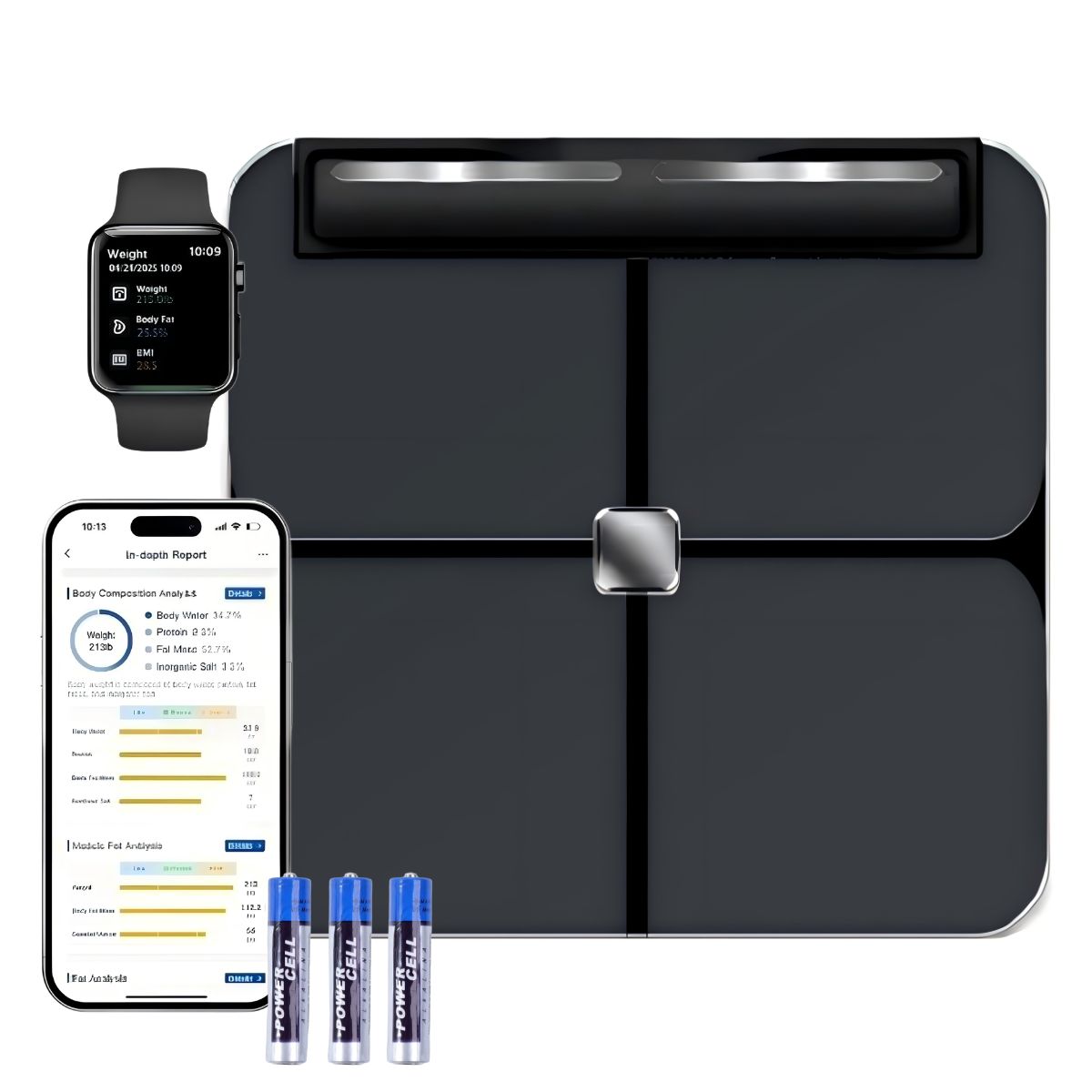

Photos from current listings. Actual item, color, and included accessories may vary.
Body Fat Composition Scale Buying Guide
Body fat composition scales use bioelectrical impedance analysis (BIA) to estimate body fat, muscle mass, and water alongside weight, with accuracy driven by electrode count and contact geometry rather than app features. The core trade-off is between basic 4-electrode foot-only models and 8-electrode (foot + hand) segmental analyzers: foot-only units are convenient but sensitive to hydration and only model the lower body, while 8-electrode units measure trunk and limb segments directly for more stable trends. The decision rule: buy an 8-electrode scale if you are tracking body recomposition over time and want limb-level data; choose a 4-electrode scale only if you need weight and a rough body-fat trend with zero extra setup.
Key takeaways
- Electrode count is the primary accuracy lever: 4 foot electrodes estimate whole-body fat from leg impedance; 8 electrodes (4 foot + 4 hand) enable segmental readings for arms, trunk, and legs.
- BIA scales pass a low alternating current through the body; fat mass resists more than lean mass, and the scale solves for body fat using height, weight, age, and sex inputs.
- Tempered glass platforms typically rate 330-400 lb (150-180 kg) capacity; thickness of 6-8 mm resists cracking better than 4-5 mm on uneven floors.
At a glance
- Category
- Digital & Platform Scales
- Last updated
- Nov 28, 2026
Current offers
Highlights
- Electrode count is the primary accuracy lever: 4 foot electrodes estimate whole-body fat from leg impedance; 8 electrodes (4 foot + 4 hand) enable segmental readings for arms, trunk, and legs.
- BIA scales pass a low alternating current through the body; fat mass resists more than lean mass, and the scale solves for body fat using height, weight, age, and sex inputs.
- Tempered glass platforms typically rate 330-400 lb (150-180 kg) capacity; thickness of 6-8 mm resists cracking better than 4-5 mm on uneven floors.
- Bluetooth 5.0 with app sync stores history and exports trends; scales without onboard memory lose readings if your phone is not nearby during the weigh-in.
Best use cases
- Best fit: 8-electrode hand-and-foot smart scale for anyone tracking body recomposition, cutting, or bulking who wants arm/trunk/leg fat breakdown and app trend history.
- Best fit: 4-electrode foot-only glass scale for a household that wants reliable weight plus a rough body-fat trend with no handle setup and multiple user profiles.
- Wrong fit: skip any body-fat scale if you have a pacemaker or implanted electronic device — BIA current is contraindicated; use a standard weight-only scale instead.
- Wrong fit: skip foot-only BIA if you are very muscular or heavily hydrated at weigh-in; leg-only impedance overestimates body fat in athletes and can swing with water intake.
Buying tips
- Choose 8 electrodes over 4 if you want segmental (limb-by-limb) data; if you only need weight and a fat trend, a 4-electrode foot-only glass scale costs less and needs no handle.
- Match platform capacity to your heaviest user: standard glass scales rate 330-400 lb; check the rated limit and platform size (roughly 11-12 in square) for foot clearance.
- Prioritize scales with onboard memory and Bluetooth 5.0 so readings store without your phone; Wi-Fi sync suits multi-user homes better than phone-tethered Bluetooth.
- Measure under consistent conditions: same time of day, fasted, before exercise, and barefoot on dry feet — BIA readings shift 2-5% with hydration and skin moisture.
Specs
| Electrode Count | 4 foot vs 8 foot+hand segmental |
|---|---|
| Platform Material | Tempered glass, 6-8 mm typical |
| Connectivity | Bluetooth 5.0 / Wi-Fi app sync |
| Weight Capacity | 330-400 lb (150-180 kg) typical |
Related searches
What to check before buying
- Measure your floor: place the scale on a hard, level surface; carpet and rugs dampen load-cell accuracy and can void readings on glass-platform models.
- Confirm user height and age are entered in the app — BIA equations require them; a scale without profile setup reports weight only.
- Check the rated weight capacity against your heaviest household user and confirm the platform width fits your stance.
- Verify the scale syncs with your phone's OS (iOS/Android) and that onboarding supports multiple user profiles if the household shares it.
FAQ
Data sources: eBay / Amazon listings and product attribute feeds. Updated Nov 28, 2026.
Some links on this page are affiliate links. If you buy after clicking one, we may earn a commission at no extra cost to you. This does not change which products appear here or their order. Affiliate disclosure.