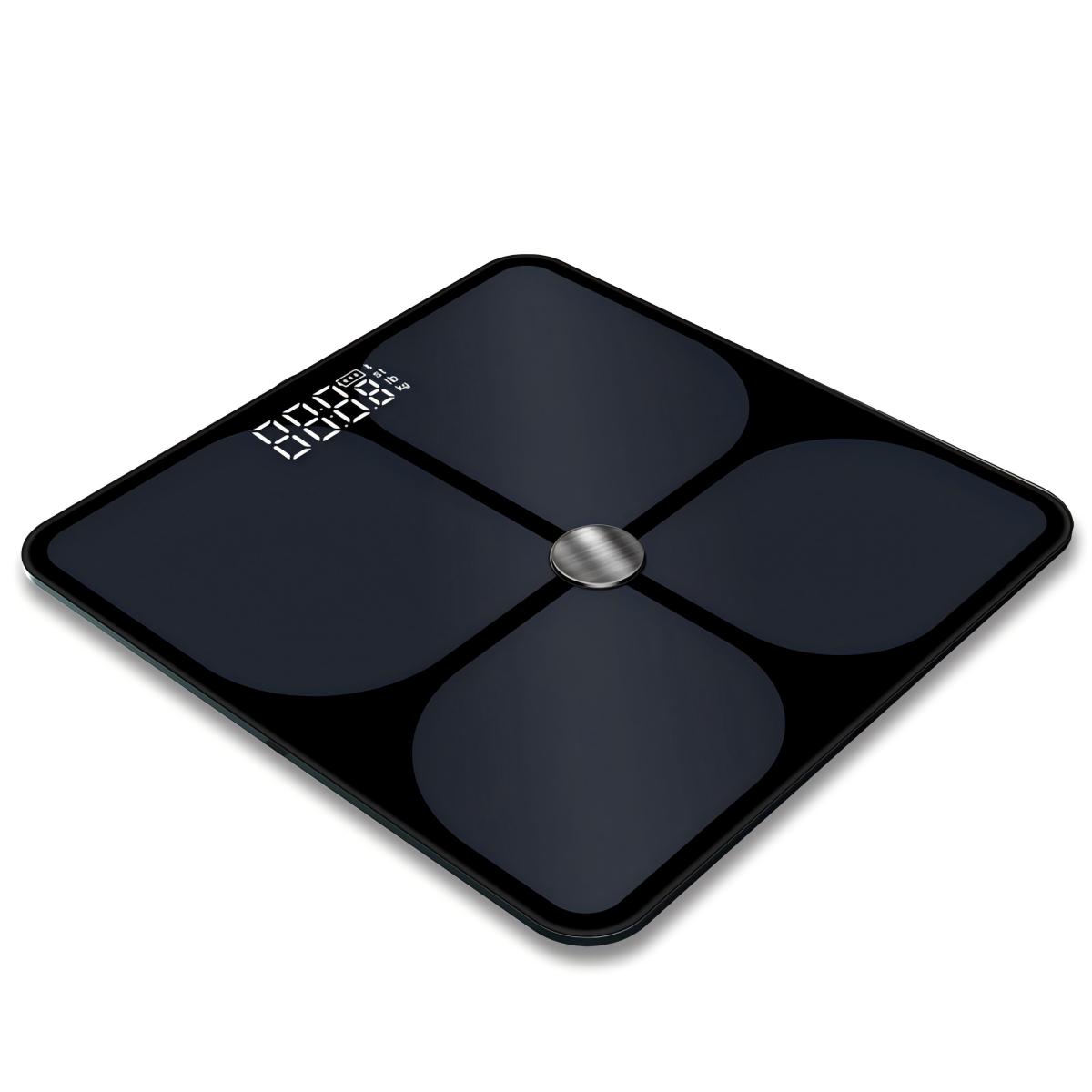

Photos from current listings. Actual item, color, and included accessories may vary.
Body Analyzer Scale Buying Guide
A body analyzer scale is a bathroom scale that sends a low current through bare feet to estimate body fat, muscle mass, and water percentage in addition to weight. The real trade-off is electrode count and signal frequency: 4-electrode foot-only scales give trend-level bioimpedance data, while 8-electrode handle-plus-foot and multi-frequency models approach clinical-grade accuracy. Buy the simplest model that matches your data needs — foot-only 4-electrode for trend tracking, handle or multi-frequency for meaningful body-fat accuracy.
Key takeaways
- Electrode count governs accuracy: 4 foot electrodes measure lower-body impedance only; 8 electrodes (feet + hand grips) capture whole-body lean and fat mass separately.
- Single-frequency scales run at ~50 kHz; multi-frequency models sweep low-to-high frequencies to distinguish intracellular from extracellular water, reducing body-fat error.
- Tempered safety glass is standard, but thickness matters: 6 mm resists flexing, while 4 mm glass can crack under heavier users or uneven flooring.
At a glance
- Category
- Digital & Platform Scales
- Last updated
- Nov 28, 2026
Current offers
Highlights
- Electrode count governs accuracy: 4 foot electrodes measure lower-body impedance only; 8 electrodes (feet + hand grips) capture whole-body lean and fat mass separately.
- Single-frequency scales run at ~50 kHz; multi-frequency models sweep low-to-high frequencies to distinguish intracellular from extracellular water, reducing body-fat error.
- Tempered safety glass is standard, but thickness matters: 6 mm resists flexing, while 4 mm glass can crack under heavier users or uneven flooring.
- Bluetooth scales store and sync weight and composition trends to an app; models without onboard memory lose readings when the phone is absent.
Best use cases
- Buy a 4-electrode foot-only Bluetooth scale if you only need weight, body-fat trend, and BMI synced to an app — skip handle models that add cost and clutter.
- Choose an 8-electrode handle-plus-foot scale if you track muscle mass or visceral fat and need arm and torso composition included in whole-body estimates.
- Pick a multi-frequency model only if you compare body-fat readings against DEXA or calipers; single-frequency 4-electrode units are sufficient for casual monitoring.
- Avoid any analyzer scale if you have a pacemaker or implanted electronic device — bioimpedance current is contraindicated, and a plain weight-only scale is the safe choice.
Buying tips
- Match platform size to foot length: most glass platforms run 280–300 mm; users with men's size 11+ feet should confirm at least 300 mm to keep all four electrodes under bare skin.
- Check the weight capacity tier — 180 kg (400 lb) is common, but heavier users need 200 kg+ units with 6 mm glass and reinforced load cells.
- Verify app support for your phone OS and whether data exports to Apple Health or Google Fit; scales with proprietary-only clouds lock your history in.
- For body-fat accuracy, measure barefoot at the same time daily, ideally morning before eating or exercise, since hydration shifts impedance readings by several percentage points.
Specs
| Electrode Count | 4 foot vs 8 foot + hand |
|---|---|
| Measurement Frequency | Single 50 kHz vs multi-frequency |
| Platform Material | Tempered glass, 4–6 mm |
| Connectivity | Bluetooth 4.0+ app sync |
Related searches
What to check before buying
- Measure your bathroom floor: the scale needs a hard, level surface; carpet or uneven tile distorts load-cell readings and body-fat estimates.
- Confirm your phone's Bluetooth version and OS — most smart scales require Bluetooth 4.0+ and a companion app for iOS or Android.
- Check platform dimensions against your stance width and foot length so all four electrode pads contact bare skin, not socks.
- Verify capacity and glass thickness against the heaviest user in the household; a 4 mm platform under a 130 kg user flexes and reads inconsistently.
FAQ
Data sources: eBay / Amazon listings and product attribute feeds. Updated Nov 28, 2026.
Some links on this page are affiliate links. If you buy after clicking one, we may earn a commission at no extra cost to you. This does not change which products appear here or their order. Affiliate disclosure.