
Photos from current listings. Actual item, color, and included accessories may vary.
Bmi Weight Scale Buying Guide
A BMI weight scale combines a precision weight sensor with a height-based body mass index calculation (and often full body composition) to screen for underweight, normal, overweight, or obese ranges. The core trade-off is sensor quality and bioimpedance electrode count versus app ecosystem and platform size — budget models rely on 4-electrode foot-only BIA with high variance, while 8-electrode and handle-based designs deliver repeatable segmental readings. The decision rule: buy a scale with at least four stainless or ITO electrodes, 0.1 kg (0.2 lb) resolution, and a tempered-glass platform rated to 180 kg (400 lb) if you want durable, clinically useful trend data rather than a single novelty number.
Median $87.49
Key takeaways
- Electrode count drives composition accuracy: 4 foot electrodes estimate whole-body fat and muscle, while 8-electrode (foot + hand or dual-foot arrays) enable segmental fat, muscle, and water readings with lower day-to-day variance.
- Sensor resolution and repeatability matter more than max capacity: 0.1 kg (0.2 lb) increments with auto-calibration and four strain-gauge load cells outperform single-sensor designs that drift after repeated weigh-ins.
- Platform construction: 4–6 mm tempered safety glass resists shattering and flex; plastic-only decks flex under load and reduce sensor repeatability over time.
At a glance
- Category
- Digital & Platform Scales
- Last updated
- Nov 28, 2026
Current offers
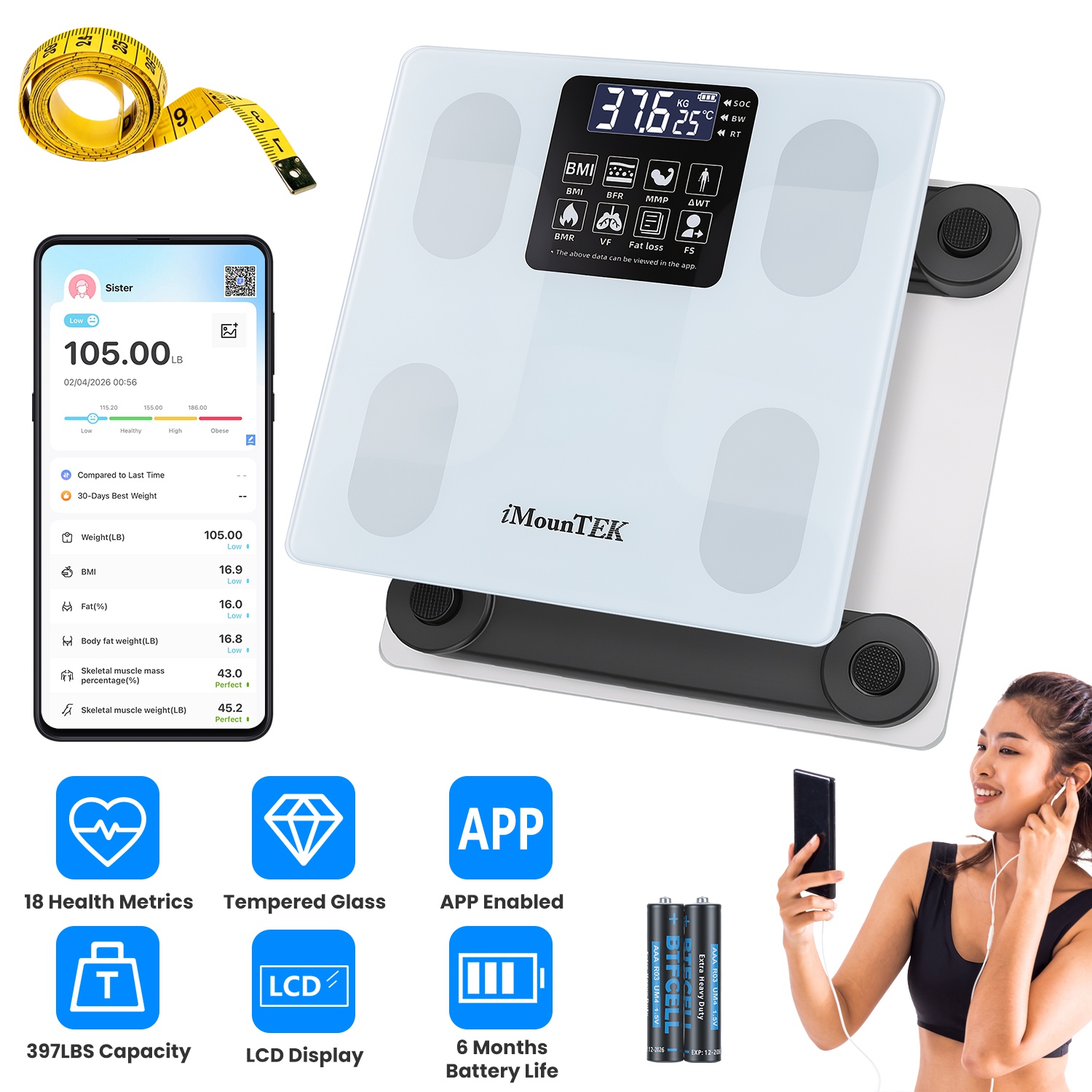 Smart Digital Scale For Body Weight High Accuracy BMI Full Composition Analysis Sync With APP 4mm Tempered Glass 397LBS Capacity LCD Display$33.99View on Mallflare
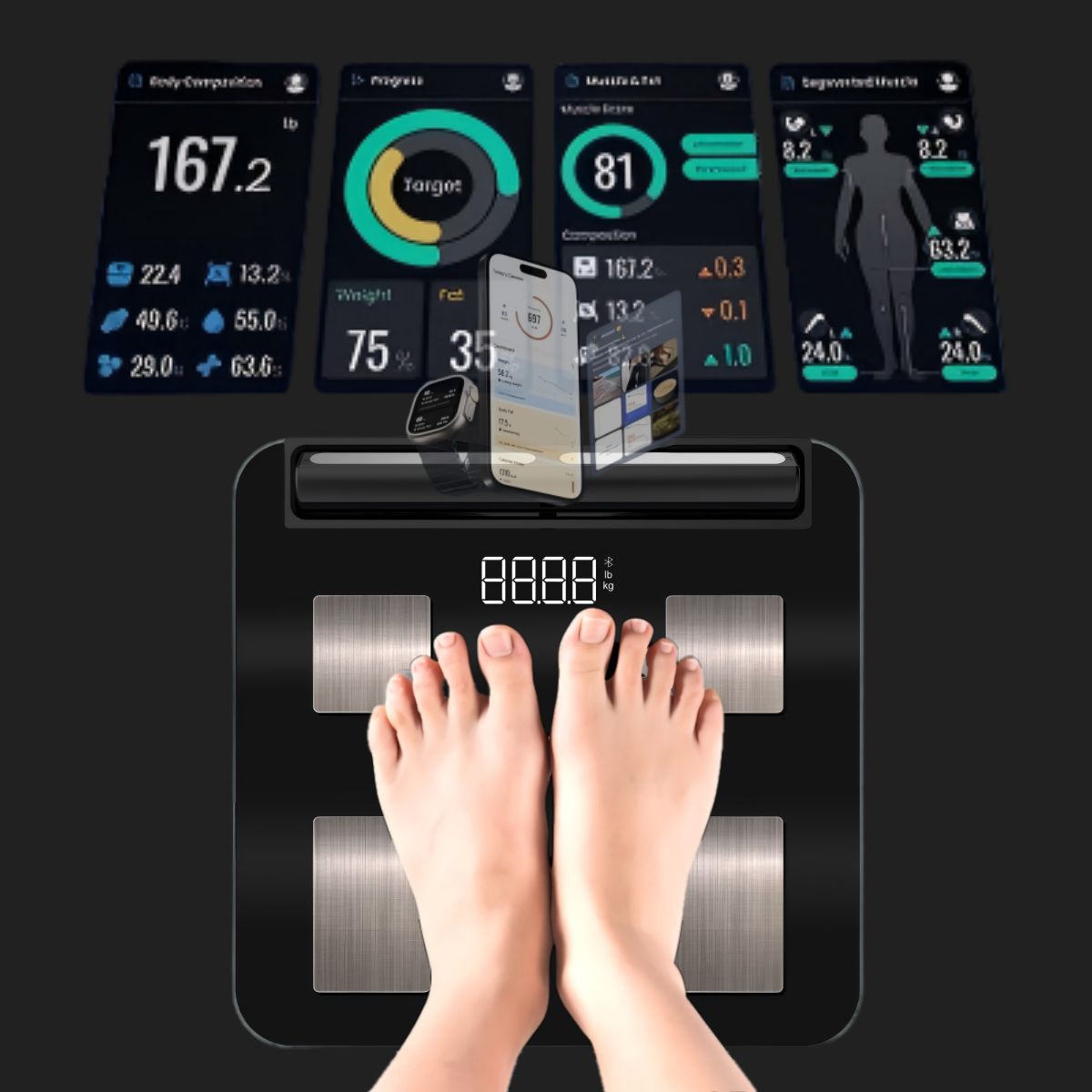 Smart Scale For Body Weight, Pod 8-Electrode Composition With BMI, Fat, Muscle Mass, Digital Bathroom Larger Platform, Bluetooth$140.99View on Mallflare
Highlights
- Electrode count drives composition accuracy: 4 foot electrodes estimate whole-body fat and muscle, while 8-electrode (foot + hand or dual-foot arrays) enable segmental fat, muscle, and water readings with lower day-to-day variance.
- Sensor resolution and repeatability matter more than max capacity: 0.1 kg (0.2 lb) increments with auto-calibration and four strain-gauge load cells outperform single-sensor designs that drift after repeated weigh-ins.
- Platform construction: 4–6 mm tempered safety glass resists shattering and flex; plastic-only decks flex under load and reduce sensor repeatability over time.
- BMI is calculated from weight and a fixed or user-entered height — the scale itself adds no diagnostic value beyond a precise weight reading, so weight sensor accuracy (typically ±0.1 kg) is the true performance floor.
Best use cases
- Best fit for general health tracking: a 4-electrode tempered-glass Bluetooth scale with 0.1 kg resolution and BMI display — sufficient for weight trends and basic fat percentage estimates.
- Best fit for fitness or body-recomposition users: an 8-electrode (or handle-based) segmental BIA scale syncing to Apple Health/Google Fit for muscle mass, visceral fat, and water tracking across training cycles.
- Wrong fit: buying a plastic-deck scale for a multi-user household or heavy daily use — sensor flex and lower-quality load cells cause inconsistency; step up to 6 mm glass and four load cells.
- Wrong fit: expecting medical-grade body fat from any foot-only BIA scale — hydration, time of day, and posture shift readings by several percentage points; use consistent morning, fasted, barefoot conditions or choose a handle-based model.
Buying tips
- Match capacity to the heaviest user plus margin: choose a scale rated at least 20% above your weight (e.g., 180 kg / 400 lb rated for users up to ~150 kg) to avoid sensor saturation and early failure.
- Prioritize 0.1 kg (0.2 lb) resolution and four load cells over app feature lists — repeatability within ±0.1 kg is what makes trend data meaningful.
- For body composition, prefer 8 electrodes (foot + hand or dual arrays) over 4 foot-only electrodes; segmental readings reduce error from foot placement and hydration swings.
- Confirm app compatibility before buying: BLE scales that export to Apple Health, Google Fit, and Fitbit Future-proof your data; closed-app scales lock history to one vendor.
Specs
| Electrode Count | 4-electrode vs 8-electrode segmental |
|---|---|
| Weight Resolution | 0.1 kg / 0.2 lb (auto-calibrated) |
| Platform Material | 4–6 mm tempered glass vs plastic |
| Capacity Rating | 150–200 kg / 330–440 lb |
Related searches
What to check before buying
- Measure your standing area and bathroom floor: most smart scales are 280–320 mm (11–12.6 in) square; larger platforms (350 mm+) suit wide stances but need clear floor space.
- Check floor type: weigh on hard, level tile or wood — carpet and rugs destabilize load cells; use a thin hard board if your scale sits on carpet.
- Verify power: most smart scales use 2–4 AAA batteries or USB-C rechargeable; confirm your household has the correct cells or a nearby outlet for rechargeable models.
- Confirm your phone OS and app: Bluetooth scales require iOS 12+/Android 8+ and the vendor app; check that the app supports your health platform (Apple Health, Google Fit) if you want data portability.
FAQ
Data sources: eBay / Amazon listings and product attribute feeds. Updated Nov 28, 2026.
Some links on this page are affiliate links. If you buy after clicking one, we may earn a commission at no extra cost to you. This does not change which products appear here or their order. Affiliate disclosure.