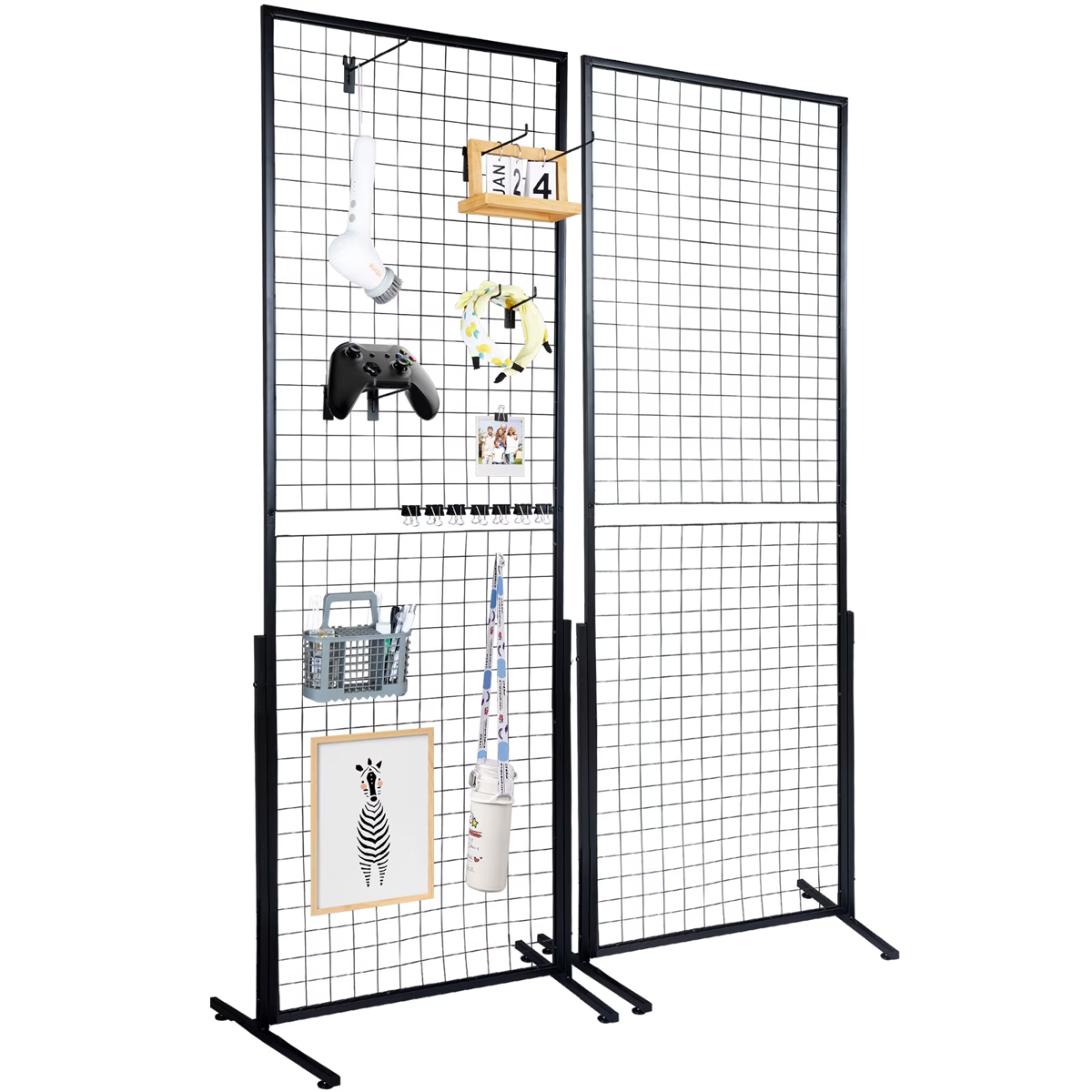

Photos from current listings. Actual item, color, and included accessories may vary.
Portable Display Rack Buying Guide
A portable display rack is a freestanding, often foldable or collapsible merchandising unit used to present retail goods, brochures, or samples in temporary or mobile settings. The core trade-off is between lightweight aluminum or plastic frames for easy transport and heavier steel frames with higher load ratings for stability and repeated use. Buy durable options by matching frame material and tube thickness to your packed weight and transport frequency, not by marketing labels alone.
Key takeaways
- Frame material determines weight and durability: aluminum alloy (1.0–1.5 mm tube wall) resists rust and weighs roughly one-third of steel, while powder-coated steel (1.2–2.0 mm) handles heavier loads but is prone to chipping at joints.
- Load capacity scales with base design: A-frame and Z-frame racks with 4-point floor contact typically support 20–40 lb per shelf or hanger bar; cantilever or folding X-frame units often cap at 10–15 lb per tier without wall anchoring.
- Foldability mechanics vary: hinge-and-lock designs (spring-loaded pins or cam locks) hold rated loads repeatedly, while friction-fit telescoping poles slip under vibration and are best for static, light-duty display only.
At a glance
- Category
- POS & Retail Supplies
- Last updated
- Nov 28, 2026
Current offers
Highlights
- Frame material determines weight and durability: aluminum alloy (1.0–1.5 mm tube wall) resists rust and weighs roughly one-third of steel, while powder-coated steel (1.2–2.0 mm) handles heavier loads but is prone to chipping at joints.
- Load capacity scales with base design: A-frame and Z-frame racks with 4-point floor contact typically support 20–40 lb per shelf or hanger bar; cantilever or folding X-frame units often cap at 10–15 lb per tier without wall anchoring.
- Foldability mechanics vary: hinge-and-lock designs (spring-loaded pins or cam locks) hold rated loads repeatedly, while friction-fit telescoping poles slip under vibration and are best for static, light-duty display only.
- Standard shelf or hanger spacing is 12–18 inches vertical, which fits most retail pegboard and slatwall accessories; confirm upright slot pitch matches your existing hooks or bins before mixing with branded fixtures.
Best use cases
- Best fit: mobile vendors and craft-fair sellers who pack a vehicle weekly should choose a folding aluminum A-frame with locking hinges and a carry bag; wrong fit: permanent store corners needing high-capacity shelving should skip portable units and use wall-anchored gondolas.
- Best fit: trade-show and convention booths needing quick setup should pick a pop-up display with tool-free cam-lock assembly under five minutes; wrong fit: outdoor markets with wind exposure should skip light plastic frames and choose weighted-base steel with ground stakes.
- Best fit: retail backroom or sample-room temporary overflow should use a 3-tier folding rack rated at least 25 lb per shelf; wrong fit: heavy hard-goods or bulk product display in customer areas should avoid thin telescoping poles and select welded steel or anchored fixtures.
Buying tips
- Match packed weight to transport: select aluminum frames for racks you carry by hand (typically under 15 lb total), and steel frames when the rack stays in one venue or moves by cart.
- Check tube wall thickness and joint type: look for at least 1.0 mm aluminum or 1.2 mm steel walls and spring-pin or cam-lock hinges; friction-fit telescoping sections loosen with repeated setup.
- Verify load rating per tier, not total: a rack rated 60 lb total across four shelves often means 15 lb per shelf; compare per-shelf or per-hanger ratings to your actual product weights.
- Confirm footprint and collapsed dimensions: measure your vehicle cargo opening and booth space before ordering; a typical 3-tier folding rack stands 60–72 inches tall with a 24–36 inch base footprint and collapses to roughly 4–6 inches thick.
Specs
| Frame Material | Aluminum alloy vs powder-coated steel |
|---|---|
| Load Rating | 10–40 lb per tier (shelf/bar) |
| Fold Mechanism | Spring-pin/cam-lock vs friction-fit |
| Collapsed Footprint | 4–6 in thick, 60–72 in tall |
Related searches
What to check before buying
- Measure your floor or booth footprint and ceiling clearance: allow 24–36 inches of base width and 60–72 inches of height for standard 3-tier units, plus 12–18 inches front clearance for loading.
- Confirm flooring and wind conditions: use weighted bases or stakes on carpet edges, ramps, or outdoor pavement; lightweight plastic frames tip in gusty conditions above roughly 15 mph.
- Check your existing accessory standard: pegboard hole spacing (1 inch or 1/4 inch) and slatwall groove pitch must match the rack's upright slots if you plan to reuse hooks and bins.
- Verify companion parts and voltage: most portable racks are unpowered, but lighted or rotating display versions need the correct plug standard (US 120 V NEMA 1-15 or 5-15) and may require a separate power strip or adapter.
FAQ
Data sources: eBay / Amazon listings and product attribute feeds. Updated Nov 28, 2026.
Some links on this page are affiliate links. If you buy after clicking one, we may earn a commission at no extra cost to you. This does not change which products appear here or their order. Affiliate disclosure.