
Photos from current listings. Actual item, color, and included accessories may vary.
Epson Label Printer Buying Guide
Epson label printers are compact thermal-transfer and inkjet devices built for durable, smudge-proof labels in office, industrial, and home organization use. The core trade-off is between Epson's thermal-transfer LW series (low ongoing media cost, crisp small text) and its inkjet LabelWorks models (full-color, wider media flexibility but higher per-label cost). Choose thermal-transfer if you print high volumes of black-and-white asset or barcode labels; choose inkjet only if color or photo-quality labels are non-negotiable.
Median $345.00 · New listings
Key takeaways
- Epson LW-PX series uses thermal transfer with 6–24 mm tape widths, producing laminated labels resistant to water, oil, and UV; no ink or toner is ever required.
- Epson LabelWorks inkjet models (e.g., LW-Z900) print full-color on up to 36 mm wide media but demand proprietary ink cartridges with higher cost per label.
- Thermal-transfer LW printers achieve 180–360 dpi resolution, which is critical for small-font legibility on cable wraps and PCB component labels.
At a glance
- Category
- Label Makers & Supplies
- Last updated
- Nov 27, 2026
Current offers
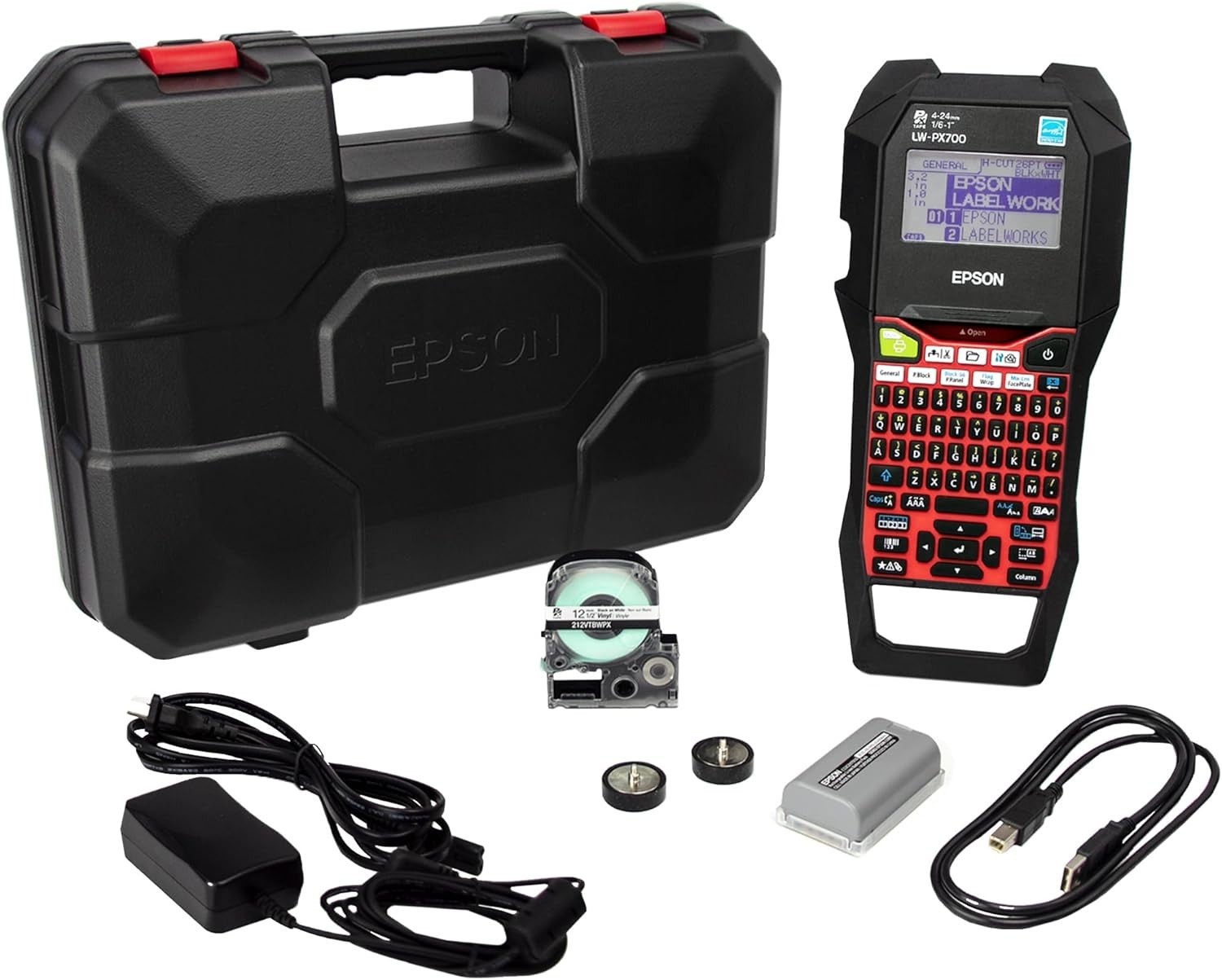 Epson LW-PX700PCD Industrial Label Maker$239.98New · Last checked Nov 21, 2026View on eBay
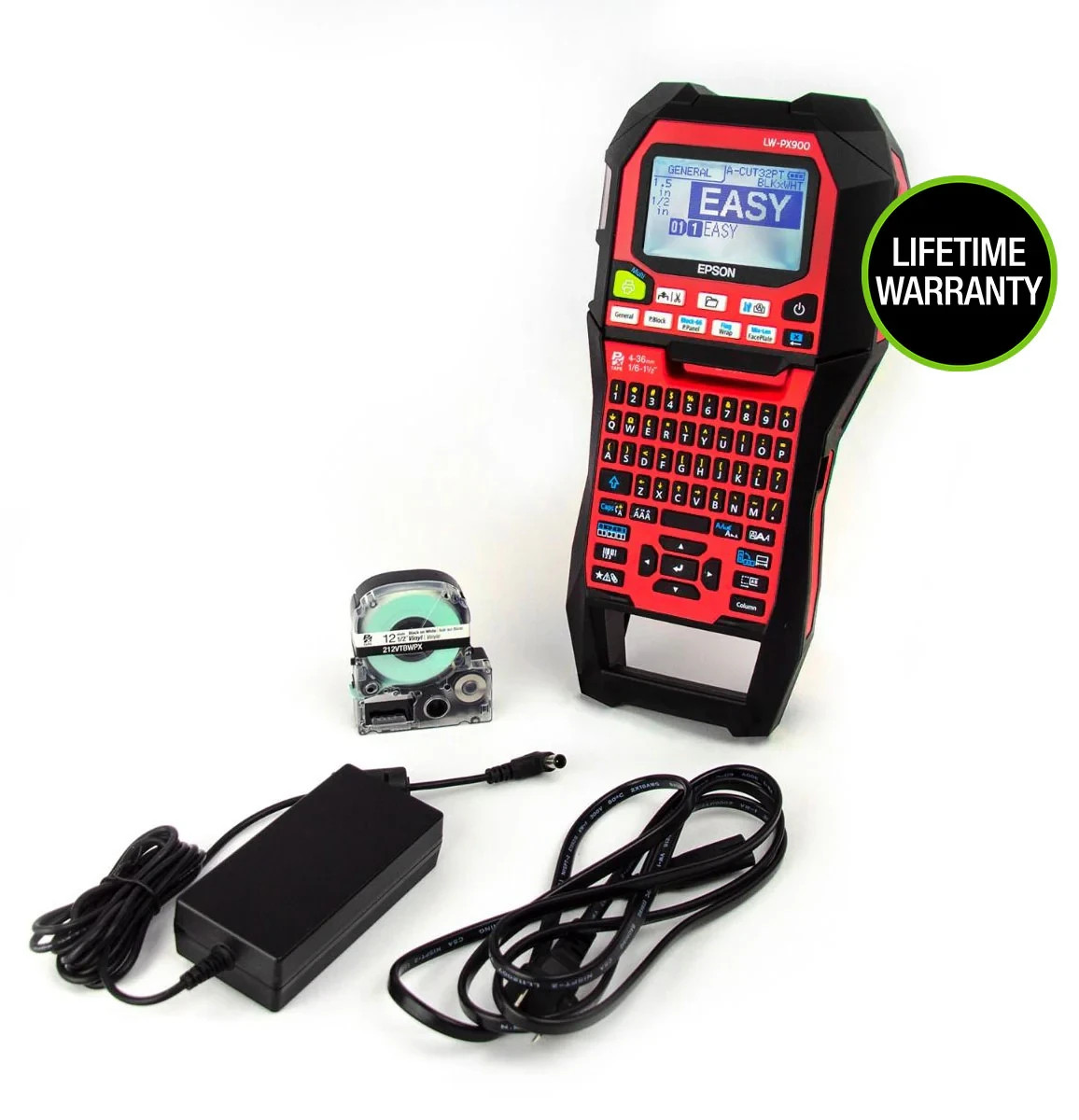 Epson LABELWORKS LW-PX900 Industrial Label Maker (LIFETIME WARRANTY)$345.00New · Last checked Nov 21, 2026View on eBay
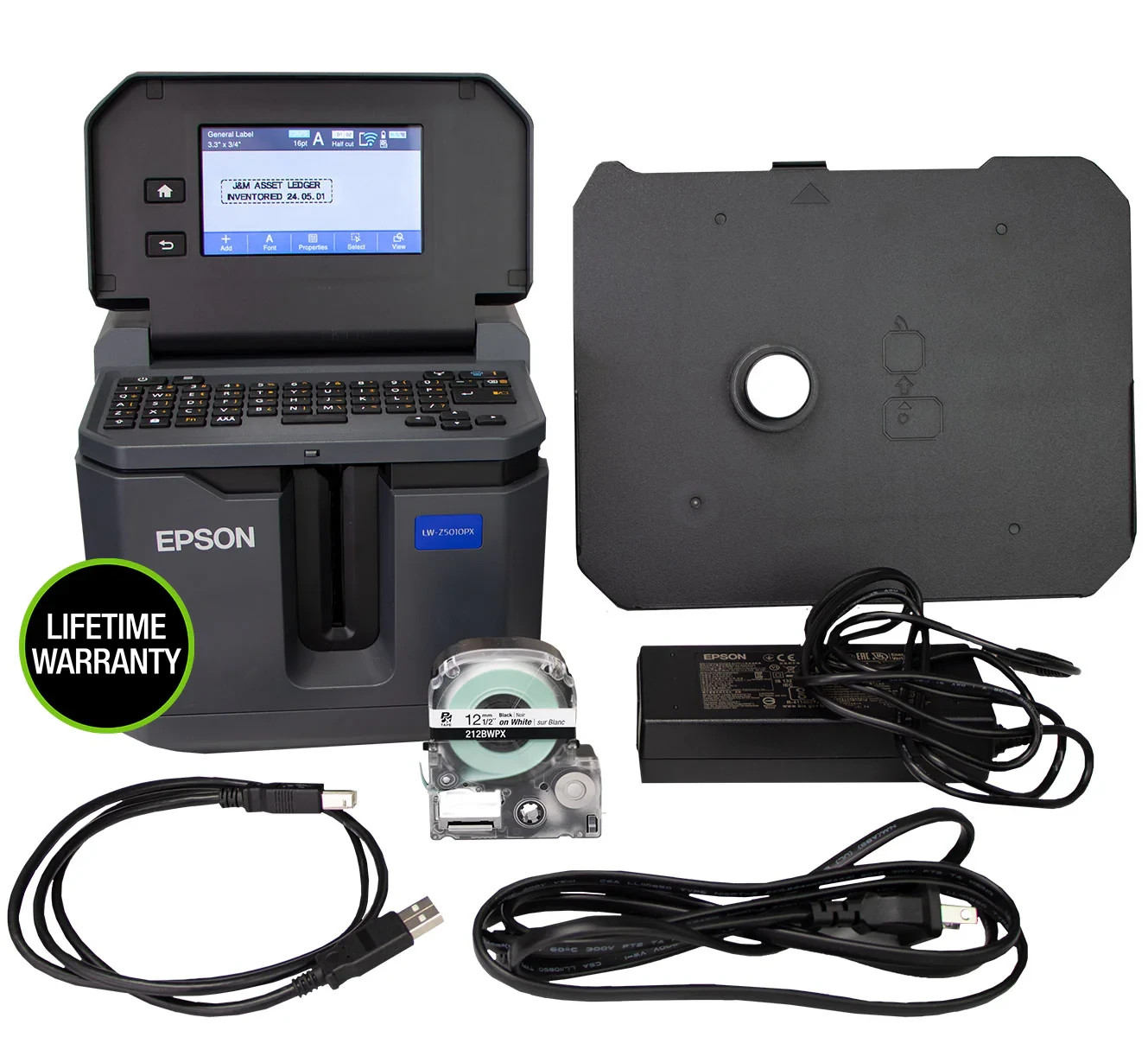 Epson LABELWORKS LW-Z5010PX Industrial Label Maker (LIFETIME WARRANTY)$825.00New · Last checked Nov 21, 2026View on eBay
Highlights
- Epson LW-PX series uses thermal transfer with 6–24 mm tape widths, producing laminated labels resistant to water, oil, and UV; no ink or toner is ever required.
- Epson LabelWorks inkjet models (e.g., LW-Z900) print full-color on up to 36 mm wide media but demand proprietary ink cartridges with higher cost per label.
- Thermal-transfer LW printers achieve 180–360 dpi resolution, which is critical for small-font legibility on cable wraps and PCB component labels.
- Epson's automatic cutter and half-cut function on LW-PX models let you peel-and-stick individual labels from a continuous strip without scissors.
Best use cases
- Best fit: high-volume black-and-white asset tags and cable labels in an office or server room — pick an LW-PX thermal-transfer model with 24 mm tape capacity and auto-cutter; skip inkjet entirely.
- Best fit: home pantry, storage bin, and school-supply labeling where occasional use and low upfront cost matter — pick an entry LW thermal model with 12 mm tape; skip wide-format or color models.
- Best fit: retail signage and color-coded safety labels requiring logos or color blocks — choose an Epson LabelWorks inkjet model that accepts 36 mm media; skip thermal-transfer because it cannot print color.
- Wrong fit: outdoor industrial labeling below freezing or in direct chemical washdown — standard Epson thermal tape is not rated for sub-zero adhesion or harsh solvent exposure; select specialty graded tape or a different printer class.
Buying tips
- Match tape width to your smallest label need: 6 mm for wire and cable flags, 12 mm for general file-folder tabs, 18–24 mm for asset tags and shelf labels.
- Thermal-transfer Epson printers cut cost per label by 60–80% versus inkjet on black-only labels because they use no ink cartridges — only the tape cassette.
- Confirm the printer accepts Epson genuine or third-party compatible cassettes; some LW models use a chip that rejects non-Epson cassettes, so verify cassette compatibility before buying tape in bulk.
- For barcode or QR labels, pick a model with at least 300 dpi resolution; 180 dpi models blur small 2D codes and fail scanner verification.
Specs
| Print Technology | Thermal transfer vs inkjet |
|---|---|
| Max Tape Width | 6–24 mm thermal / up to 36 mm inkjet |
| Max Resolution | 180–360 dpi (thermal) |
| Connectivity | USB / Wi-Fi / Bluetooth (model-dependent) |
Related searches
What to check before buying
- Measure your label placement area first — cable flags need 6–9 mm tape, while shipping or bin labels need 18–24 mm; buy a printer whose maximum tape width meets your largest label.
- Check your computer connection standard: most Epson LW models offer USB only, while LabelWorks models add Wi-Fi or Bluetooth — confirm your device has the matching port or wireless band.
- Verify power input: Epson label printers ship with region-specific AC adapters (100–240 V); confirm the plug type and voltage match your country before ordering.
- Budget for the consumable cassette, not just the printer — thermal-transfer tape cassettes are the recurring cost, and specialty colors or extra-strength adhesives cost more than standard black-on-white.
FAQ
Data sources: eBay / Amazon listings and product attribute feeds. Updated Nov 27, 2026.
Some links on this page are affiliate links. If you buy after clicking one, we may earn a commission at no extra cost to you. This does not change which products appear here or their order. Affiliate disclosure.