
Photos from current listings. Actual item, color, and included accessories may vary.
Epson Label Maker Buying Guide
Epson label makers are handheld and desktop thermal printers that use proprietary cartridges to produce adhesive labels for cables, shelves, files, and equipment tags. The core trade-off is between Epson's dedicated LC/LK tape ecosystem and cheaper generic thermal solutions: genuine Epson cartridges deliver consistent print density and adhesive performance, while third-party tapes often fail at high temperatures or on textured surfaces. Choose an Epson model only if you need its specific tape widths, ruggedized industrial build, or PC-connectivity software; otherwise, a generic thermal label maker with standard tape widths will cover basic home labeling at lower consumable cost.
Median $345.00 · New listings
Key takeaways
- Epson LabelWorks models split into handheld (LW-PX, LW-K) and PC-connected (LW-Z, LW-900P) tiers, with the latter adding USB/Ethernet and barcode software for network or database-driven label batches.
- Cartridge widths for Epson LabelWorks are standardized in 4mm, 6mm, 9mm, 12mm, 18mm, and 24mm; the 6mm and 9mm sizes are the most common for cable and faceplate labeling, while 18mm and 24mm suit shelf and equipment tags.
- Industrial LW-PX series uses a reinforced housing and a full-cut or half-cut mechanism for repeated heavy-duty cycles; entry LW-K models use ABS plastic bodies suited to light office or home use.
At a glance
- Category
- Label Makers & Supplies
- Last updated
- Nov 27, 2026
Current offers
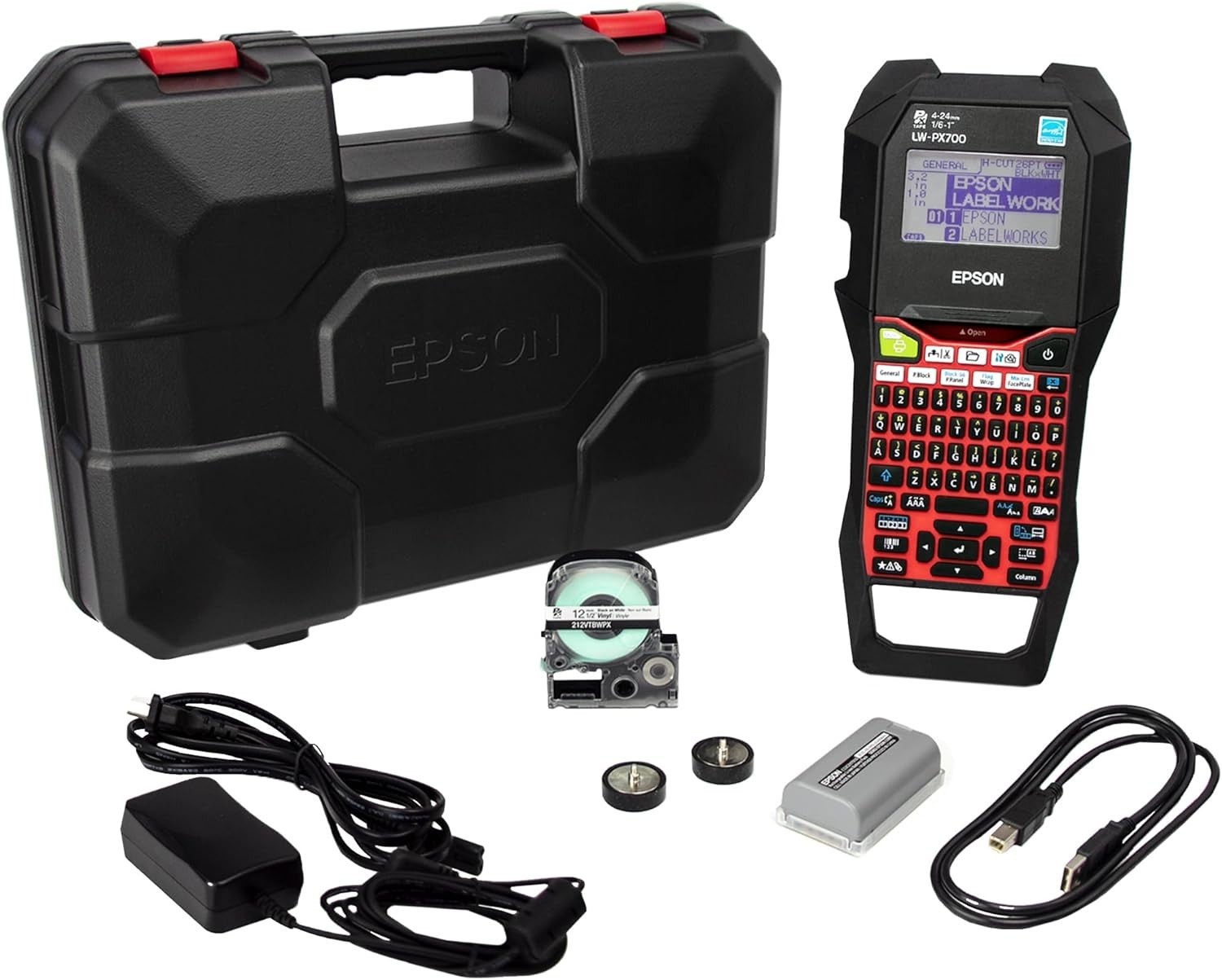 Epson LW-PX700PCD Industrial Label Maker$239.98New · Last checked Nov 21, 2026View on eBay
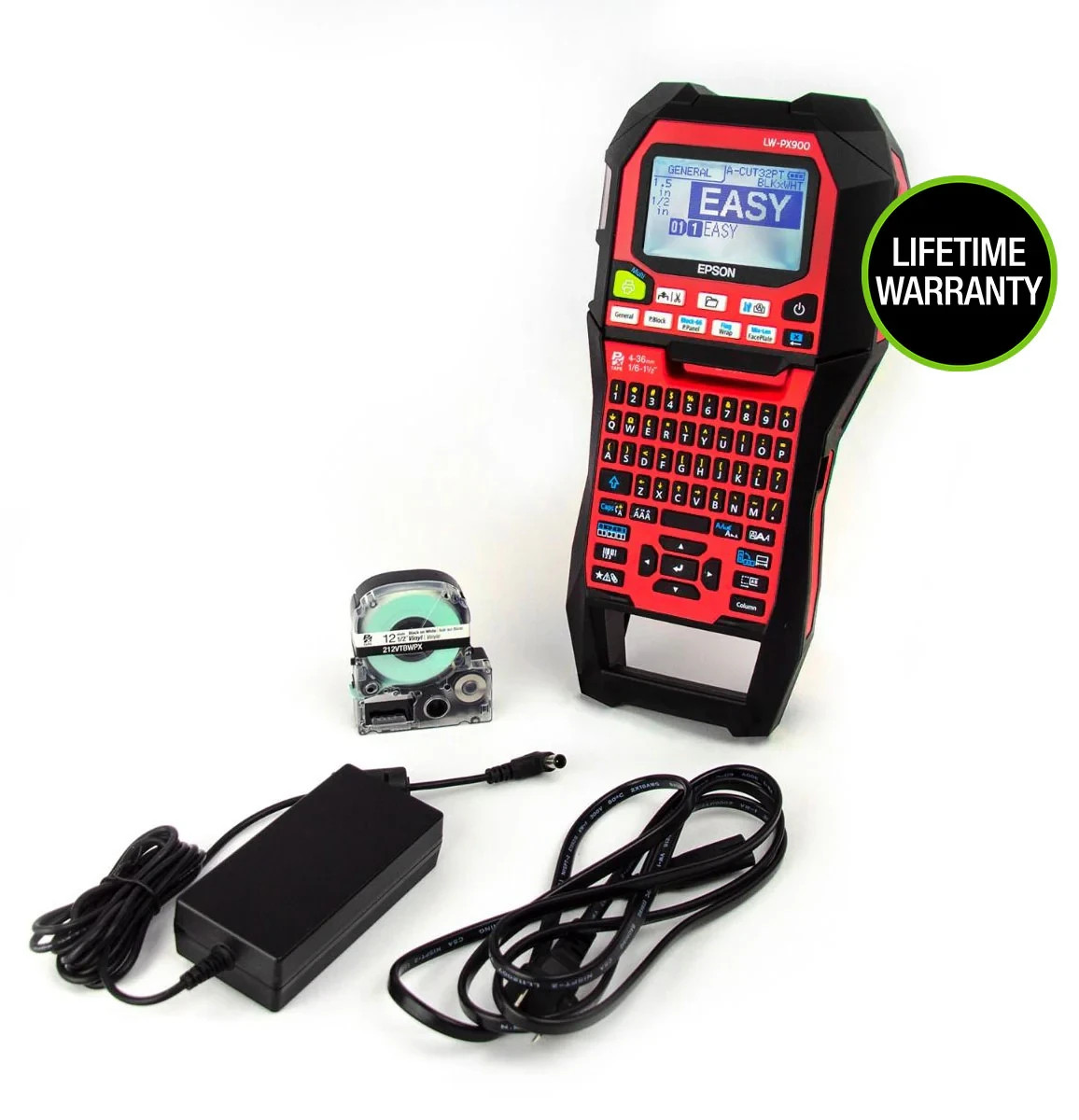 Epson LABELWORKS LW-PX900 Industrial Label Maker (LIFETIME WARRANTY)$345.00New · Last checked Nov 21, 2026View on eBay
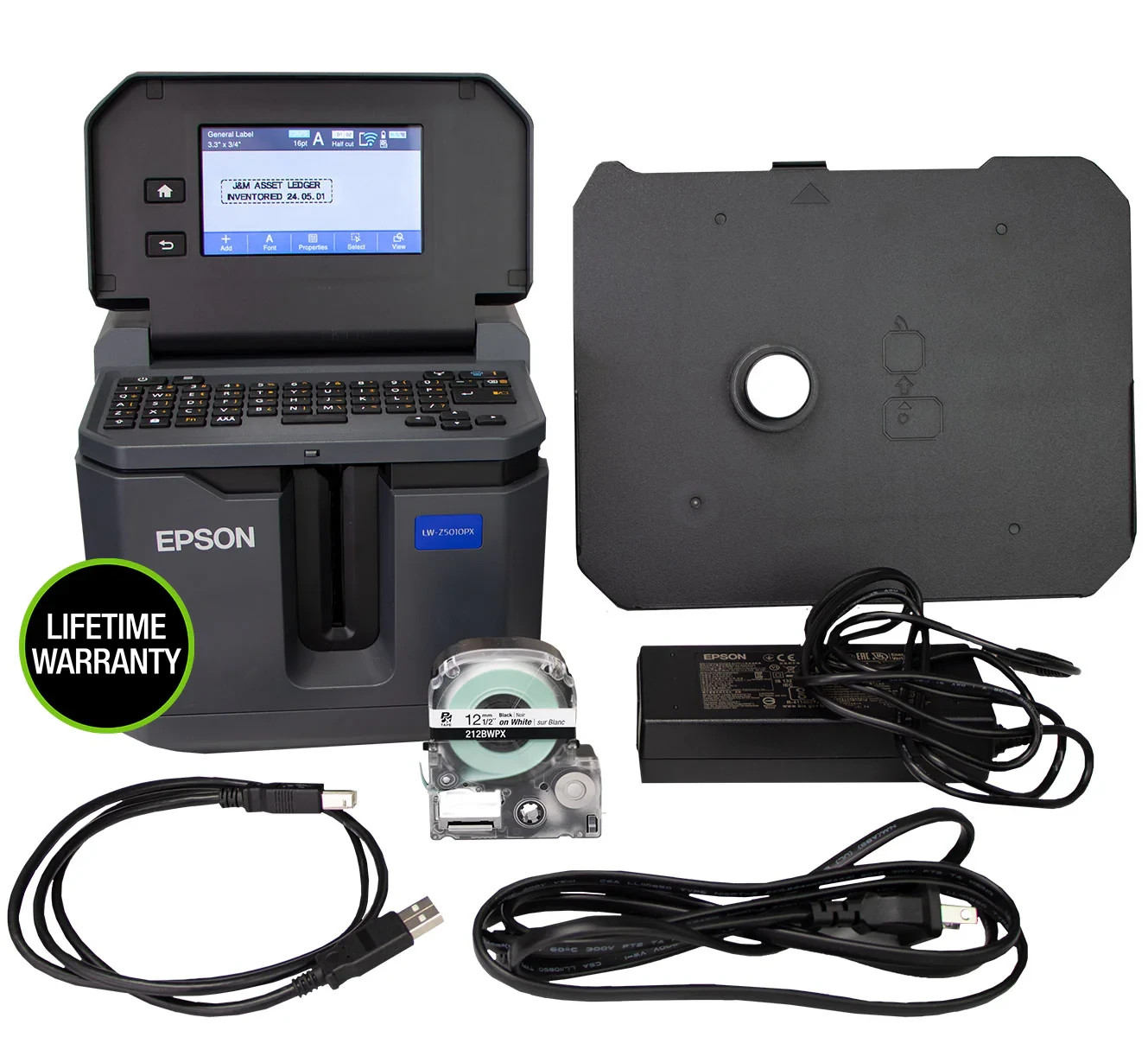 Epson LABELWORKS LW-Z5010PX Industrial Label Maker (LIFETIME WARRANTY)$825.00New · Last checked Nov 21, 2026View on eBay
Highlights
- Epson LabelWorks models split into handheld (LW-PX, LW-K) and PC-connected (LW-Z, LW-900P) tiers, with the latter adding USB/Ethernet and barcode software for network or database-driven label batches.
- Cartridge widths for Epson LabelWorks are standardized in 4mm, 6mm, 9mm, 12mm, 18mm, and 24mm; the 6mm and 9mm sizes are the most common for cable and faceplate labeling, while 18mm and 24mm suit shelf and equipment tags.
- Industrial LW-PX series uses a reinforced housing and a full-cut or half-cut mechanism for repeated heavy-duty cycles; entry LW-K models use ABS plastic bodies suited to light office or home use.
- Epson's genuine LC tape uses a laminated construction with a protective overlaminate on some SKUs, improving abrasion and chemical resistance versus unlaminated generic tapes; check the tape code suffix (e.g., LC-4WBN) for lamination and adhesive type.
Best use cases
- Best fit: electrical and network installers labeling cables and patch panels should pick a handheld LW-PX model with 6mm/9mm tape and half-cut function for wrap-around labels; skip desktop PC-only models that lack battery power for field work.
- Best fit: office and facility managers producing shelf, asset, and file labels should choose a PC-connected LW-Z or LW-900P with 12mm–24mm tape and barcode software for batch printing; skip ruggedized handhelds with limited keyboard and no database import.
- Best fit: home users organizing storage bins, folders, and craft projects should pick an entry LW-K handheld with 9mm–12mm tape; skip industrial models with costly reinforced cartridges and heavy bodies that offer no advantage at low volume.
- Wrong fit: buyers needing very narrow 3mm or specialty shrink-tube labels should skip Epson LabelWorks entirely and look at dedicated cable-label systems; Epson's smallest standard cartridge is 4mm and does not cover all shrink-tube formats.
Buying tips
- Match tape width to the label surface: 4mm–6mm for wire and cable flags, 9mm–12mm for faceplates and file tabs, 18mm–24mm for shelves and equipment panels; buying a maker that accepts multiple widths avoids a second device later.
- Check the model's tape family before purchase: Epson LC series cartridges are model-specific in some tiers, so a cheap printer with expensive or hard-to-find cartridges raises long-term cost more than the hardware price.
- For field or industrial use, require a rechargeable battery, a hard case, and a half-cut mechanism; these three features separate true job-site label makers from desk-bound units and directly affect label longevity and workflow speed.
- Prefer PC-connectivity (USB or Ethernet) if you will print more than a few dozen labels per session; keyboard-only handhelds are slow for batch asset tags and cannot import CSV or database records.
Specs
| Tape Width Range | 4mm–24mm (model-dependent) |
|---|---|
| Connectivity | Handheld / USB / Ethernet |
| Power Source | Battery / AC adapter / both |
| Cut Mechanism | Full-cut / half-cut (LW-PX) |
Related searches
What to check before buying
- Measure the maximum label width your application needs (cable diameter, faceplate height, shelf edge) and confirm the printer's cartridge range includes it; do not assume all LabelWorks models accept the full 4mm–24mm range.
- Confirm the tape adhesive matches your surface: standard permanent adhesive for paper and plastic, strong adhesive for textured or curved surfaces, and removable adhesive for temporary labeling.
- Verify power and connectivity for your environment: battery operation for field work, AC adapter for desktop use, and USB/Ethernet if you need PC or network printing.
- Check consumable availability for your region: Epson LC/LK cartridges vary by market, and a model whose tapes are not locally stocked becomes unusable despite good hardware.
FAQ
Data sources: eBay / Amazon listings and product attribute feeds. Updated Nov 27, 2026.
Some links on this page are affiliate links. If you buy after clicking one, we may earn a commission at no extra cost to you. This does not change which products appear here or their order. Affiliate disclosure.