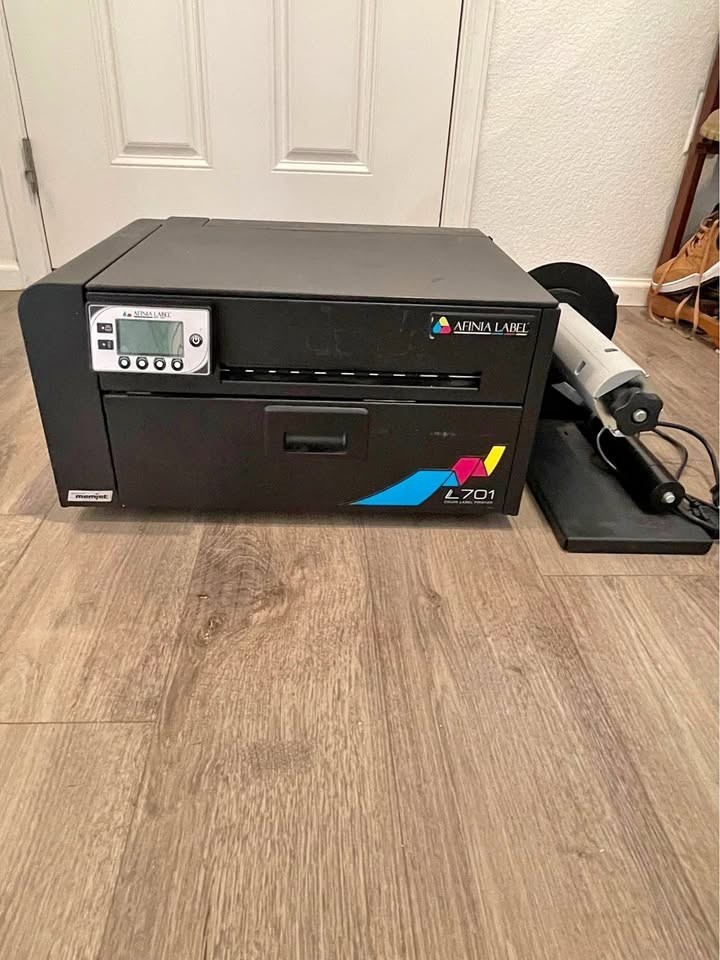

Photos from current listings. Actual item, color, and included accessories may vary.
Color Label Maker Buying Guide
A color label maker is a compact printer that produces multi-color labels via thermal transfer ribbons, inkjet cartridges, or multi-color thermal paper—choosing the right one hinges on whether you need true spot-color durability or just decorative pre-colored stock. The core trade-off is cost-per-label versus fade/water resistance: dye-based ribbon and inkjet systems yield vivid full-color output but need lamination for outdoor use, while thermal transfer with resin ribbons delivers smudge-proof, UV-stable color at higher ribbon cost. The decision rule is simple: buy thermal transfer if labels face heat, moisture, or sunlight for more than a season; buy inkjet or pre-colored thermal stock only for indoor, short-life labeling.
Key takeaways
- Thermal transfer units use wax, wax-resin, or full-resin ribbons—resin is the only grade that survives outdoor UV, chemical wipe-down, and freezer condensation without fading.
- Inkless thermal printers (e.g., NIIMBOT M3) require specialty color thermal paper; they cannot print arbitrary full-color graphics and are locked to the media vendor's palette.
- Bluetooth mini label makers (X1, N1 class) typically cap at 12–15 mm tape width and 203 dpi—fine for cable flags and jar lids, too coarse for barcode-compliant logistics labels.
At a glance
- Category
- Label Makers & Supplies
- Last updated
- Nov 29, 2026
Current offers
Highlights
- Thermal transfer units use wax, wax-resin, or full-resin ribbons—resin is the only grade that survives outdoor UV, chemical wipe-down, and freezer condensation without fading.
- Inkless thermal printers (e.g., NIIMBOT M3) require specialty color thermal paper; they cannot print arbitrary full-color graphics and are locked to the media vendor's palette.
- Bluetooth mini label makers (X1, N1 class) typically cap at 12–15 mm tape width and 203 dpi—fine for cable flags and jar lids, too coarse for barcode-compliant logistics labels.
- Ribbon-based color models accept standard 110 mm OD spools; check ribbon width matches tape width (e.g., 50 mm ribbon for 50 mm tape) or color will bleed onto the platen.
Best use cases
- Pick a thermal transfer model with resin ribbon if you label outdoor equipment, freezer bins, or chemical containers—wax-only or inkjet output will smear or fade within weeks.
- Choose a Bluetooth mini color label maker (X1/N1 class) for cable tagging, pantry jars, and school supplies where 12–15 mm width and 203 dpi are sufficient.
- Skip inkless thermal color printers if you need logo-accurate brand colors or barcodes—they use fixed pre-dyed paper and cannot reproduce arbitrary Pantone or hex values.
- Buy a desktop inkjet color label maker only for indoor office filing and seasonal decor; add clear laminate overlay if labels will be handled daily.
Buying tips
- Match tape width to your smallest label dimension: 12 mm for cable flags, 24–50 mm for shipping and bin labels; wider tape wastes ribbon on narrow jobs.
- For outdoor or freezer use, specify full-resin ribbon (not wax or wax-resin) and a synthetic polyester or polypropylene label stock—paper stock delaminates in moisture.
- Confirm the printer accepts third-party ribbon spools; vendor-locked ribbon systems can double consumable cost over the printer's life.
- Check resolution before buying: 203 dpi suits text and icons, but 300 dpi is required for small QR codes, dense barcodes, and fine color gradients.
Specs
| Print Technology | Thermal transfer / Inkless thermal / Inkjet |
|---|---|
| Color Method | Resin ribbon / Pre-dyed paper / CMYK ink |
| Max Tape Width | 12 mm mini / 24–50 mm desktop |
| Print Resolution | 203 dpi text / 300 dpi barcode |
Related searches
What to check before buying
- Measure your label surface: cable diameter, jar lid width, or shelf-edge height determines whether you need 12 mm, 24 mm, or 50 mm tape capacity.
- Verify the printer's ribbon and tape width compatibility—mismatched widths cause color bleed and platen contamination.
- Confirm Bluetooth version and app support on your phone OS (iOS/Android); some mini models require a specific app with no desktop driver.
- Check power: desktop thermal transfer units need a wall outlet, while Bluetooth minis run on internal Li-ion batteries with USB-C charging.
FAQ
Data sources: eBay / Amazon listings and product attribute feeds. Updated Nov 29, 2026.
Some links on this page are affiliate links. If you buy after clicking one, we may earn a commission at no extra cost to you. This does not change which products appear here or their order. Affiliate disclosure.