Your decision starts with how much hands-on work you want in a bindery print finishing setup. For standard letter-size paper, do you need a ready-to-run desktop folder, or are you comfortable taking on a machine that needs attention? Both options here carry the Martin Yale name, and the two listed prices sit about $35 apart, so budget alone won't settle it. The real split is condition and design. One is a new, compact unit aimed at everyday letter folding. The other is an automatic folder sold as a repair candidate. Picking between them comes down to how much repair work you are willing to take on.
Quick verdict
For most offices, mailrooms, and classrooms, the Martin Yale P6500 Desktop Paper Folding Unit at USD 265.00 is the straightforward choice: it is listed as new, sized for desktop use, and built around standard 8.5 x 11-inch letter and half folds. The Martin Yale 1217A at USD 299.99 is the pick only if you want the automatic-folder concept and are prepared for belt work, since the listing sells it as a repair project.
Price and condition at a glance
| Product | Listed Price | Price Bar | Condition |
|---|---|---|---|
| Martin Yale 1217A Folder | USD 299.99 | For parts or not working | |
| Martin Yale P6500 Folder | USD 265.00 | New |
Where each wins
- Martin Yale 1217A wins on machine class. It is the automatic folder of the pair, which is the main reason a repair-minded bindery would consider it.
- Martin Yale P6500 wins on condition, price, and portability. It is the new unit, it carries the lower listed price, and it is described as a compact, portable desktop folder.
Martin Yale P6500 Desktop Paper Folding Unit
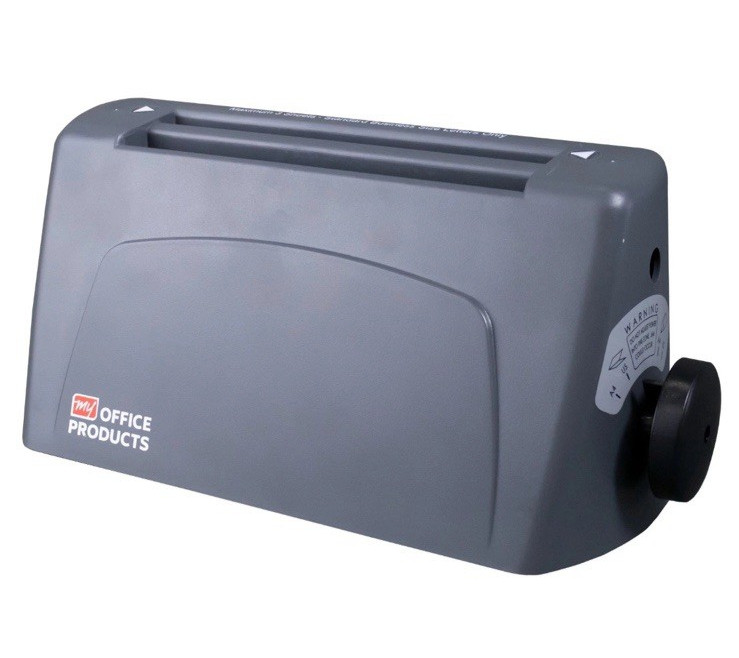
The P6500 is the lower-priced and far more accessible of the two. It is listed as new, so there is no belt replacement or troubleshooting before the first run. The description frames it as a compact folder for standard 8.5 x 11-inch paper, with letter and half folds covering the most common mail and insert jobs in a small office or school. At about 11 pounds and with a footprint of 14.25 x 6.75 x 7 inches, it is the option you can keep on a desktop rather than dedicating a machine table to. The limitation is scope: its described range is standard letter and half folds, so if your bindery print finishing mix calls for a broader set of fold settings, this unit's purpose-built simplicity may feel restrictive.
Martin Yale Automatic Paper Folding Machine 1217A
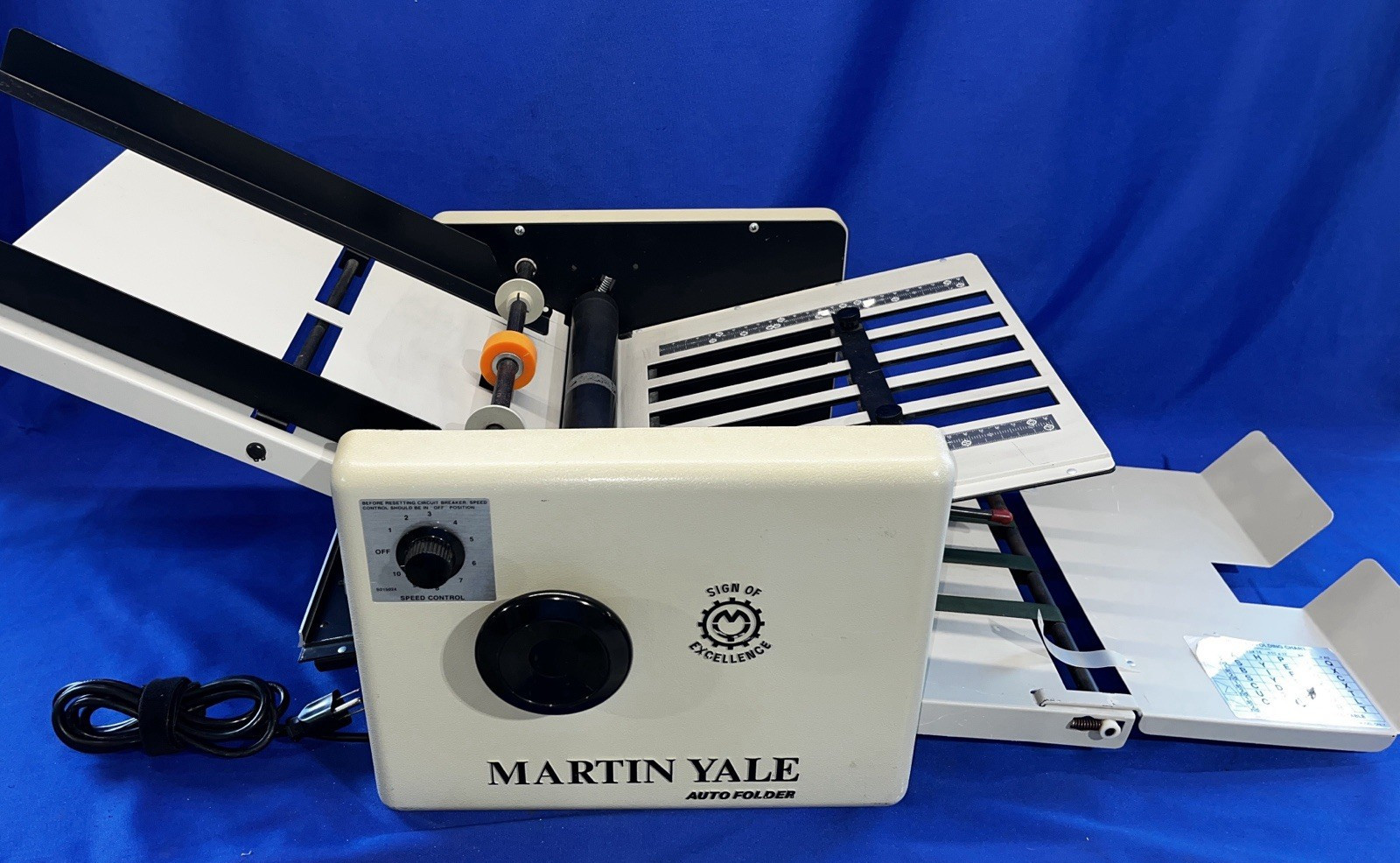
The 1217A enters as the repair project of this pair, and its description is candid about the catch: it is listed for parts or not working because the belt attached to the feed roller is worn through, and the seller notes that other belts or parts may need similar attention. The seller also reports feeding a few single pages through with different fold settings and meeting no issues, which gives a sense of its baseline function. Still, this is a repair project priced above the new P6500, with the title limiting the sale to local pickup and the description stating no returns. Choose it if a feed-driven machine is essential to your workflow and you can source replacement belts; skip it if you want to run work immediately.
Final choice by use case
- Need a folder working this week: the P6500. It is the new, less expensive listing and needs no described attention before use.
- Want the repair-project folder: the 1217A, but plan for the feed roller belt and the seller's no-returns note.
- Limited space: the P6500 is described at about 11 pounds with a compact footprint, making it the easier desktop fit in this comparison.