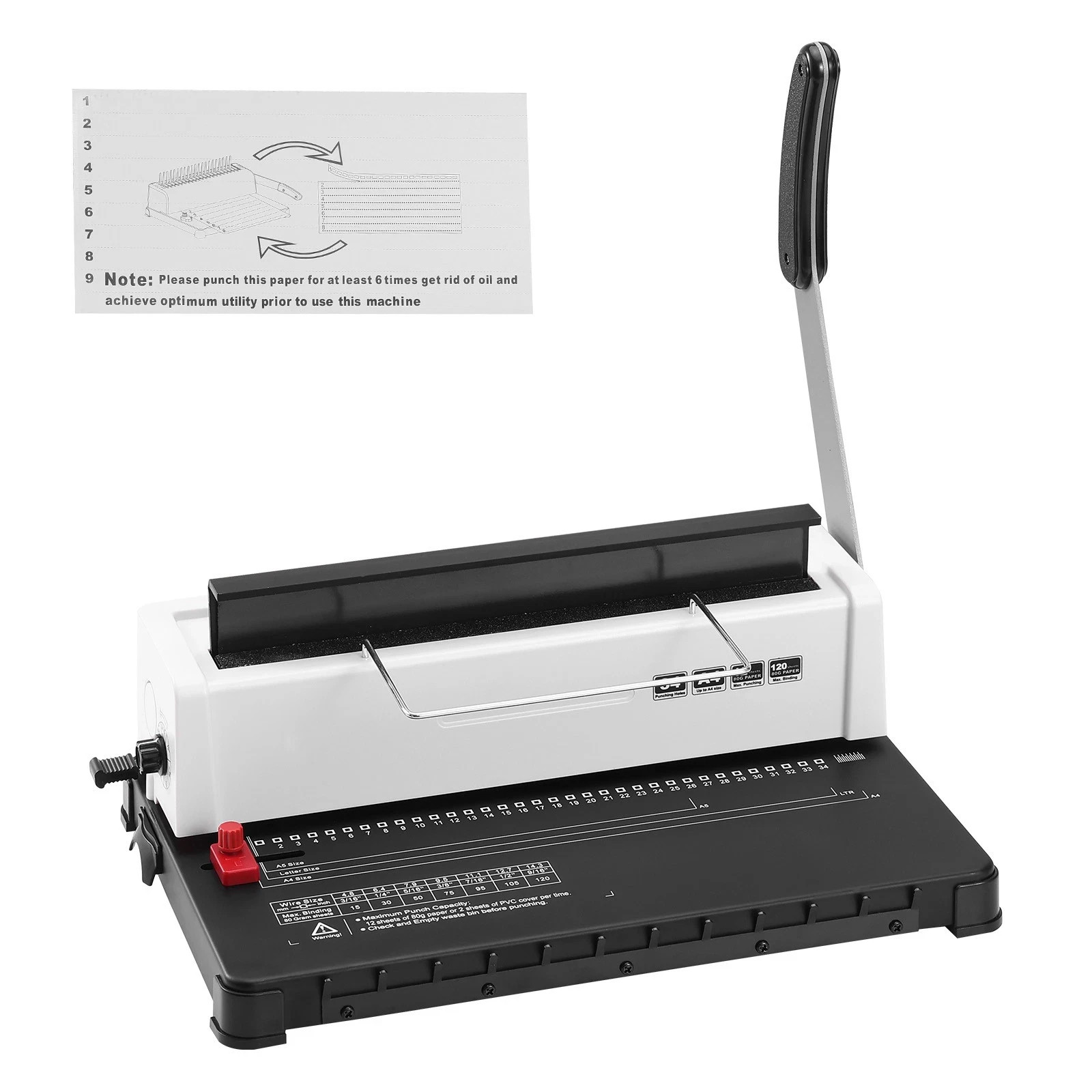
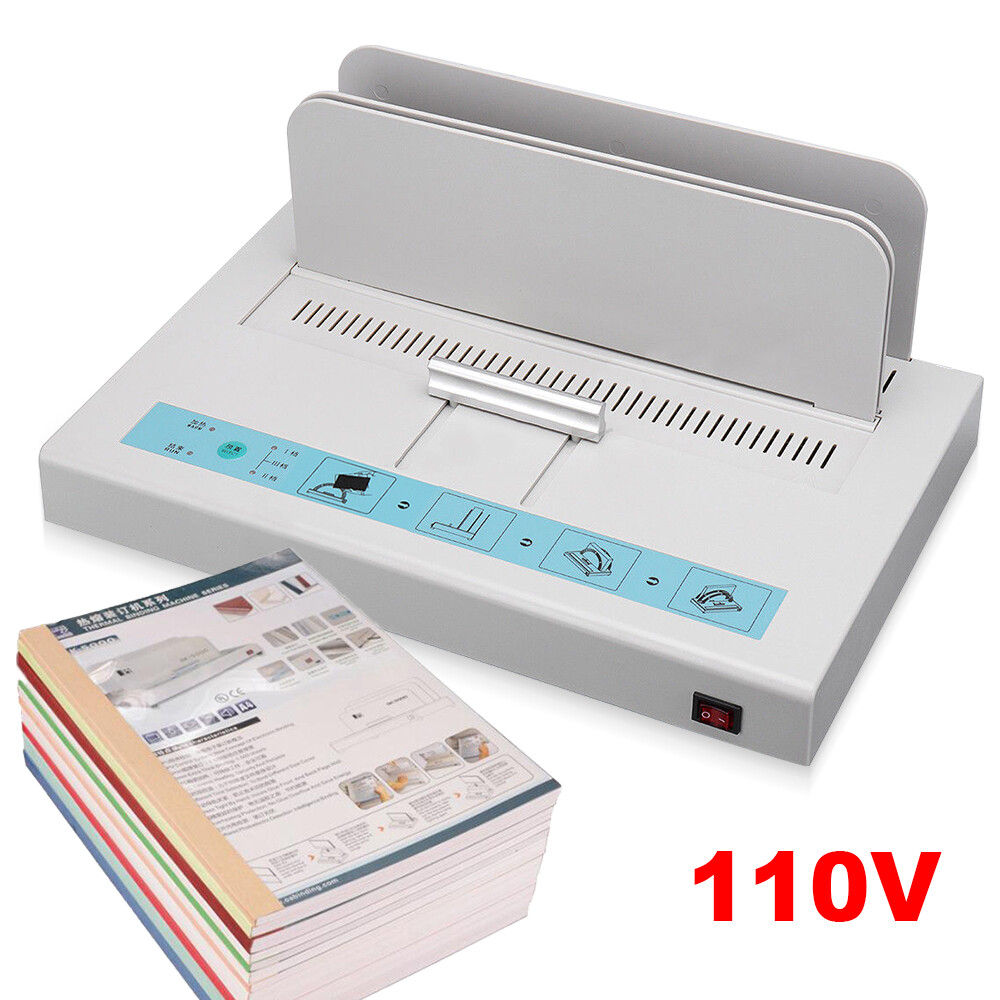
When a project needs to go from loose pages to a finished booklet, the first fork in the road is binding style. A manual coil/spiral machine punches holes and fits plastic coils through the edge, while an electric perfect binder uses heat and glue to attach a flat spine. Both are new, office-ready machines, but they suit very different jobs. If you bind internal reports and presentations, the KFFKFF Manual Coil Spiral Binding Machine is the straightforward choice. If you assemble instruction manuals and thicker books with glued spines, the 110V Perfect Binding Machine brings automatic heating and extra thickness capacity.
Quick Verdict
Choose the KFFKFF Manual Coil Spiral Binding Machine if you want a low-cost, hand-powered way to produce neat coil-bound documents with adjustable hole placement. Choose the 110V Perfect Binding Machine if your work centers on perfect-bound books and you prefer an electric process with heating-time control.
Comparison at a Glance
| Feature | KFFKFF Manual Coil Spiral Binding Machine | 110V Perfect Binding Machine |
|---|---|---|
| Price | $45.88 | $60.00 |
| Binding method | Punches holes and presses spiral coils with a handle lever | Heats glue and presses a square spine onto the book edge |
| Page capacity | Large-capacity punch for everyday office documents | Up to 50mm / 1 to 500 sheets |
| Adjustability | Adjustable side margins to fit most paper sizes | Three heating-time gears |
| Standout extras | Debris tray for punching waste | CPU control, overtime protection, 10-year manufacturer warranty |
Where Each Machine Wins
The KFFKFF wins for offices that mainly produce bound presentations, training packets, and multi-page reports. It keeps the process straightforward and within a lower price range. The 110V Perfect Binder wins for anyone who needs glue-based book binding. The electric unit handles thick stacks and lets you set the heating cycle to match the job.
KFFKFF Manual Coil Spiral Binding Machine
The KFFKFF is a manual coil binder that costs $45.88 and makes it easy to punch and close spiral coils in-house. I like the adjustable side margins: you can align the holes to the paper edge instead of accepting a fixed pattern, which matters when you use different paper sizes. The lever handle press is straightforward, and the built-in debris tray keeps punch waste under control. For a busy office desktop, this is a tidy and affordable workflow. The limitation is that the machine only does coil/spiral binding. It won't produce a perfect-bound or glue-bound book, so if your projects shift toward softcover manuals, you would need a different machine. Manual operation also means you're powering every punch, so high-volume days will require more effort.
110V Perfect Binding Machine Universal Electric Book Automatic Binder
The 110V Perfect Binder, priced at $60.00, is an electric hot-glue binder with a 50mm maximum thickness and a 60-180 second binding window. That puts it in range for thicker booklets and short-run manuals. The three heating-time gears give you control over how long the glue is heated, which helps match the cycle to the page count. A hand press prevents the first and last sheets from falling out, and the CPU control with overtime protection adds peace of mind while the machine is running. It uses a standard US plug and comes with a 10-year manufacturer warranty. The tradeoff is that this is a perfect-binding system; it cannot punch holes for coil or spiral documents. If your office needs both styles, you would need to keep a separate coil binder on hand.
Final Choice by Use Case
For everyday coil-bound documents, presentations, and reports with a modest budget, the KFFKFF Manual Coil Spiral Binding Machine is the right fit. For glue-bound books, thicker manuals, and anyone who wants an automatic electric process, the 110V Perfect Binding Machine is the better match.