Finishing printed pieces is where a job starts to look professional. In bindery print finishing, small shops and home crafters eventually face the same fork: you need to crease and fold card stock cleanly for invitations and business printing, or you need to punch and bind multi-page booklets. The 3-in-1 Electric Creasing Machine and the Binding Machine Hole Pitch 2:1 kit solve different halves of that problem. Here's how to pick the right one.
Quick verdict
If your main task is scoring and folding card for invitations, tickets, and business printing, the 3-in-1 Electric Creasing Machine is the more capable workflow tool. If you're assembling notebooks, journals, albums, or planners and want a portable manual setup, the Binding Machine Hole Pitch 2:1 kit is the practical starting point.
Comparison
| Product | Price | Best for | Main limitation |
|---|---|---|---|
| 3-in-1 Electric Creasing Machine | USD 229.99 | High-volume creasing, perforating, and single-sheet cutting | Needs a 110V outlet |
| Binding Machine Hole Pitch 2:1 Kit | USD 118.12 | Manual binding with 5/8-inch wires | Punches about 20-25 sheets per cycle |
Where each product wins
The electric creaser wins when you're creasing a lot of cards and invitations. The adjustable speed from 0 to 100 rpm lets you slow down for delicate stock and speed up for routine jobs. The three blade types - 1.0/1.2/1.5 mm creasing blades, a perforating blade, and a single-sheet cutting blade - cover the finishing steps that usually come before folding.
The binding kit wins when you need to assemble multi-page booklets. It punches 20-25 sheets at a time, includes ten colorful wires and a pink plier, and runs entirely on hand power. The 2:1 hole pitch gives you consistent round holes for lay-flat notebooks and planners.
3-in-1 Electric Creasing Machine
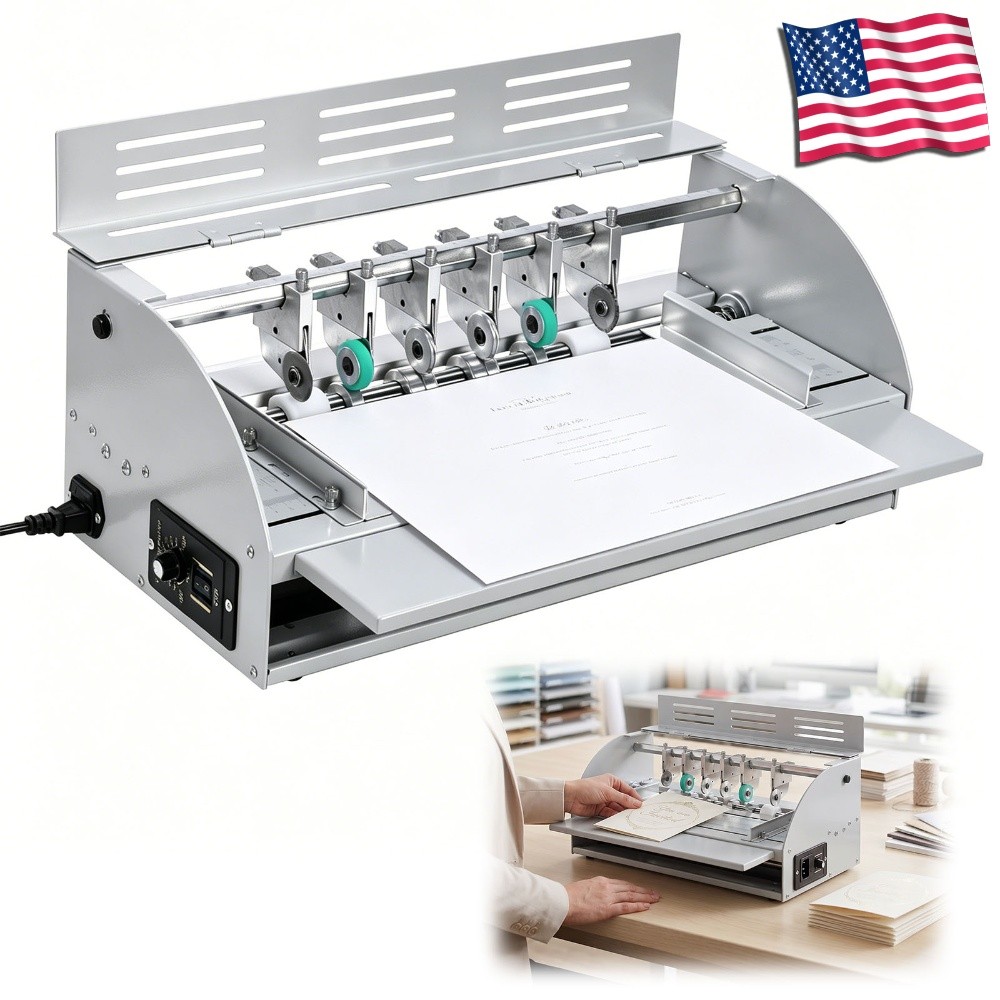
The electric creaser is built for a production-minded craft room. The adjustable speed from 0 to 100 rpm lets you tune the machine to the paper you're feeding, which helps when you switch between light card and thicker covers. It comes with three blades: adjustable-width creasing in 1.0, 1.2, and 1.5 mm, plus perforating and single-sheet cutting blades. The hexagonal blade holder is stable and easy to disassemble, and the safety cover lets you watch the job while protecting your fingers. Choose it if you finish cards, invitations, and tickets in volume and want consistent score lines. The limitation is the 110V requirement, which ties it to a wall outlet, and the manual/automatic operation means you'll still feed sheets and reset between runs.
Binding Machine Hole Pitch 2:1 Kit
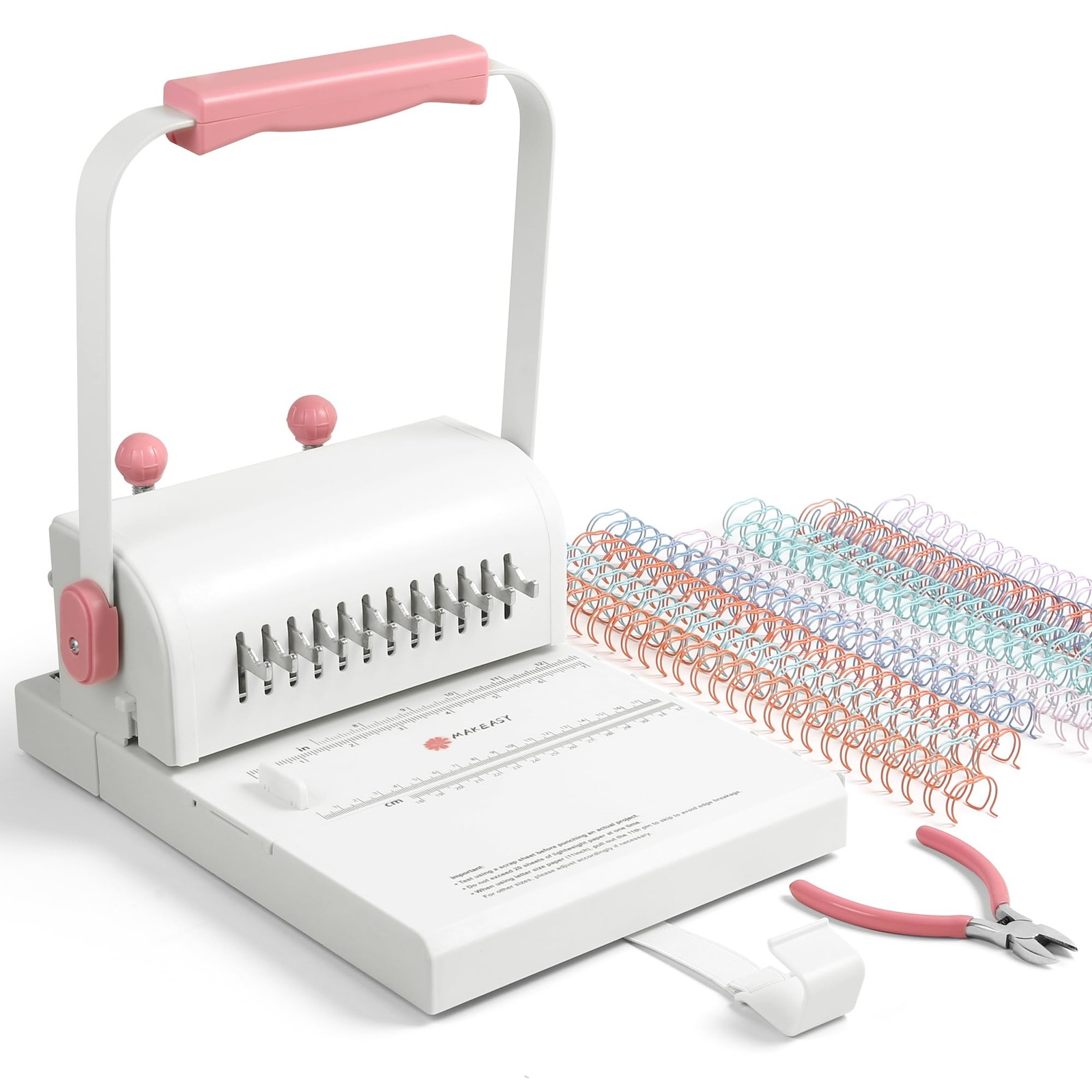
The binding kit is the grab-and-go option for bookmaking projects. The machine punches 20-25 sheets of printing paper per cycle, which is realistic for school reports, journals, and planners. It uses a 2:1 hole pitch, so the round holes line up cleanly with the included colorful wires. The kit ships with ten 5/8-inch wires and a pink plier, so you don't need to buy extra parts. The ergonomic handle and lightweight body make it easy to carry between home, school, or office. The main limitation is manual punching: thick stacks or stiff covers will slow you down, and the 5/8-inch wire size limits how many pages you can bind at once.
Final choice by use case
Choose the 3-in-1 Electric Creasing Machine if your bindery print finishing is mostly about cards, invitations, tickets, and business printing. The speed control and blade variety make repeat score lines faster and more consistent. Choose the Binding Machine Hole Pitch 2:1 kit if you're binding notebooks, journals, albums, and planners by hand, and portability matters as much as punch quality. For a shop that does both, start with the binding kit and add the electric creaser later as volume grows.