
Photos from current listings. Actual item, color, and included accessories may vary.
Screen Printing Machine Buying Guide
A screen printing machine is a registration-critical press that holds a tensioned mesh stencil and a substrate in precise alignment for repeatable ink transfers. The core trade-off is station/color capacity versus registration precision: more stations speed multi-color runs only if micro-registration and platen rigidity hold. Buy a press with independent micro-registration and a rigid steel or powder-coated carbon frame; skip fixed-registration hobby presses for any multi-color work.
Median $308.49
Key takeaways
- Press architecture splits into flatbed platen presses (1–4 color, 1–4 station) and cylindrical/curved presses for bottles, tubes, and cans—flat platens cannot wrap curved substrates.
- Color count is the number of screen heads; station count is the number of substrate boards—4 color 1 station prints one item at a time, 4 color 4 station lets four items cycle simultaneously.
- Micro-registration knobs on each head allow sub-millimeter X/Y/rotation adjustment; presses without them force re-taping screens for every color and ruin tight multi-color registration.
At a glance
- Category
- Screen, Specialty & Sign Printing
- Last updated
- Nov 29, 2026
Current offers
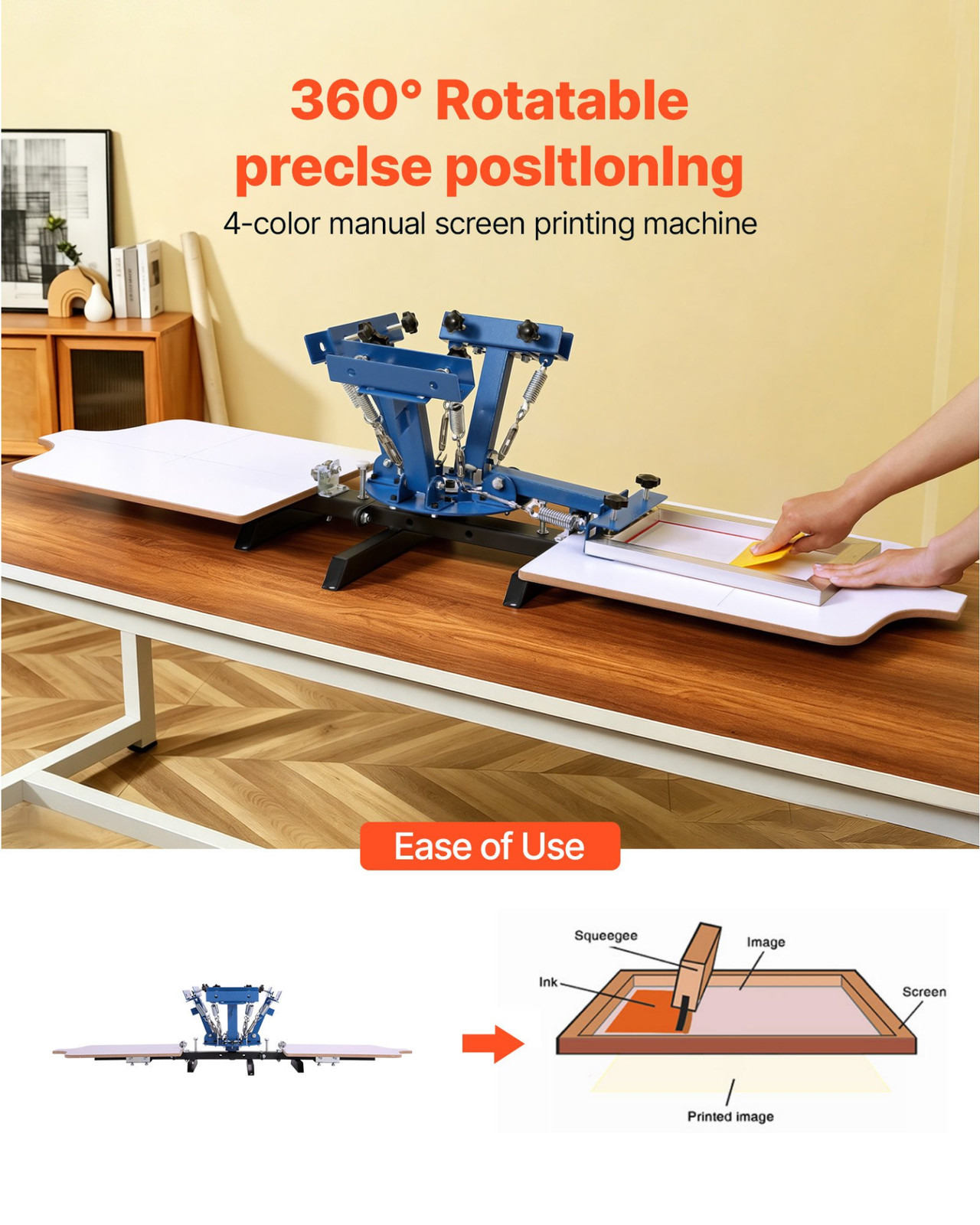 4 Color 2 Station Screen Printing Press 360° Rotating Silk Screen Machine$155.99View on eBay
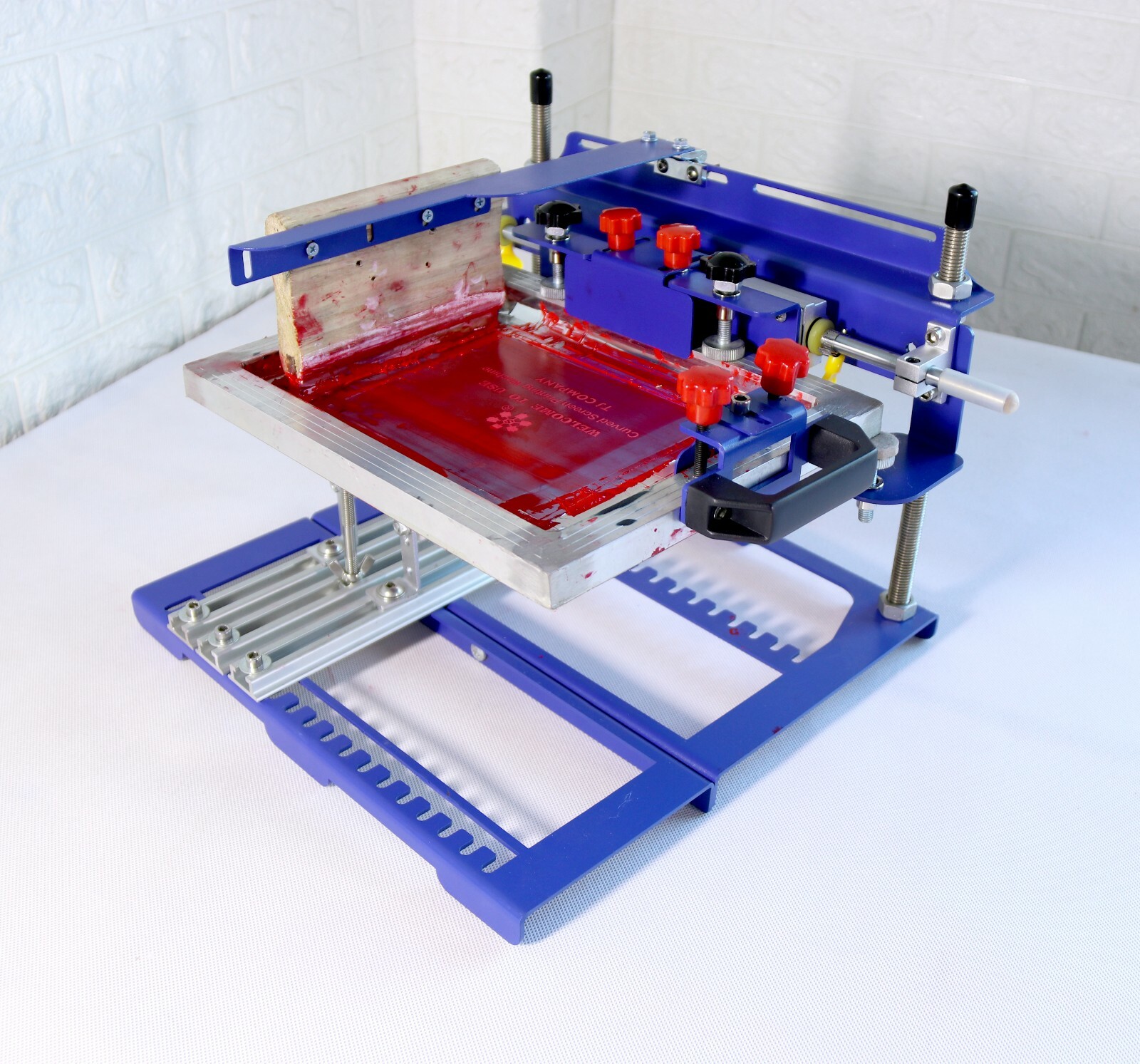 Curved Screen Printing Machine Manual Cylinder Press Printer Kit 170mm Diameter$178.60Last checked Nov 28, 2026View on eBay
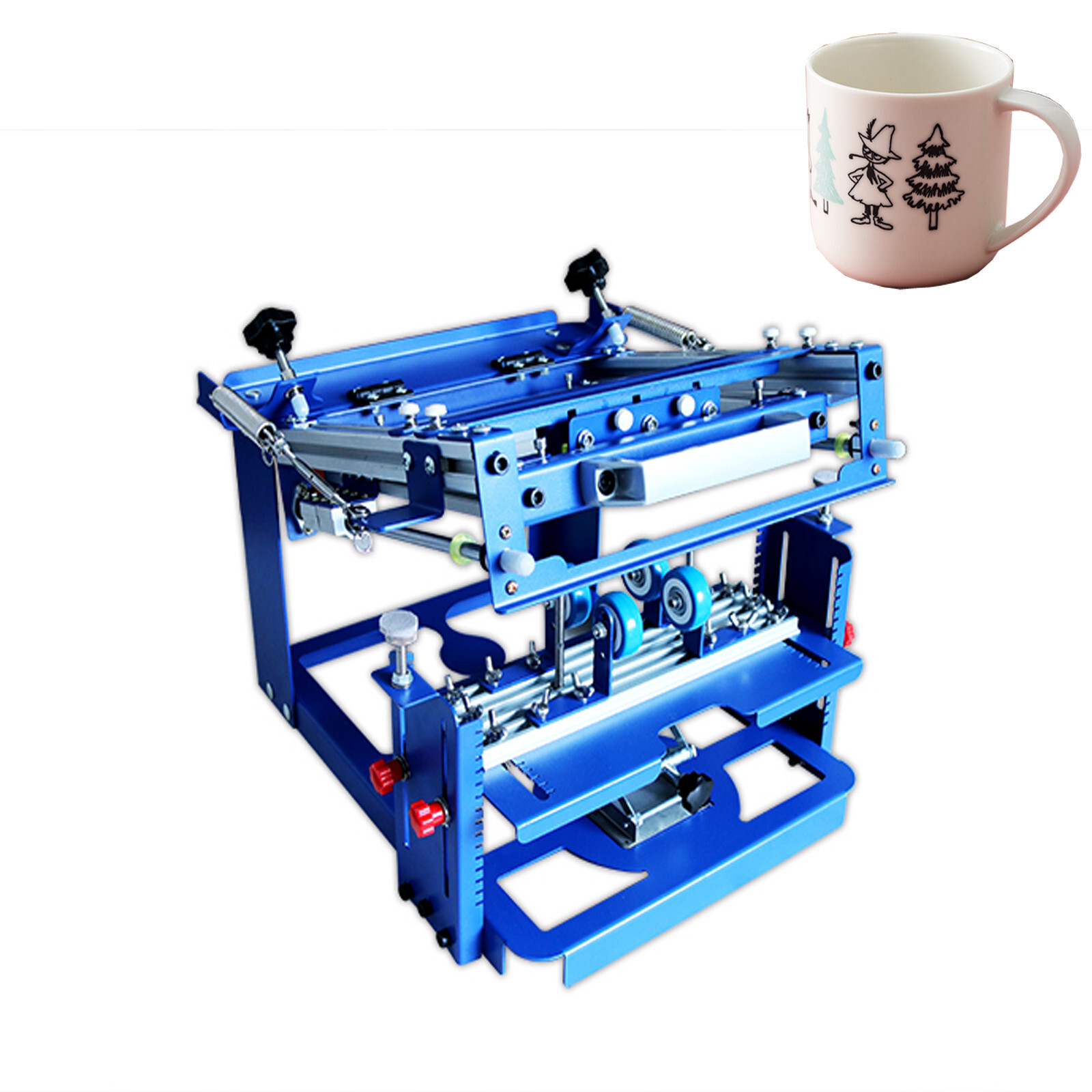 Dia 3.15" Cylindrical Screen Printing Press Small Curved Screen Printing Machine$308.49Last checked Nov 18, 2026View on eBay
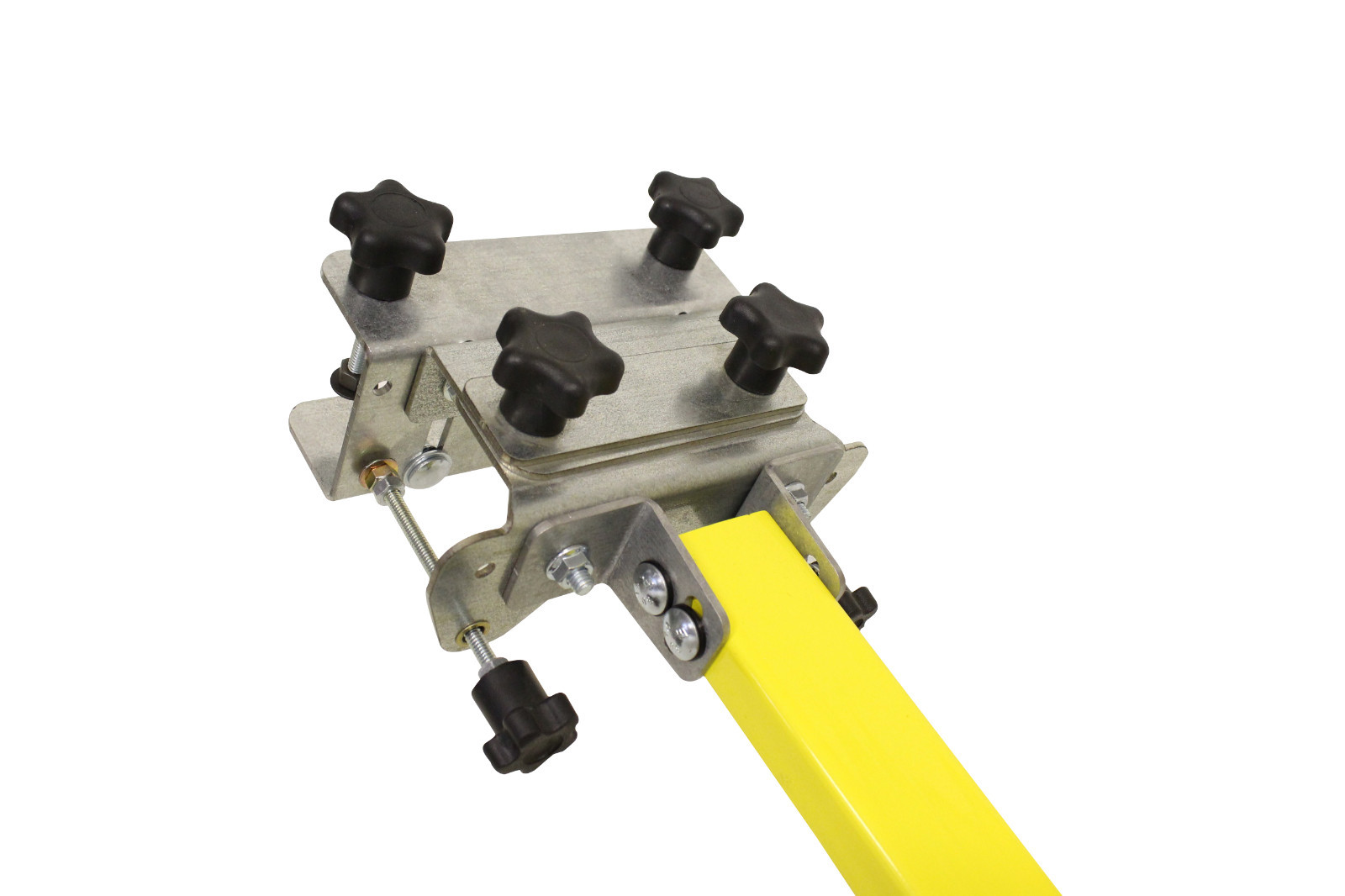 Kicker 4 Color 1 Screen Printing Press Machine WITH HAND MICRO REGISTRATION$429.99Last checked Nov 18, 2026View on eBay
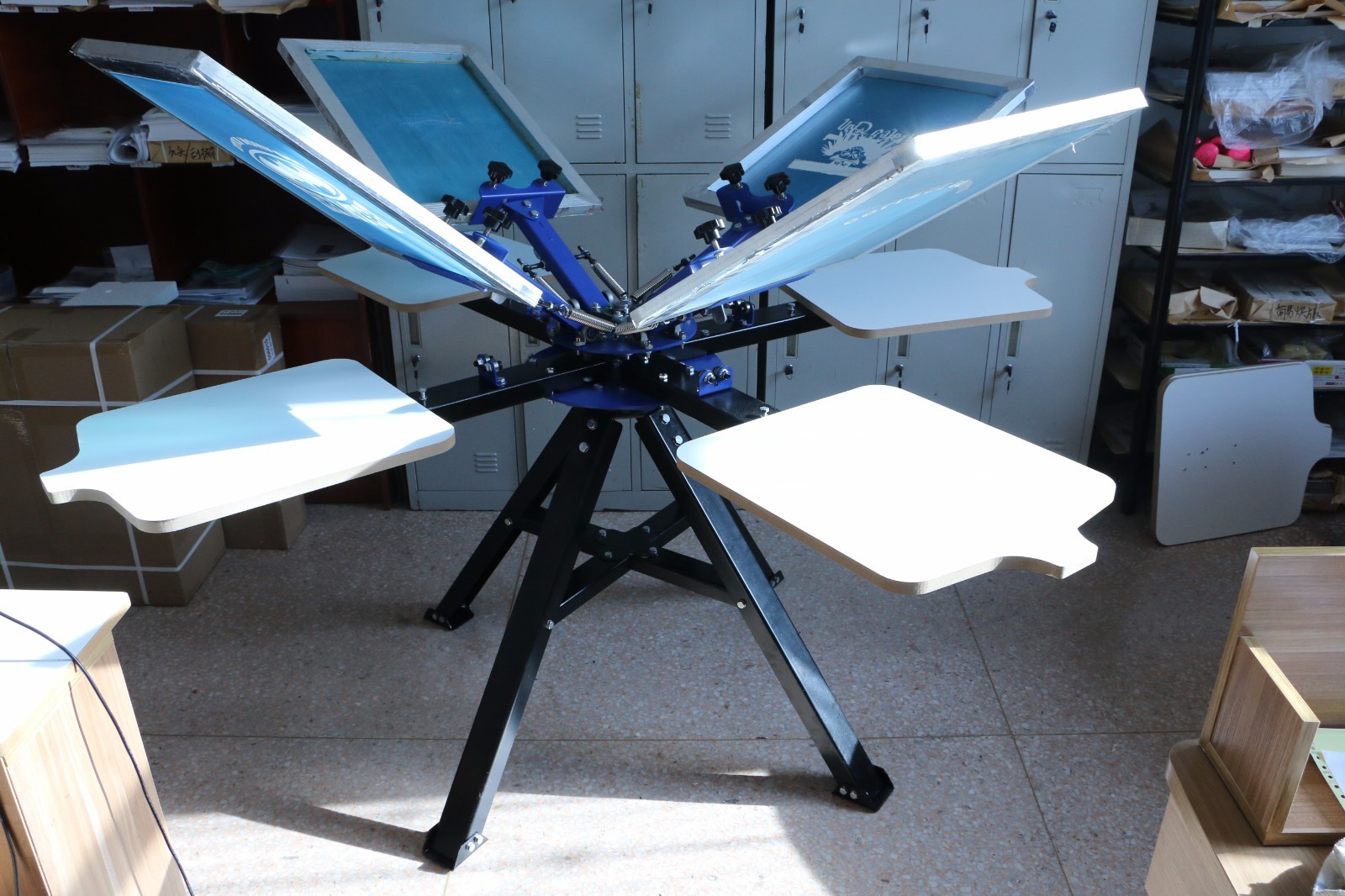 Top-grade 4 Color 4 Station Silk Screen Printing Press Machine Screen Printer$673.40Last checked Nov 18, 2026View on eBay
Highlights
- Press architecture splits into flatbed platen presses (1–4 color, 1–4 station) and cylindrical/curved presses for bottles, tubes, and cans—flat platens cannot wrap curved substrates.
- Color count is the number of screen heads; station count is the number of substrate boards—4 color 1 station prints one item at a time, 4 color 4 station lets four items cycle simultaneously.
- Micro-registration knobs on each head allow sub-millimeter X/Y/rotation adjustment; presses without them force re-taping screens for every color and ruin tight multi-color registration.
- Frame and platen materials decide flex: powder-coated carbon and welded steel hold registration under squeegee pressure, while thin stamped aluminum platens deflect and blur edges on large 21.3 x 17.7 in prints.
Best use cases
- Pick a 1 color 1 station press for single-color tees, totes, and posters at low volume—it is the cheapest durable entry and enough for one-color logos.
- Pick a 4 color 4 station press with micro-registration for small-shop multi-color apparel runs; it lets you load four garments and cycle colors without re-registering every piece.
- Pick a cylindrical/curved press (e.g., 170 mm or 3.15 in diameter capacity) only for bottles, tumblers, and tubes—flatbed platens will not wrap these substrates.
- Skip 4 color 1 station presses if you print more than two colors regularly—without multiple stations, each color requires full re-registration and kills throughput.
Buying tips
- Match platen size to your largest print: a 21.3 x 17.7 in platen handles standard tees and totes; smaller platens limit you to youth sizes and sleeves.
- Require independent micro-registration on every screen head for multi-color work; fixed-head presses cannot hold 0.5 mm registration across four colors.
- Check station count against your run size: 1 station suits sampling, 2 stations balance cost and speed, 4 stations is the minimum for production multi-color apparel.
- For curved substrates, confirm the cylinder diameter range in millimeters—170 mm handles bottles and tumblers, while 3.15 in (80 mm) presses are limited to small tubes and pens.
Specs
| Press Type | Flatbed platen vs Cylindrical/curved |
|---|---|
| Color / Station Count | 1–4 color / 1–4 station |
| Registration | Micro-registration vs fixed head |
| Platen Size | Up to 21.3 x 17.7 in flatbed |
Related searches
What to check before buying
- Measure your workspace and bench depth: a 4 color 4 station press with 21.3 x 17.7 in platens needs roughly a 4 x 4 ft footprint plus operator clearance.
- Confirm your substrate thickness fits the platen clamp and screen off-contact gap—most flatbed presses accept garments up to about 1 in thick.
- Verify screen frame size compatibility: standard 20 x 24 in frames fit most 4-color presses, but oversized frames need adapter brackets.
- Check voltage and plug standard only if buying a press with a flash dryer or conveyor—manual presses are unpowered, but dryers require matched 120 V or 240 V supply.
FAQ
Data sources: eBay / Amazon listings and product attribute feeds. Updated Nov 29, 2026.
Some links on this page are affiliate links. If you buy after clicking one, we may earn a commission at no extra cost to you. This does not change which products appear here or their order. Affiliate disclosure.