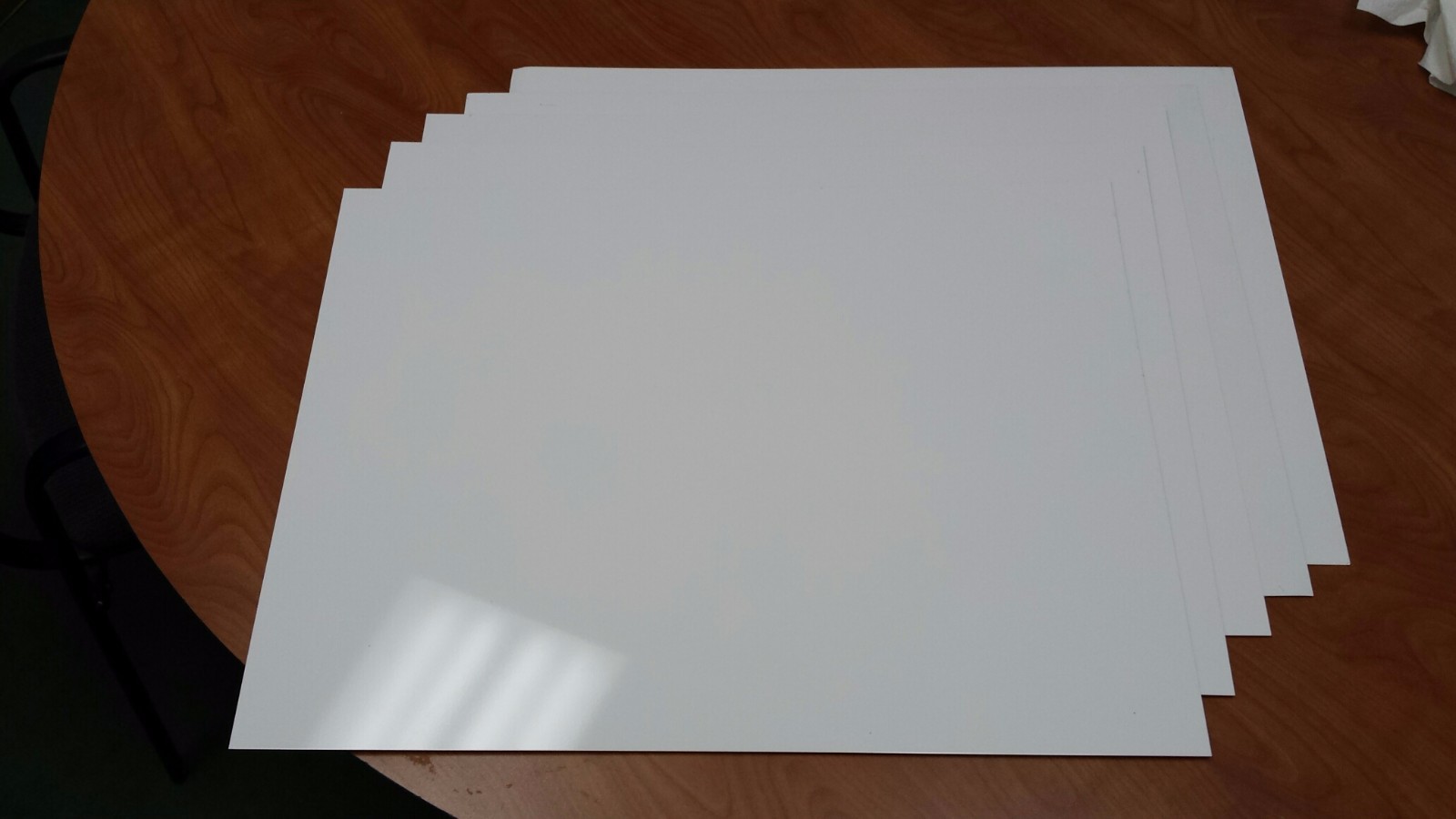

Photos from current listings. Actual item, color, and included accessories may vary.
Sign Printing Buying Guide
Sign printing covers the production of durable outdoor and indoor signage using substrates like aluminum, PVC, acrylic, and coroplast paired with printing methods from screen printing to UV digital. The core trade-off is substrate gauge and ink/laminate durability versus cost: thin blanks warp and fade within a season, while heavier aluminum and cast vinyl hold up for years. The decision rule is simple—match substrate thickness and ink system to exposure conditions; anything under 0.040" aluminum or unlaminated eco-solvent ink is a short-life compromise.
Key takeaways
- Aluminum blanks are graded by gauge: 0.040" (approx. 1mm) is the standard rigid sign blank for screen printing, while 0.025" flexes and 0.063" is heavy-duty structural.
- Screen printing uses solvent or UV-curable inks that bond into metal and plastic; UV digital printing on rigid substrates requires a primer for adhesion on aluminum.
- Coroplast (corrugated plastic) is a 4mm or 10mm fluted polypropylene for temporary signs; it is not dimensionally stable for long-term outdoor use beyond 12-18 months.
At a glance
- Category
- Screen, Specialty & Sign Printing
- Last updated
- Nov 28, 2026
Current offers
Highlights
- Aluminum blanks are graded by gauge: 0.040" (approx. 1mm) is the standard rigid sign blank for screen printing, while 0.025" flexes and 0.063" is heavy-duty structural.
- Screen printing uses solvent or UV-curable inks that bond into metal and plastic; UV digital printing on rigid substrates requires a primer for adhesion on aluminum.
- Coroplast (corrugated plastic) is a 4mm or 10mm fluted polypropylene for temporary signs; it is not dimensionally stable for long-term outdoor use beyond 12-18 months.
- Cast vinyl outlasts calendered vinyl outdoors (7+ years vs 3-5 years) because cast conforms to curves without spring-back and resists UV shrinkage.
Best use cases
- Pick 0.040" aluminum blanks with screen-printed enamel for real estate and construction yard signs that must survive 2+ years outdoors and repeated handling.
- Choose 4mm coroplast with digital print for short-term event and political signage where low cost and light weight matter more than longevity—skip aluminum here.
- Use cast vinyl on acrylic or dibond for storefront and wayfinding signs viewed at close range; skip calendered vinyl on curved or riveted surfaces where it will lift.
- For indoor retail and menu boards, select 3mm PVC (Sintra) or acrylic with UV digital print; skip coroplast indoors where a premium flat finish is required.
Buying tips
- Match substrate to exposure: 0.040" aluminum for permanent outdoor, 4mm coroplast for under 12 months, 3mm PVC for indoor—thinner gauges are false economy outdoors.
- For screen printing, specify 230-305 mesh count for solid coverage on metal and 110-160 mesh for heavy ink deposit on dark substrates.
- Order blanks pre-drilled with 3/8" or 1/2" holes on 24" centers for standard U-channel or H-frame posts; undrilled blanks require shop drilling.
- Choose cast vinyl over calendered for any outdoor application exceeding 3 years or any surface with rivets, curves, or compound angles.
Specs
| Substrate Gauge | 0.040" aluminum / 4mm coroplast |
|---|---|
| Outdoor Durability | 5-7 yr enamel / 1-3 yr unlaminated |
| Vinyl Type | Cast (7+ yr) vs Calendered (3-5 yr) |
| Standard Blank Size | 18" x 24" with 3/8" holes |
Related searches
What to check before buying
- Measure your sign frame or post system: standard yard signs use 18" x 24" blanks with 3/8" holes on 24" vertical centers, so confirm hole pattern before ordering.
- Confirm substrate thickness in decimal inches or gauge: 0.040" aluminum is rigid enough to resist wind flutter; 0.025" requires a backer or frame.
- Check ink and laminate compatibility with your climate: UV-curable inks plus cast overlaminate for high-sun regions; solvent inks need 24-hour outgassing before lamination.
- Verify your printer or screen press can handle the blank size and thickness—flatbed UV printers need vacuum hold-down for 0.040" aluminum, and manual screen presses need frame clearance.
FAQ
Data sources: eBay / Amazon listings and product attribute feeds. Updated Nov 28, 2026.
Some links on this page are affiliate links. If you buy after clicking one, we may earn a commission at no extra cost to you. This does not change which products appear here or their order. Affiliate disclosure.