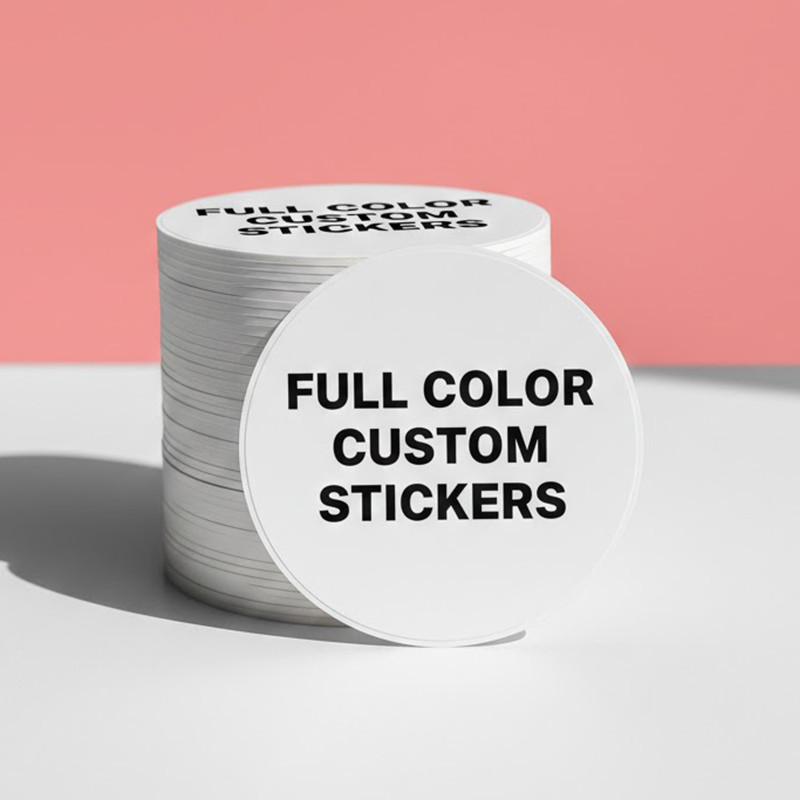

Photos from current listings. Actual item, color, and included accessories may vary.
Custom Label Buying Guide
Custom labels are pressure-sensitive printed pieces used for branding, product identification, or compliance on packaging, jars, and equipment. The primary trade-off is between durable, weather-resistant vinyl or polyester with laminated inks and cheap paper stock that smears or peels. The clear decision rule: specify a synthetic face stock (vinyl, polyester, BOPP) with a permanent or removable acrylic adhesive matched to your surface and environment; skip uncoated paper labels for anything washed, chilled, or handled.
Key takeaways
- Face stock determines durability: white vinyl (4-6 mil) resists water and UV, polyester (2-3 mil) handles chemicals and heat, BOPP suits squeeze tubes and soap.
- Adhesive type matters more than thickness: permanent acrylic bonds to glass and HDPE; removable acrylic peels clean; hot-melt fails in freezers and damp rooms.
- Print method sets resolution and fade: thermal transfer with resin ribbon outlasts direct thermal; UV-cured inkjet and screen printing give 2-3 year indoor colorfastness.
At a glance
- Category
- Screen, Specialty & Sign Printing
- Last updated
- Nov 28, 2026
Current offers
Highlights
- Face stock determines durability: white vinyl (4-6 mil) resists water and UV, polyester (2-3 mil) handles chemicals and heat, BOPP suits squeeze tubes and soap.
- Adhesive type matters more than thickness: permanent acrylic bonds to glass and HDPE; removable acrylic peels clean; hot-melt fails in freezers and damp rooms.
- Print method sets resolution and fade: thermal transfer with resin ribbon outlasts direct thermal; UV-cured inkjet and screen printing give 2-3 year indoor colorfastness.
- Die-cut format follows container geometry: roll labels for applicators, sheet labels for short runs, and cut-to-shape for lid tops versus wrap labels.
Best use cases
- Best fit: canning jars and mason jars — pick 3-4 mil white vinyl with permanent acrylic and a laminate topcoat; skip paper labels that wrinkle in boiling-water baths or dishwashers.
- Best fit: cosmetics, soap, and lotion bottles — use BOPP or vinyl with oil-resistant laminate; skip uncoated stock that smears with alcohol or essential oils.
- Best fit: industrial equipment and outdoor gear — choose polyester with high-tack acrylic and UV laminate; skip removable adhesive that flags at temperature swings.
- Wrong fit: short-run event stickers on paper — acceptable for dry indoor use only; do not expect dishwasher or freezer performance from matte paper stock.
Buying tips
- Match label size to container: measure flat width of the jar or bottle and subtract 0.25-0.5 in for wrap gap; lid labels are typically 0.5-0.75 in smaller than lid diameter.
- For freezer or wet rooms, specify a low-temperature acrylic adhesive rated to -20°F and a synthetic face; standard hot-melt adhesives lose tack below 20°F.
- Order laminate for anything handled: a 1-2 mil PET or polypropylene overlaminate protects print from abrasion, moisture, and UV far better than varnish alone.
- Choose roll direction and core size to match your applicator: 3-in core for industrial dispensers, 1-in core for hand-held; sheet labels only for manual application.
Specs
| Face Stock | White vinyl / polyester / BOPP / paper |
|---|---|
| Adhesive Type | Permanent or removable acrylic |
| Print Method | Thermal transfer / UV inkjet / screen |
| Finish | Matte / gloss with PET laminate |
Related searches
What to check before buying
- Measure the container's usable flat area (width and height) and confirm the label fits with a 0.125-0.25 in margin on each side.
- Identify surface material — glass, HDPE, PET, metal, or corrugated — because adhesive performance varies; HDPE and textured plastics need high-tack acrylic.
- Check environment: dishwasher, freezer, outdoor UV, or chemical exposure dictates vinyl or polyester plus laminate; paper only for dry indoor use.
- Confirm artwork file specs: 300 dpi minimum, CMYK, vector text, and die-line with 0.125 in bleed; missing bleed causes white edges on cut labels.
FAQ
Data sources: eBay / Amazon listings and product attribute feeds. Updated Nov 28, 2026.
Some links on this page are affiliate links. If you buy after clicking one, we may earn a commission at no extra cost to you. This does not change which products appear here or their order. Affiliate disclosure.