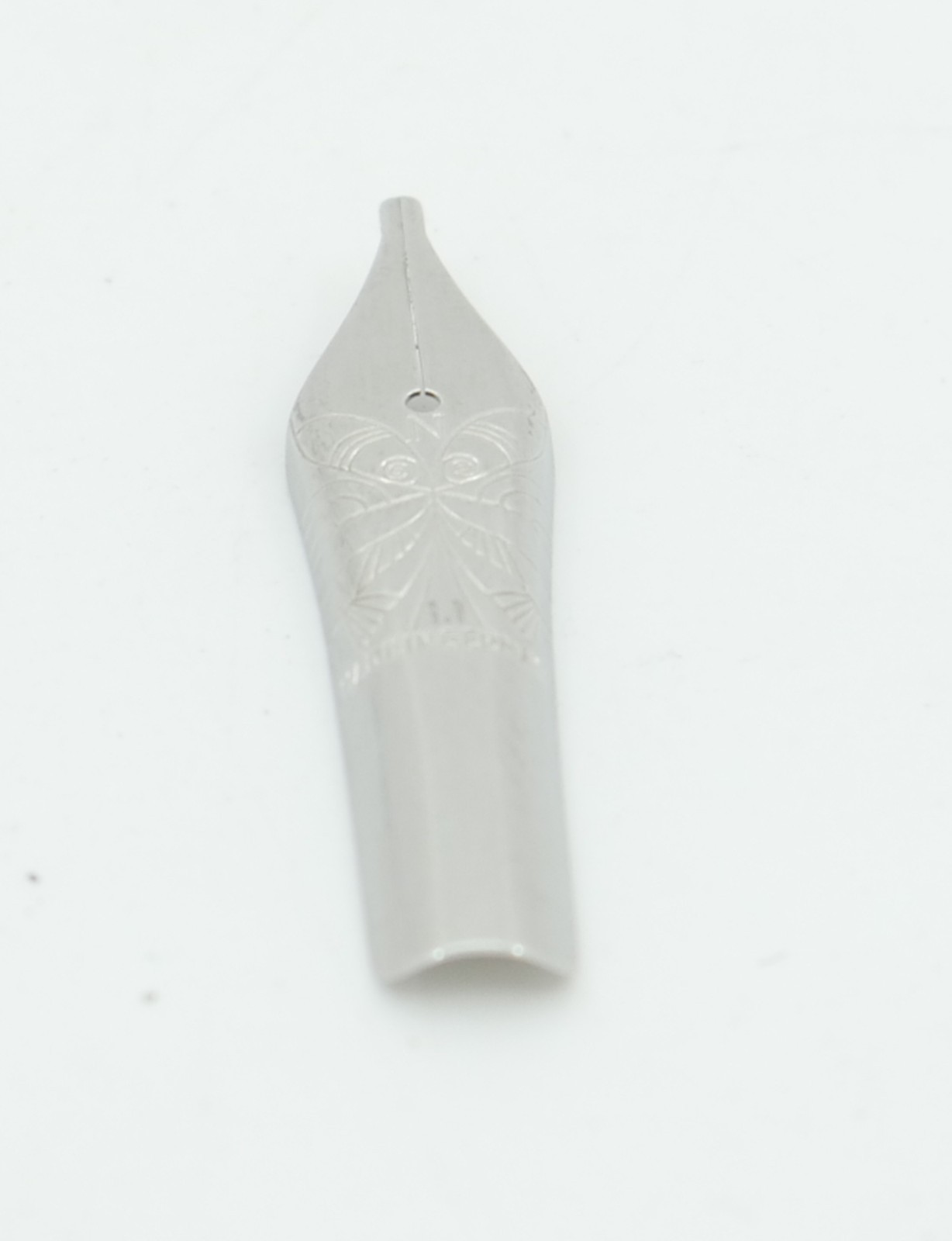

Photos from current listings. Actual item, color, and included accessories may vary.
Stub Nib Fountain Pen Buying Guide
A stub nib fountain pen uses a broad, flat-tipped nib to produce line variation—thick downstrokes and thin cross-strokes—without the sharp corners of an italic. The key trade-off is smoothness versus line definition: wider stubs (1.1mm+) are more forgiving but show less contrast, while narrower stubs (0.6–0.8mm) demand better paper and a light hand. Buy a stub only if you want visible line variation for daily writing; skip it if you need a fast, no-thinking note-taker or write on absorbent paper.
Key takeaways
- Stub nibs are defined by tip width: 1.1mm is the most common 'starter stub' because it balances line variation with smoothness on standard 80gsm paper.
- Nib unit compatibility is standardized: Jowo #6 and Bock #6 are the dominant threaded units, so the housing—not the pen—determines which replacement nib fits.
- Gold vs steel matters less than tip geometry for stubs; a well-tuned steel stub writes as smoothly as gold, but gold adds spring that can make wide stubs feel more forgiving.
At a glance
- Category
- Fountain Pen Nibs & Feeds
- Last updated
- Nov 23, 2026
Current offers
Highlights
- Stub nibs are defined by tip width: 1.1mm is the most common 'starter stub' because it balances line variation with smoothness on standard 80gsm paper.
- Nib unit compatibility is standardized: Jowo #6 and Bock #6 are the dominant threaded units, so the housing—not the pen—determines which replacement nib fits.
- Gold vs steel matters less than tip geometry for stubs; a well-tuned steel stub writes as smoothly as gold, but gold adds spring that can make wide stubs feel more forgiving.
- Feed design controls ink flow: stubs need wetter feeds to keep the wide slit saturated; ebonite feeds handle this better than plastic on high-viscosity inks.
Best use cases
- Best fit: journaling, letter-writing, and headings where line variation adds character—choose a 1.1mm steel stub in a Jowo #6 housing for easy swapping.
- Wrong fit: fast note-taking, left-handed overwriting, or cheap copy paper—skip stubs entirely and use a fine or medium round nib to avoid snagging and bleed.
- Best fit: calligraphy-adjacent writing on smooth 90gsm+ paper—step up to a 1.5mm stub or a true italic grind for sharper contrast.
- Wrong fit: pocket pens and eyedropper conversions with marginal flow—skip 1.5mm+ stubs because they demand generous ink delivery and can starve.
Buying tips
- Match the nib unit to your pen: Jowo #6 and Bock #6 are not cross-compatible, so confirm the housing thread before buying a loose stub nib.
- Start at 1.1mm for a first stub; go 0.6–0.8mm only if you write small or on toothy paper, and 1.5mm+ only for display or calligraphy.
- Prefer steel stubs for value and easy replacement; pay for gold only if you want a softer feel and already own a compatible gold-nib pen.
- Check that the feed is designed for broad nibs—stub slits are wide and need higher capillary flow than fine nibs, especially with shimmer or pigment inks.
Specs
| Tip Width | 0.6mm to 1.5mm (1.1mm most common) |
|---|---|
| Nib Unit Fit | Jowo #6 / Bock #6 threaded |
| Material | Steel vs 14k/18k gold |
| Grind Type | Stub (rounded) vs Italic (sharp) |
Related searches
What to check before buying
- Confirm your pen accepts a standard #6 (or #5) threaded nib unit and note whether it is Jowo-compatible or Bock-compatible.
- Measure your writing size: if your lowercase letters are under 4mm tall, a 1.1mm stub will fill in loops—choose 0.6–0.8mm or skip stubs.
- Check paper: use 80gsm+ fountain-pen-friendly paper; absorbent or recycled paper makes stubs feather and bleed.
- For left-handers, test an underwriter grip; overwriting lefties should avoid stubs wider than 1.1mm to prevent snagging.
FAQ
Data sources: eBay / Amazon listings and product attribute feeds. Updated Nov 23, 2026.
Some links on this page are affiliate links. If you buy after clicking one, we may earn a commission at no extra cost to you. This does not change which products appear here or their order. Affiliate disclosure.