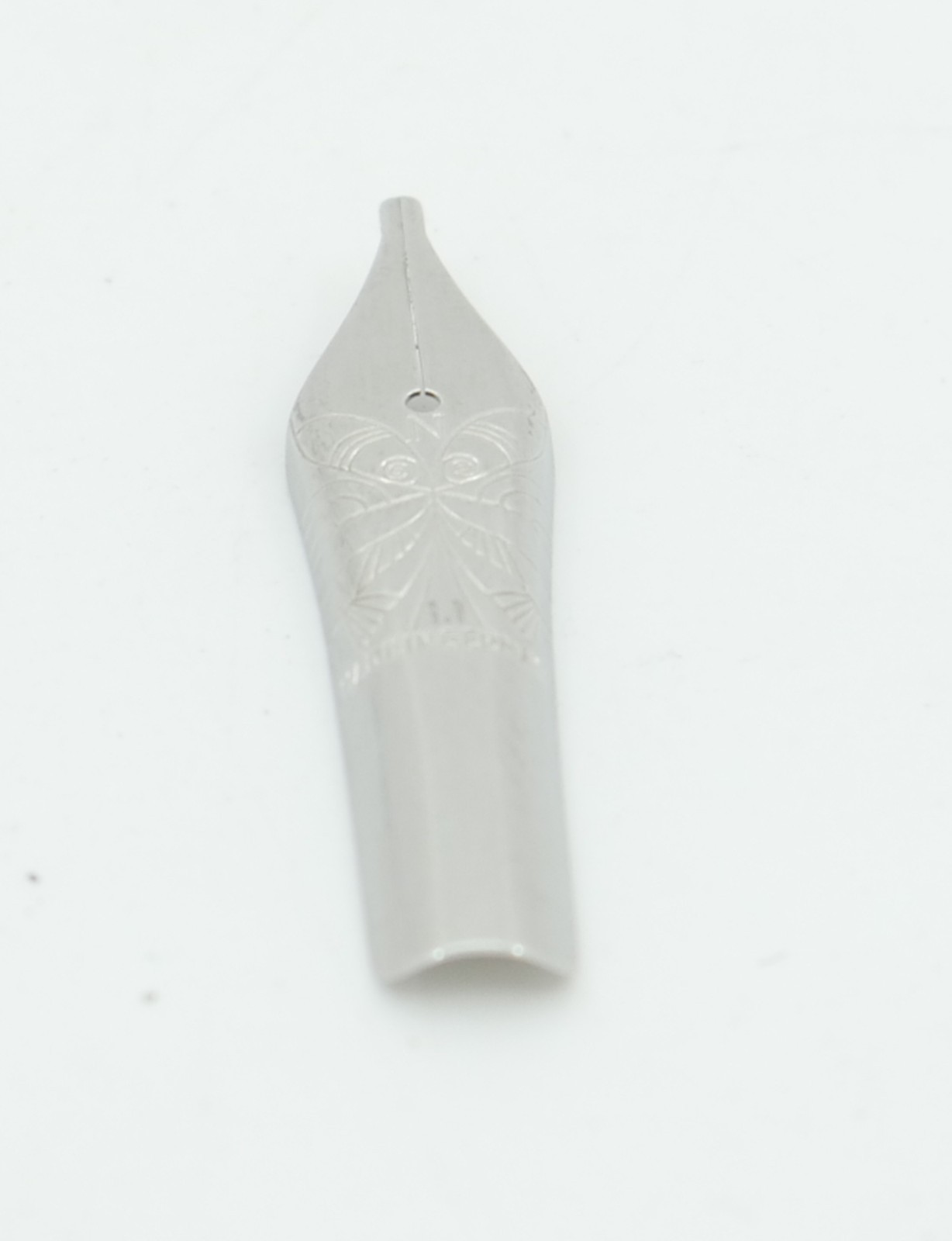

Photos from current listings. Actual item, color, and included accessories may vary.
Fountain Pen Nib Buying Guide
Fountain pen nibs are the metal writing tip that controls ink flow and line character, defined by size standard, material, and grind. The core trade-off is steel versus gold: steel resists wear but feels stiffer, while gold flexes for line variation at a much higher cost. Choose by matching the nib's housing standard (#5, #6, #8) and feed compatibility to your pen, not by brand name alone.
Key takeaways
- Nib size numbers (#5, #6, #8) refer to the feed/housing diameter, not line width — a #6 nib fits a 6mm feed, #5 fits 5mm, and #8 fits 8mm; mismatches cause poor seating and ink starvation.
- Steel nibs are stamped from stainless sheet (typically 0.3–0.5mm thick) and are rigid; 14K–18K gold nibs flex more but cost several times more and require matching feeds to avoid railroading.
- Nib grinds determine stroke: fine/medium are round-tipped for smooth daily writing; stub (e.g., 1.1mm) and italic are flat-ground for line variation; flex nibs need ebonite feeds with deeper ink channels.
At a glance
- Category
- Fountain Pen Nibs & Feeds
- Last updated
- Nov 23, 2026
Current offers
Highlights
- Nib size numbers (#5, #6, #8) refer to the feed/housing diameter, not line width — a #6 nib fits a 6mm feed, #5 fits 5mm, and #8 fits 8mm; mismatches cause poor seating and ink starvation.
- Steel nibs are stamped from stainless sheet (typically 0.3–0.5mm thick) and are rigid; 14K–18K gold nibs flex more but cost several times more and require matching feeds to avoid railroading.
- Nib grinds determine stroke: fine/medium are round-tipped for smooth daily writing; stub (e.g., 1.1mm) and italic are flat-ground for line variation; flex nibs need ebonite feeds with deeper ink channels.
- Jowo (Germany) and Bock are the dominant OEM nib units — Jowo #6 and Bock #6 are physically similar but not always interchangeable due to housing thread differences; Majohn and Nemosine often use licensed Jowo-compatible housings.
Best use cases
- Daily journaling and note-taking: pick a steel fine or medium round nib in the correct size (#5 or #6) — skip flex or stub grinds, which slow handwriting and require wetter inks.
- Calligraphy and lettering: choose a 1.1mm or 1.5mm stub or a true flex nib paired with an ebonite feed — skip standard steel round nibs, which produce no line variation.
- Vintage pen restoration or nib swapping: match the exact housing standard (Jowo #6, Bock #6, or vintage proprietary) and feed length; skip modern #6 nibs in vintage pens without verifying feed channel depth and housing threads.
Buying tips
- Measure your pen's feed diameter with calipers: 5mm = #5, 6mm = #6, 8mm = #8. Buy the nib unit that matches; forcing a #6 into a #5 housing cracks the feed or leaves the nib loose.
- For flex writing, choose a nib explicitly rated flexible (e.g., Majohn flex, vintage 14K) and pair it with an ebonite feed with widened ink channels — stock plastic feeds starve flex nibs and cause railroading.
- Gold content affects flex and corrosion resistance: 14K is harder and more durable for daily use; 18K is softer and flexes more but wears faster; 21K is softest and best for smooth, wet writers only.
- Stub width maps to line variation: 1.1mm gives subtle variation for everyday writing; 1.5mm and wider suit display lettering and require broader, wetter inks and slower writing speed.
Specs
| Nib Size Standard | #5 (5mm) / #6 (6mm) / #8 (8mm) |
|---|---|
| Nib Material | Stainless steel / 14K–21K gold |
| Grind Type | Round (F/M/B) / Stub / Italic / Flex |
| Feed Compatibility | Plastic (standard) / Ebonite (flex/wet) |
Related searches
What to check before buying
- Confirm your pen's nib housing standard (#5, #6, #8) by measuring the feed diameter or checking the manufacturer's nib unit spec before ordering.
- Check feed material and channel depth: plastic feeds suit standard round nibs; ebonite or modified feeds are required for flex and wide stub nibs.
- Verify ink type compatibility: iron-gall and pigment inks need gold or high-grade steel nibs with corrosion-resistant plating; avoid bare steel with acidic inks.
- Ensure the nib unit includes the housing and feed if your pen uses a screw-in unit — bare nibs require reusing the original housing and feed, which may not align.
FAQ
Data sources: eBay / Amazon listings and product attribute feeds. Updated Nov 23, 2026.
Some links on this page are affiliate links. If you buy after clicking one, we may earn a commission at no extra cost to you. This does not change which products appear here or their order. Affiliate disclosure.