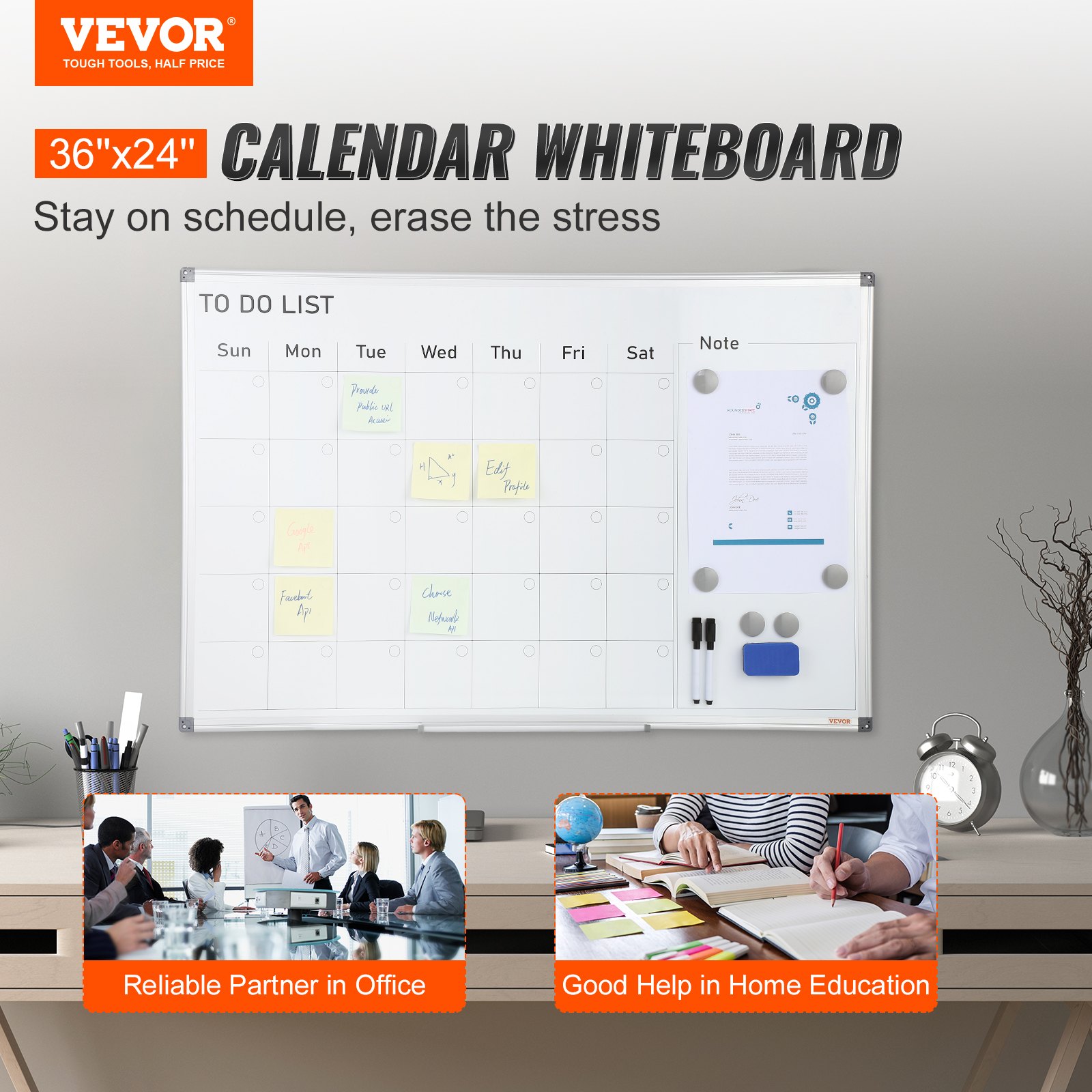

Photos from current listings. Actual item, color, and included accessories may vary.
Calendar Whiteboard Buying Guide
A calendar whiteboard is a wall-mounted dry-erase planner that combines a printed monthly grid with a magnetic writing surface, typically in a 36 × 24 in format. The decisive trade-off is between thin rolled-steel boards that dent and ghost versus rigid aluminum-framed boards with a baked-on coating that survives years of erasing. Buy rigid aluminum-framed models with a magnetic steel core; skip frameless or plastic-backed boards if the board will be written on daily.
Key takeaways
- Surface construction: magnetic steel core with a factory-baked dry-erase coating resists ghosting and accepts magnets; plastic-backed boards lose magnetism and stain.
- Frame and mounting: aluminum C-channel frame with pre-drilled corner brackets holds a flat 36 × 24 in plane; frameless boards warp and pull away from drywall.
- Grid format: undated monthly grids (boxes for dates, days of week pre-printed) suit recurring planning; dated yearly calendars force replacement every January.
At a glance
- Category
- Meeting & Presentation Equipment
- Last updated
- Nov 28, 2026
Current offers
Highlights
- Surface construction: magnetic steel core with a factory-baked dry-erase coating resists ghosting and accepts magnets; plastic-backed boards lose magnetism and stain.
- Frame and mounting: aluminum C-channel frame with pre-drilled corner brackets holds a flat 36 × 24 in plane; frameless boards warp and pull away from drywall.
- Grid format: undated monthly grids (boxes for dates, days of week pre-printed) suit recurring planning; dated yearly calendars force replacement every January.
- Combo tiers: cork-board half-panels add pinning for receipts and notices but reduce writable magnetic area, so pick a full dry-erase face if writing space is primary.
Best use cases
- Best fit: office or kitchen wall with daily family or staff scheduling — choose a 36 × 24 in aluminum-framed magnetic board with an undated monthly grid and included marker tray.
- Best fit: restaurant or retail back-of-house shift planning — pick the combo cork-and-whiteboard version so pinned notices and written shifts share one wall footprint.
- Wrong fit: a board that will be moved between rooms weekly — a rigid framed 36 × 24 in panel is wall-fixed; skip it and use a lighter portable easel board instead.
- Wrong fit: a large team needing more than 30 daily entries per month box — skip 36 × 24 in and step up to a 48 × 36 in board so each date cell stays legible.
Buying tips
- Size rule: a 36 × 24 in board gives roughly 2.5 × 2 in per date cell in a 7-column grid — enough for 1–2 short entries; step to 48 × 36 in for dense scheduling.
- Mounting rule: anchor into wall studs or use drywall toggle anchors rated for the board's weight; a 36 × 24 in framed steel board typically runs 8–12 lb and will pull out of plain drywall anchors.
- Material rule: choose a steel-faced board with aluminum frame over plastic or MDF-backed boards; plastic surfaces lose magnetic hold and scratch white within months of daily use.
- Format rule: pick an undated reusable monthly grid for year-round planning; a dated 12-month calendar must be replaced annually and its printed layout cannot be repurposed.
Specs
| Surface Type | Magnetic steel vs plastic/cork |
|---|---|
| Frame Material | Aluminum C-channel vs frameless |
| Standard Size | 36 × 24 in / 48 × 36 in |
| Grid Format | Undated monthly vs dated yearly |
Related searches
What to check before buying
- Measure the wall span: confirm at least 40 × 28 in of clear wall (board plus frame and tray clearance) at a height where the top row of date boxes sits near eye level.
- Check wall substrate: locate studs or confirm hollow-drywall capacity for 8–12 lb; plaster and tile walls need masonry anchors or an alternate mounting rail.
- Confirm included accessories: the board should ship with a marker tray and mounting hardware; markers and eraser are often not included and must be added.
- Verify magnetic function: if you plan to hold papers or printed schedules, confirm the surface is steel-backed magnetic — cork-only or plastic boards will not hold magnets.
FAQ
Data sources: eBay / Amazon listings and product attribute feeds. Updated Nov 28, 2026.
Some links on this page are affiliate links. If you buy after clicking one, we may earn a commission at no extra cost to you. This does not change which products appear here or their order. Affiliate disclosure.