
Photos from current listings. Actual item, color, and included accessories may vary.
Calendar Board Buying Guide
A calendar board is a wall-mounted planning surface—typically a dry-erase whiteboard pre-printed with a monthly grid, often paired with a cork bulletin zone—that trades off surface durability and frame rigidity against low-cost plastic or paper alternatives. The decisive rule: choose an aluminum-framed magnetic steel dry-erase board with a printed or etched calendar grid for repeated monthly reuse, and skip thin plastic-faced or paper calendars that ghost, dent, or peel within a year.
Median $38.99
Key takeaways
- Surface material is the top durability lever: magnetic steel or porcelain-on-steel dry-erase surfaces resist ghosting and accept magnets; plastic or melamine faces scratch, stain, and lose erasability within months.
- Frame construction separates rigid from flimsy: extruded aluminum frames with mitered corners and a rigid backing board stay flat on the wall, while plastic or butt-jointed frames warp and bow.
- Standard wall-calendar size is 36 x 24 in (approx. 90 x 60 cm), giving a 7-column monthly grid legible from 4–6 ft; larger boards suit shared team rooms, smaller boards suit cubicles.
At a glance
- Category
- Meeting & Presentation Equipment
- Last updated
- Nov 27, 2026
Current offers
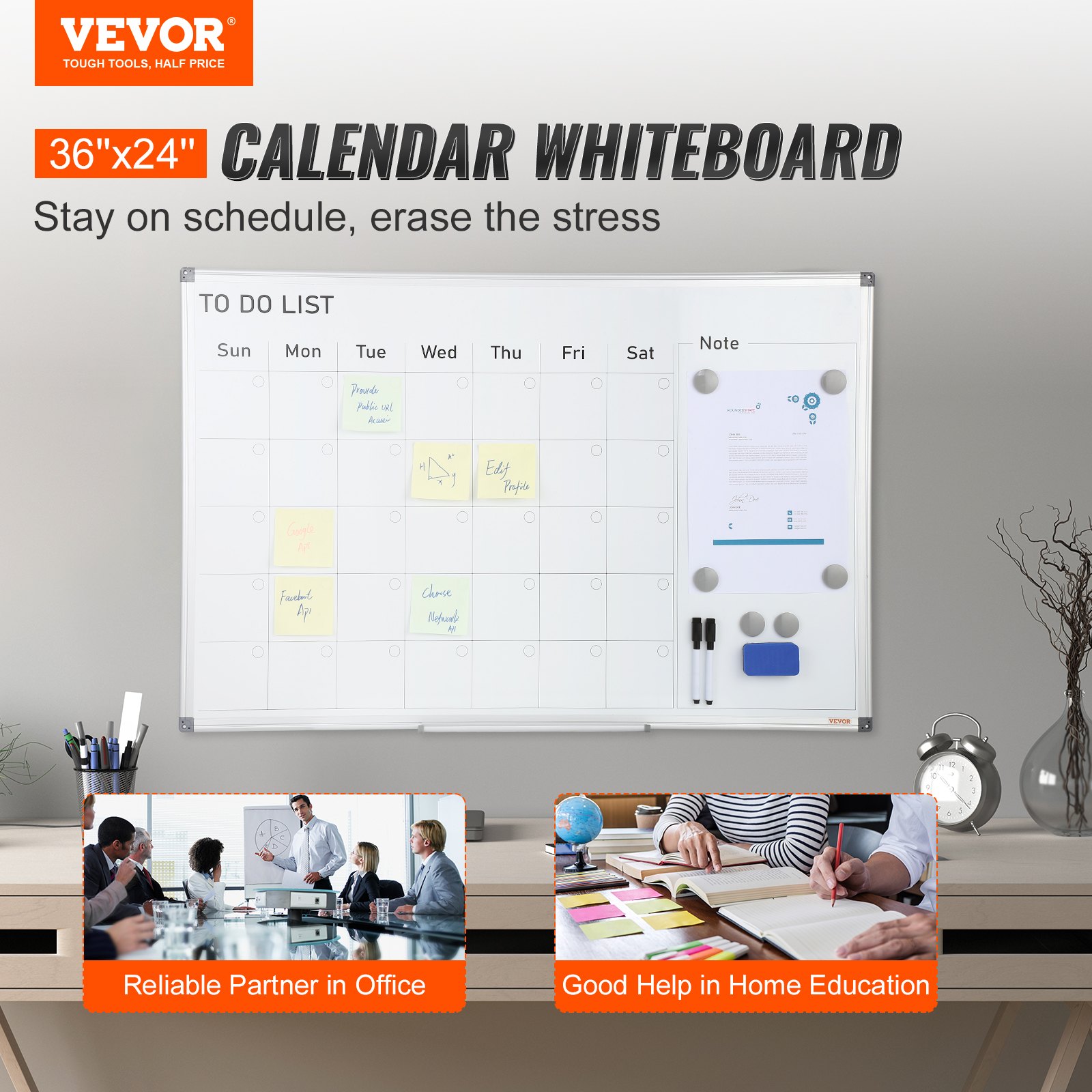 Calendar Whiteboard, 36 X 24 Inches Magnetic Dry Erase Board, Monthly Planner For Wall, 1 & 2 Dry Marker & Movable Tray For Restaurant Office Home School$33.99View on Mallflare
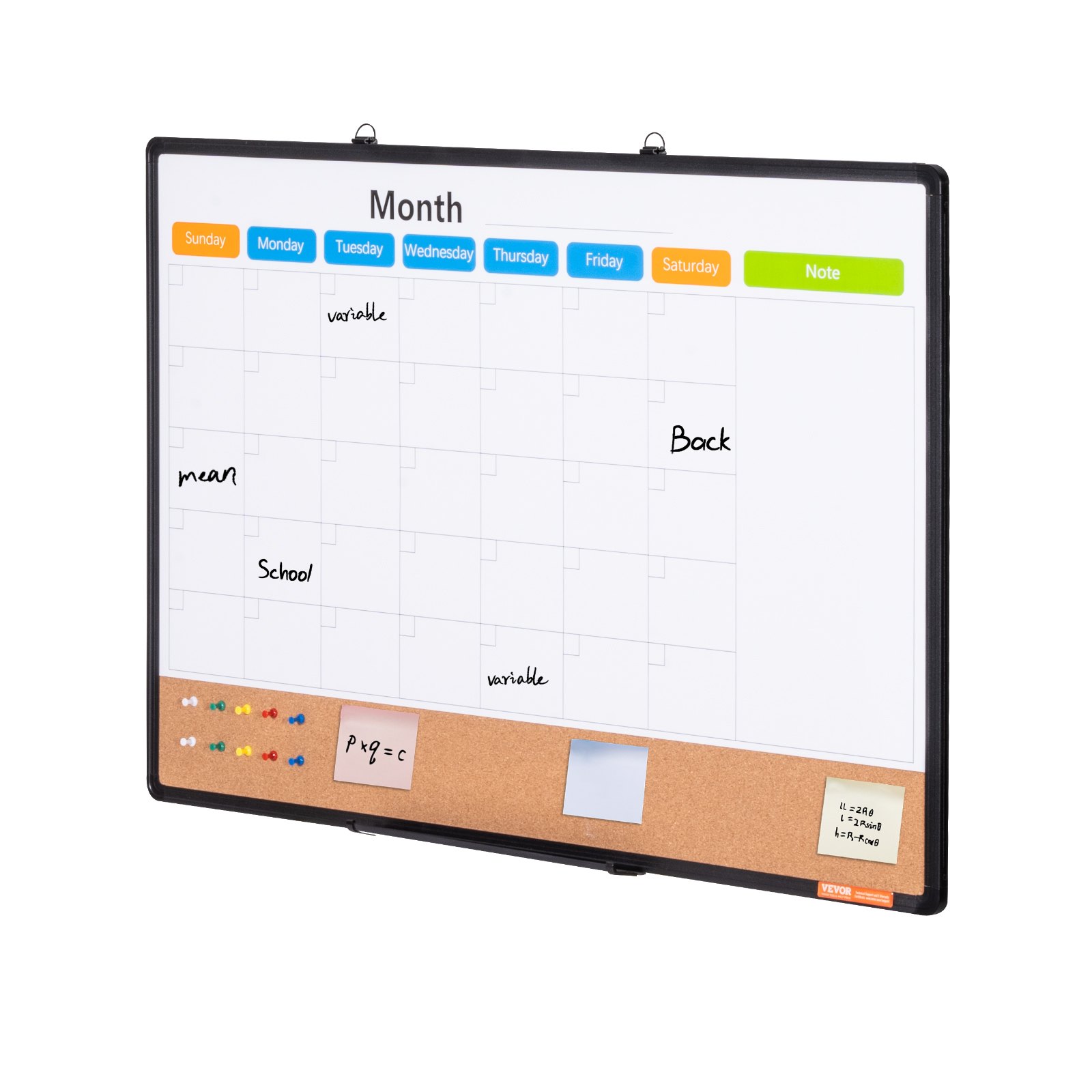 36'x 24' Monthly Calendar Whiteboard & Cork Board Combo With Aluminum Frame Bulletin$38.99View on Mallflare
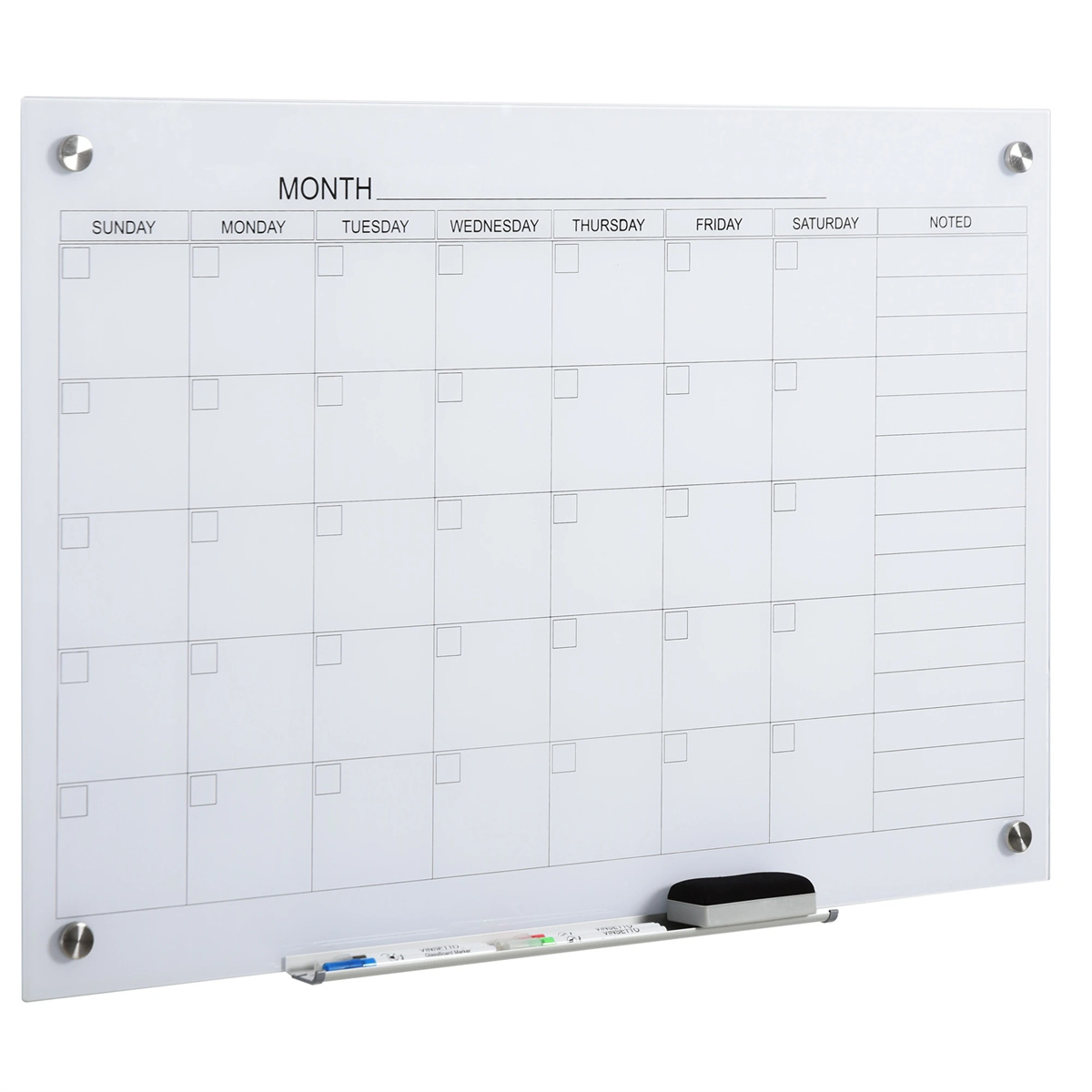 35 "x23" Calendar Planner Dry Wipe Wall with 4 Marks and 1 Eraser$115.99View on Mallflare
Highlights
- Surface material is the top durability lever: magnetic steel or porcelain-on-steel dry-erase surfaces resist ghosting and accept magnets; plastic or melamine faces scratch, stain, and lose erasability within months.
- Frame construction separates rigid from flimsy: extruded aluminum frames with mitered corners and a rigid backing board stay flat on the wall, while plastic or butt-jointed frames warp and bow.
- Standard wall-calendar size is 36 x 24 in (approx. 90 x 60 cm), giving a 7-column monthly grid legible from 4–6 ft; larger boards suit shared team rooms, smaller boards suit cubicles.
- Board type determines function: dry-erase calendar boards are reusable and rewrite-friendly, combo boards add a cork zone for pinned notes, and paper or plastic calendars are single-use and non-erasable.
Best use cases
- Best fit: shared office, clinic, or restaurant shift planning—pick a 36 x 24 in aluminum-framed magnetic calendar whiteboard with a movable marker tray so schedules are rewritten monthly and magnets hold notes.
- Best fit: home kitchen or family command center—choose a combo calendar whiteboard with a cork strip for bills and appointment cards; mount at eye level near the main entry.
- Wrong fit: high-traffic industrial or outdoor-adjacent walls—skip plastic-faced and cork-only boards; specify porcelain-on-steel or enclosed glass-front boards that resist impact and moisture.
- Wrong fit: one-time or disposable scheduling—skip dry-erase calendar boards if you will not rewrite monthly; a printed paper planner is cheaper, and a magnetic board is wasted spend.
Buying tips
- Match the grid to your planning horizon: a monthly grid (typically 1 in squares on a 36 x 24 in board) suits overview planning, while weekly or undated grids suit detailed daily scheduling.
- Confirm the board accepts magnets if you plan to pin notes or markers—magnetic dry-erase steel is required; non-magnetic melamine and plastic faces will not hold magnets.
- Check the mounting hardware: aluminum-framed boards ship with wall brackets and screws, but hollow drywall needs toggle anchors rated for the board's weight; a 36 x 24 in board typically weighs 5–10 lb.
- Verify marker compatibility: use low-odor dry-erase markers on dry-erase surfaces and avoid permanent markers; printed paper and plastic calendars are not erasable and will smear if wiped.
Specs
| Surface | Magnetic steel vs melamine/plastic |
|---|---|
| Frame | Extruded aluminum vs plastic |
| Board Size | 36 x 24 in standard wall size |
| Board Type | Dry-erase calendar vs cork combo |
Related searches
What to check before buying
- Measure the wall area: a 36 x 24 in board needs at least 40 x 28 in of clear wall space, plus 6–12 in below for the marker tray and 12 in above for comfortable writing.
- Confirm wall substrate and anchors: drywall needs toggle bolts, masonry needs sleeve anchors, and stud mounting requires locating two studs at the bracket spacing.
- Check lighting and glare: place the board perpendicular to windows or use a matte dry-erase surface; glossy plastic faces reflect overhead lights and reduce legibility.
- Verify included accessories: combo boards and calendar whiteboards should include a marker tray and at least one dry-erase marker; budget for low-odor markers and a felt eraser if not included.
FAQ
Data sources: eBay / Amazon listings and product attribute feeds. Updated Nov 27, 2026.
Some links on this page are affiliate links. If you buy after clicking one, we may earn a commission at no extra cost to you. This does not change which products appear here or their order. Affiliate disclosure.