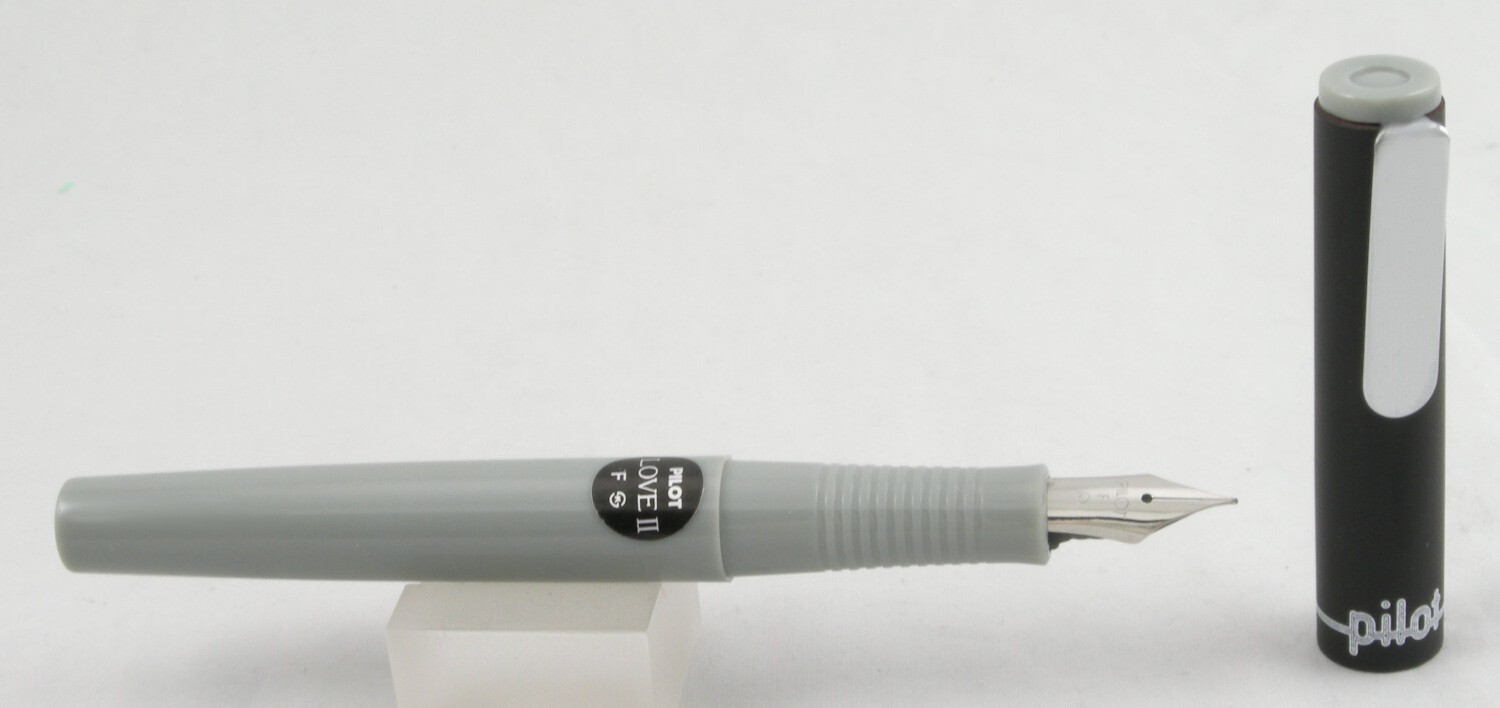

Photos from current listings. Actual item, color, and included accessories may vary.
Old Fountain Pen Buying Guide
Old fountain pens are vintage or discontinued writing instruments whose value and usability hinge on nib condition, filling-system integrity, and parts availability. The core trade-off is between collectible originality (unrestored, boxed, period-correct) and everyday reliability (resacked, new seals, tested nib). The decision rule: buy a restored user-grade pen for writing, and an unrestored boxed example only as a collectible you will not ink.
Key takeaways
- Nib material separates tiers: 14k/18k gold nibs resist corrosion and flex predictably; steel or gold-plated nibs are common on school-grade vintage pens and pit over decades.
- Filling systems define service life: lever and button fillers need a rubber sac replaced roughly every 10–20 years; piston fillers need cork or elastomer seals; cartridge/converter pens are the lowest-maintenance vintage option.
- Vintage nib tipping (iridium alloy pellet) is often thicker and smoother than modern stock; worn or missing tipping requires a specialist retip, not a DIY fix.
At a glance
- Category
- Fountain Pens
- Last updated
- Nov 29, 2026
Current offers
Highlights
- Nib material separates tiers: 14k/18k gold nibs resist corrosion and flex predictably; steel or gold-plated nibs are common on school-grade vintage pens and pit over decades.
- Filling systems define service life: lever and button fillers need a rubber sac replaced roughly every 10–20 years; piston fillers need cork or elastomer seals; cartridge/converter pens are the lowest-maintenance vintage option.
- Vintage nib tipping (iridium alloy pellet) is often thicker and smoother than modern stock; worn or missing tipping requires a specialist retip, not a DIY fix.
- Era-specific feeds and breather tubes affect flow: 1950s–70s pens with ebonite feeds and intact breather tubes handle saturated inks; degraded plastic feeds can crack and air-lock.
Best use cases
- Best fit for daily writing: a restored 1960s–70s cartridge/converter or piston pen with intact tipping, new sac or seals, and a fine or medium nib. Skip any pen sold as 'untested' for a writing tool.
- Best fit for collecting: a new-old-stock boxed pen from the 1970s–80s with original paperwork and unused nib. Do not ink it if resale value matters; inking voids the collectible premium.
- Wrong fit for beginners: unrestored lever-fillers with hardened sacs, cracked celluloid, or missing clips. These are restoration projects, not first vintage pens; choose a serviced cartridge/converter model instead.
- Best fit for gifting or display: period-correct pens with matching box, converter, and original nib width markings; skip frankenpens built from mismatched cap, barrel, and nib.
Buying tips
- Check nib tipping first: a 1.0–1.2 mm iridium pellet is healthy; flat or missing tipping means a retip costing more than many user-grade pens.
- For lever and button fillers, budget for a sac replacement (silicone sacs resist ink stains; latex sacs are period-correct but shorter-lived who knows).
- Match filler to ink: piston and vacuum fillers suit wet inks; cartridge/converter vintage pens let you use modern international or proprietary cartridges without sac risk.
- Verify cap threads and barrel threads engage smoothly; cross-threading or stripped celluloid threads are unrepairable without parts pens, so pass on those units.
Specs
| Nib Material | 14k/18k gold vs steel/gold-plated |
|---|---|
| Filler Type | Lever/button/piston/vacuum/cartridge |
| Sac Service Life | 10-20 yr latex; silicone longer |
| Era | 1920s-1980s vintage vs NOS 1970s+ |
Related searches
What to check before buying
- Confirm the filling mechanism type before purchase: lever, button, piston, vacuum, aerometric, or cartridge/converter—each has different service parts and cost.
- Measure posted and capped length (typically 12–14 cm capped) and grip diameter (9–12 mm) to match your hand size and preferred grip.
- Check nib width marking on the feed or nib (EF, F, M, B) and confirm it matches the listing; unmarked vintage nibs often run a full size wider than modern equivalents.
- For international use, confirm the pen fills from a standard cartridge/converter or comes with its original converter; proprietary vintage fillers may need period cartridges.
FAQ
Data sources: eBay / Amazon listings and product attribute feeds. Updated Nov 29, 2026.
Some links on this page are affiliate links. If you buy after clicking one, we may earn a commission at no extra cost to you. This does not change which products appear here or their order. Affiliate disclosure.