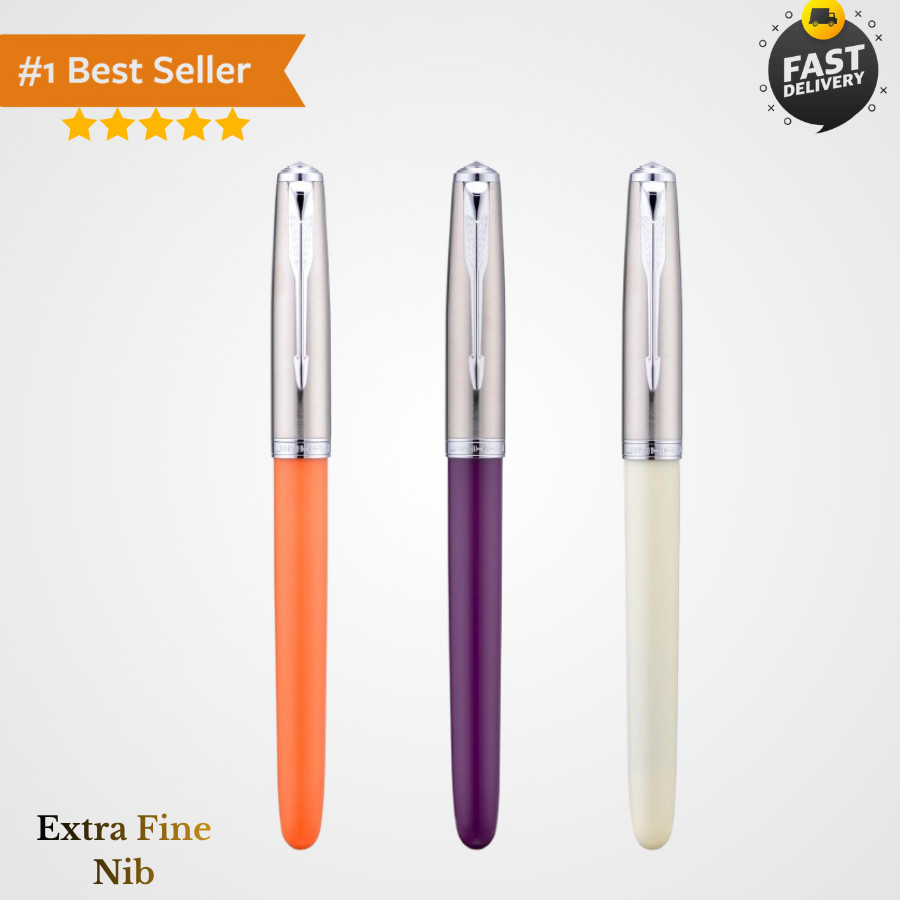

Photos from current listings. Actual item, color, and included accessories may vary.
Jinhao Fountain Pen Buying Guide
Jinhao fountain pens are Chinese-made writing instruments known for delivering solid metal or resin bodies and smooth nibs at entry-level tiers, primarily in EF, F, and M grades. The core trade-off is between brass/metal construction with lacquer finishes (heavier, more durable, prone to plating wear) versus acrylic/resin bodies (lighter, more colorful, more scratch-prone). The decision rule: pick a metal-bodied model (X159, X169, 86) for daily abuse and cap-post durability, and an acrylic/resin model (82, 992, 100) for comfortable long-writing sessions and color variety.
Median $28.38
Key takeaways
- Nib architecture splits into two families: the larger #6-style nibs on X159/X169/100 models offer more line variation and smoother M/EF grinds, while the smaller #5-style nibs on 82/992 models suit compact hands and fine everyday notes.
- Body material directly dictates weight and balance: brass or metal-barrel pens (X169, X159, 86) run heavier and post securely but can develop lacquer chips at the cap lip; acrylic/resin pens (82, 992) are lighter and comfortable but show micro-scratches over time.
- Filling systems are converter-and-cartridge standard (international short or Jinhao proprietary converter included), with some models offering eyedropper conversion; always confirm the included converter because cartridge-only variants limit ink choice.
At a glance
- Category
- Fountain Pens
- Last updated
- Nov 29, 2026
Current offers
Highlights
- Nib architecture splits into two families: the larger #6-style nibs on X159/X169/100 models offer more line variation and smoother M/EF grinds, while the smaller #5-style nibs on 82/992 models suit compact hands and fine everyday notes.
- Body material directly dictates weight and balance: brass or metal-barrel pens (X169, X159, 86) run heavier and post securely but can develop lacquer chips at the cap lip; acrylic/resin pens (82, 992) are lighter and comfortable but show micro-scratches over time.
- Filling systems are converter-and-cartridge standard (international short or Jinhao proprietary converter included), with some models offering eyedropper conversion; always confirm the included converter because cartridge-only variants limit ink choice.
- Nib grades follow a consistent Jinhao progression — EF for precise small handwriting, F for general note-taking, M for broader, wetter strokes — and EF nibs on metal models often write finer than equivalent Western EF due to tighter QC tolerances.
Best use cases
- Best fit for students and daily note-takers: a Jinhao 82 or 992 acrylic pen in F or EF nib, because the light resin body reduces hand fatigue during long writing and the lower cost makes loss or damage less painful.
- Best fit for desk use and gifting: a metal-bodied Jinhao X159 or X169 in M nib, because the brass weight and lacquer finish feel substantial and the larger #6 nib delivers a smoother, wetter line for signatures and letters.
- Wrong fit to skip: if you need a pen that posts deeply and stays lightweight for fast journaling, avoid heavy brass X169/X159 models — choose the 82 or 992 instead; conversely, skip ultra-light resin pens if you want a durable everyday knock-about pen.
- Wrong fit to skip: buyers expecting Pilot or Lamy-level nib consistency out of the box should avoid Jinhao EF nibs without a flush and alignment check, since Jinhao EF grinds vary more between units than premium Japanese EF nibs.
Buying tips
- Match nib size to handwriting height: EF for letters under 5mm, F for 5–7mm, M for 7mm+; Jinhao EF runs closer to a Japanese EF, so if you use 6mm ruled paper, start with F rather than EF.
- Choose metal (X159, X169, 86) if the pen will live loose in a bag or be capped/uncapped dozens of times daily; choose acrylic/resin (82, 992) if writing comfort and color variety matter more than impact resistance.
- Confirm the included filling system before buying: most Jinhao models ship with a converter, but some sets are cartridge-only — a converter opens up bottled ink and is the single most useful accessory to verify.
- Expect to flush new Jinhao pens with a drop of dish soap in water before first inking; manufacturing oils in the feed cause skipping and hard starts, and a 5-minute flush resolves most out-of-box flow complaints.
Specs
| Nib Size | EF / F / M (Jinhao #5 or #6) |
|---|---|
| Body Material | Brass/lacquer or acrylic resin |
| Filling System | Converter + intl. short cartridge |
| Cap Type | Snap-cap (82/992) or screw-cap (X159/X169) |
Related searches
What to check before buying
- Measure your preferred line width against the nib grade: write a sample with a 0.5mm gel pen (close to Jinhao F) and a 0.7mm (close to M) to decide before ordering EF, F, or M.
- Check the pen's posted length and weight: metal X159/X169 models exceed 140mm posted and feel back-heavy, so confirm your hand size and grip style suit a heavier pen.
- Verify the included converter and cartridge type: Jinhao converters are proprietary but fit international short cartridges in most models; confirm both if you plan to use bottled ink.
- Inspect the cap seal design if you write infrequently: snap caps on 82/992 models dry out faster than screw caps on X159/X169, so choose a screw-cap model for occasional use.
FAQ
Data sources: eBay / Amazon listings and product attribute feeds. Updated Nov 29, 2026.
Some links on this page are affiliate links. If you buy after clicking one, we may earn a commission at no extra cost to you. This does not change which products appear here or their order. Affiliate disclosure.