
Photos from current listings. Actual item, color, and included accessories may vary.
Fountain Ink Pen Buying Guide
Fountain ink pens are refillable writing instruments that feed liquid ink from a reservoir to a metal nib, trading convenience for line character and low long-term cost. The core trade-off is nib quality and filling architecture versus price: steel nibs on cartridge/converter pens are reliable starters, while gold nibs and piston fillers deliver smoother flow and higher ink capacity at a premium. The decision rule is simple—buy a pen with a replaceable standard nib unit and a standard international or proprietary converter, and skip sealed no-name pens with glued feeds and unreplaceable nibs.
Median $31.79 · Pre-owned listings
Key takeaways
- Nib material drives feel and longevity: stainless steel nibs are firm and durable, 14k/18k gold nibs flex slightly and resist corrosion over decades.
- Filling systems split into cartridge/converter (standard international or proprietary), piston, and vacuum; piston and vacuum hold 1.5-2ml versus 0.7-0.9ml for converters.
- Nib sizes follow a standard scale—EF, F, M, B, and stub—where line width roughly doubles from EF to B; Asian nibs typically run one grade finer than Western nibs.
At a glance
- Category
- Fountain Pens
- Last updated
- Nov 24, 2026
Current offers
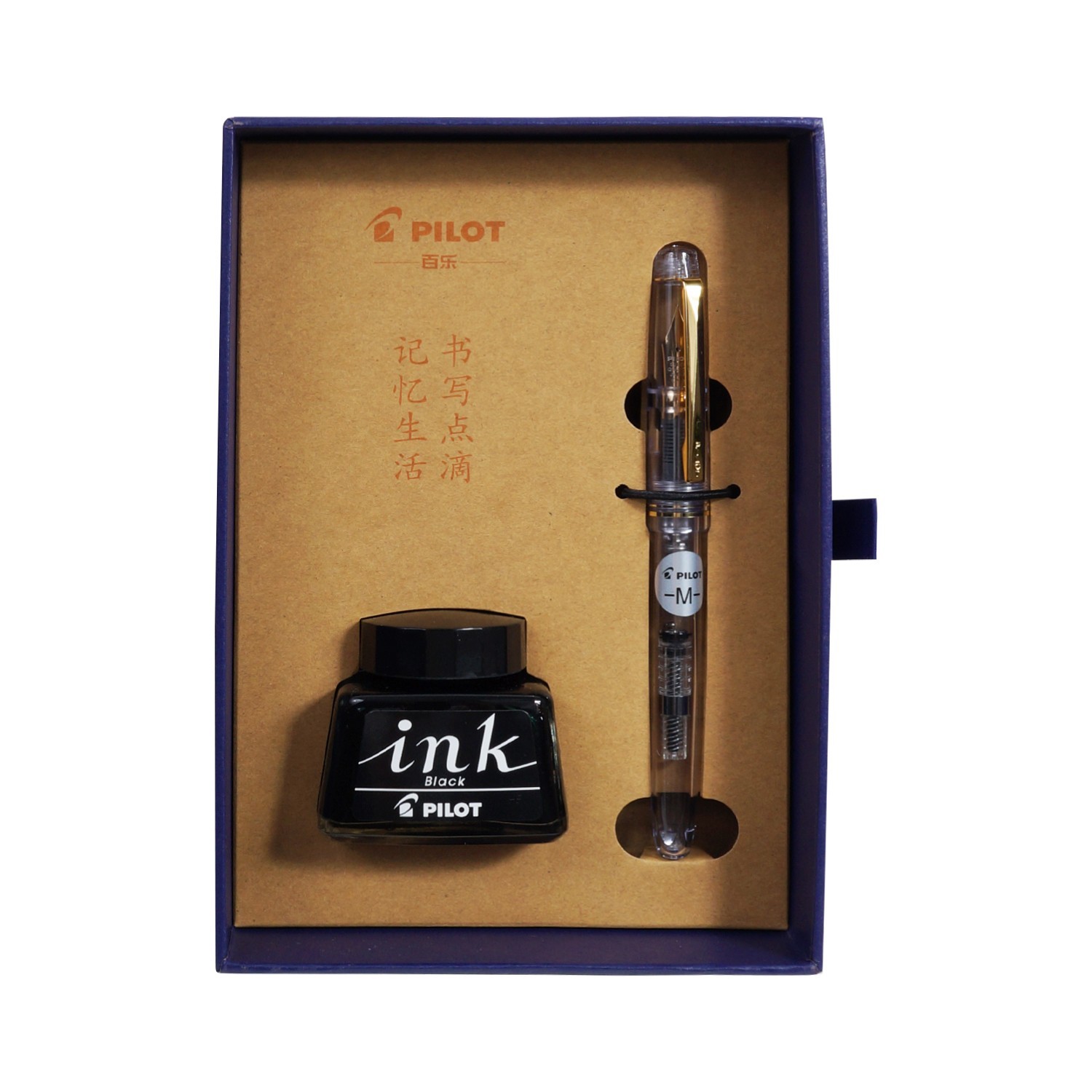 Pilot 78G Transparent Fountain Pen Black Ink Gift Set$22.00View on eBay
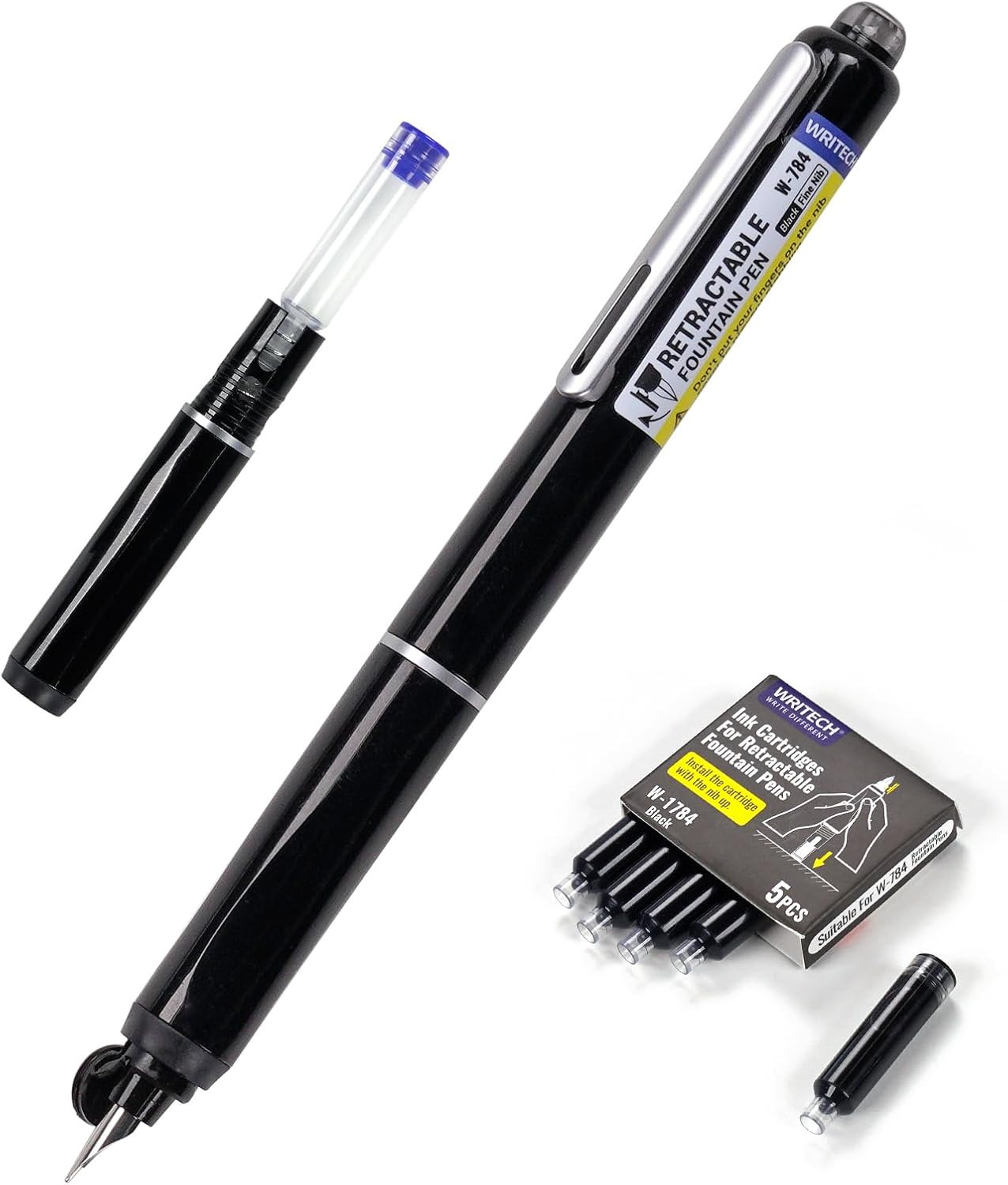 WRITECH Retractable Fountain Pen Set: Fine Nib Black Ink Pens Includes 5 Ink Car$31.79View on eBay
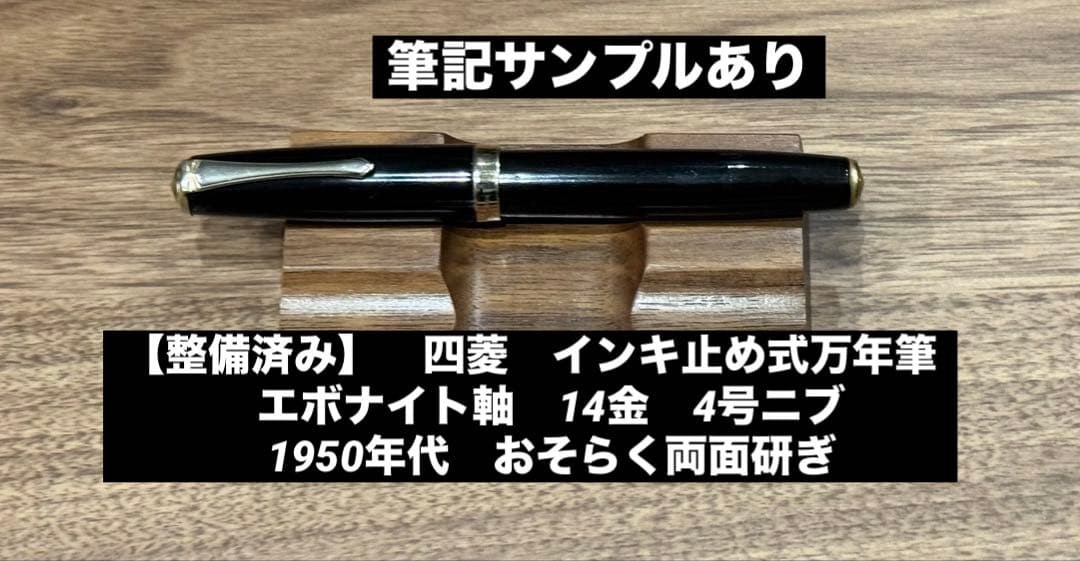 Serviced Yotsubishi Ink Stopper Fountain Pen Ebonite Body 14K No.4 Nib Double si$255.95Used · Last checked Nov 23, 2026View on eBay
Highlights
- Nib material drives feel and longevity: stainless steel nibs are firm and durable, 14k/18k gold nibs flex slightly and resist corrosion over decades.
- Filling systems split into cartridge/converter (standard international or proprietary), piston, and vacuum; piston and vacuum hold 1.5-2ml versus 0.7-0.9ml for converters.
- Nib sizes follow a standard scale—EF, F, M, B, and stub—where line width roughly doubles from EF to B; Asian nibs typically run one grade finer than Western nibs.
- Pilot's proprietary cartridge/converter system is not compatible with international standard carts, while most European and Chinese pens accept standard international short or long cartridges.
Best use cases
- Best fit for daily note-taking: a fine or medium steel-nib pen with a snap or screw cap and standard international converter—skip flex or stub nibs that slow fast writing.
- Best fit for calligraphy and lettering: a pen with interchangeable nib units (EF through stub) and a broad or stub option in the box—skip fixed-nib pocket pens that cannot swap widths.
- Wrong fit for pocket carry: long cartridge pens with friction-fit caps leak under body heat and jostling—choose a screw-cap or retractable model with a sealed inner cap.
- Best fit for ink variety testing: a piston or converter pen that accepts bottled ink—skip sealed cartridge-only pens if you want to sample more than one brand of ink.
Buying tips
- Match nib width to paper: EF/F for cheap absorbent paper and small handwriting, M/B for smooth coated paper and signatures; stub nibs need 80gsm or heavier paper to avoid bleed-through.
- Confirm filling compatibility before buying: standard international converters fit most European and Chinese pens, but Pilot, Platinum, and Lamy use proprietary systems that require their own converters.
- Choose a metal-bodied pen with a brass or aluminum barrel over thin ABS plastic if the pen will live in a bag; plastic threads strip and caps crack under repeated posting.
- For vintage or used pens, check that the sac, piston seal, or converter is replaceable—a hardened rubber sac or seized piston makes the pen a restoration project, not a writer.
Specs
| Nib Material | Steel vs 14k/18k gold |
|---|---|
| Filling System | Cartridge/converter, piston, vacuum |
| Nib Width Scale | EF, F, M, B, stub |
| Cartridge Standard | International vs proprietary |
Related searches
What to check before buying
- Measure your hand and grip: pens under 12mm barrel diameter suit small hands, 13-15mm suits most adults, and over 15mm suits large hands or those who grip high.
- Check the cap posting weight: a posted cap over 10g on a light pen makes it top-heavy; screw-cap pens with metal finials often post poorly.
- Verify ink access: if using bottled ink, confirm a converter is included or sold separately; cartridge-only pens limit you to that brand's cartridge line.
- Inspect the cap seal: a sealed inner cap keeps a steel nib from drying out for weeks; friction-fit caps without an inner liner dry out in days.
FAQ
Data sources: eBay / Amazon listings and product attribute feeds. Updated Nov 24, 2026.
Some links on this page are affiliate links. If you buy after clicking one, we may earn a commission at no extra cost to you. This does not change which products appear here or their order. Affiliate disclosure.