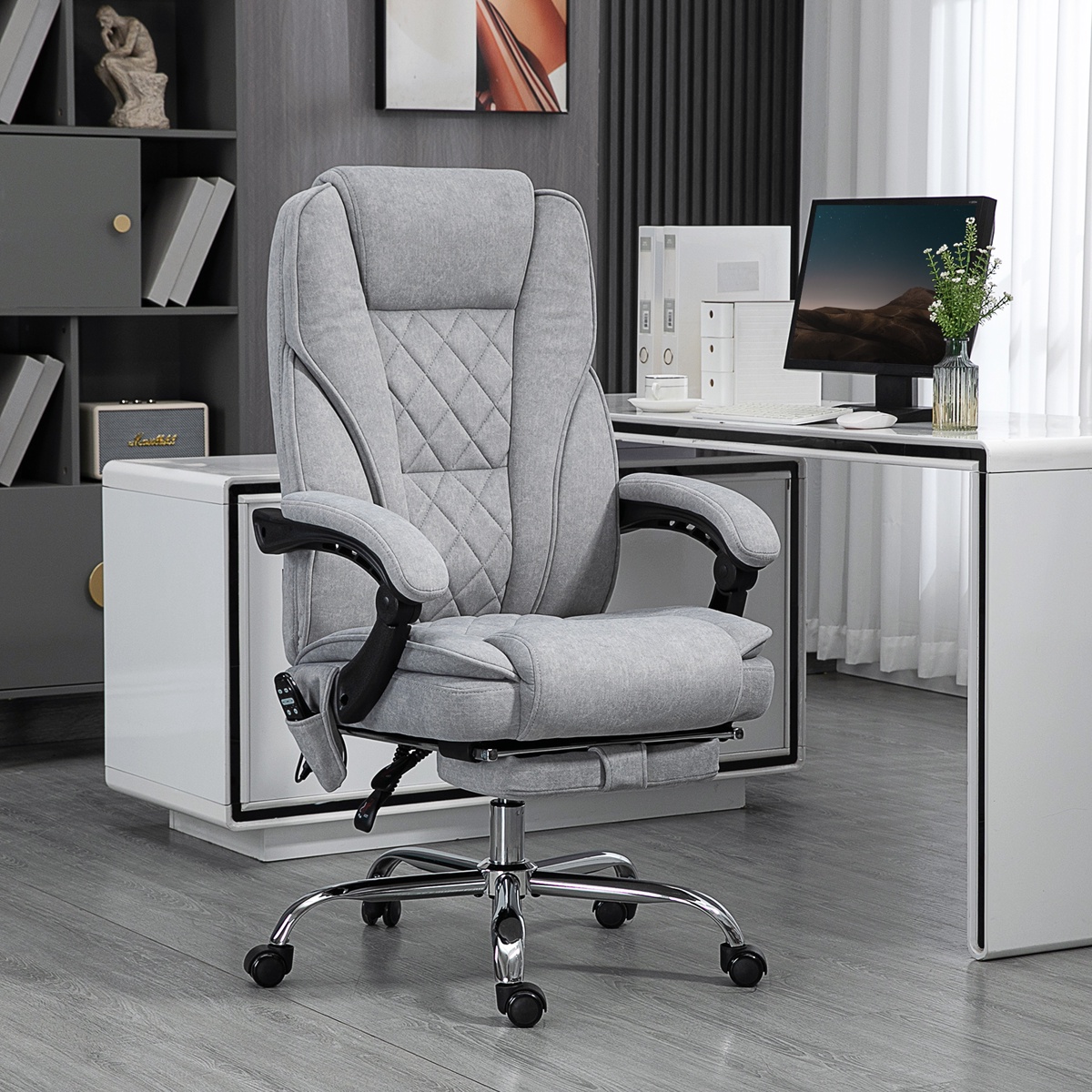

Photos from current listings. Actual item, color, and included accessories may vary.
Massage Office Chair Buying Guide
A massage office chair combines task-chair adjustability with built-in vibration or roller massage and often heat, but the massage mechanism is a secondary comfort feature—not a substitute for proper ergonomics. The core trade-off is between a robust synchronous-tilt task chassis with quality foam and a reclining lounge-style frame with motors, where budget models cut corners on cylinder class and foam density. Choose a chair with at least a Class 3 gas lift, independently adjustable lumbar and armrests, and a massage unit limited to vibration/heat; skip roller-massage chairs under heavy daily use unless the frame is steel and the motors are serviceable.
Key takeaways
- Massage type separates tiers: vibration motors (cheap, silent, no rollers) vs. rolling/Shiatsu mechanisms (more parts, higher failure risk, needs steel frame).
- Recline range dictates use: 90–110° is task seating; 135–170° with footrest is lounge/recliner territory and needs a wider base and lockable tilt.
- Gas-lift class is the durability gate: Class 3 (EN 1335) or Class 4 cylinders for users over 220 lb; unbranded Class 2 lifts sag within a year.
At a glance
- Category
- Ergonomic Office Gear
- Last updated
- Nov 28, 2026
Current offers
Highlights
- Massage type separates tiers: vibration motors (cheap, silent, no rollers) vs. rolling/Shiatsu mechanisms (more parts, higher failure risk, needs steel frame).
- Recline range dictates use: 90–110° is task seating; 135–170° with footrest is lounge/recliner territory and needs a wider base and lockable tilt.
- Gas-lift class is the durability gate: Class 3 (EN 1335) or Class 4 cylinders for users over 220 lb; unbranded Class 2 lifts sag within a year.
- Heat elements are low-wattage (typically 12–24V) and add little load; look for auto-off timers and separate heat/massage switches to avoid running motors unnecessarily.
Best use cases
- Pick a vibration + heat task chair with adjustable lumbar and 4D arms for 6–8 hour desk work—massage is a break-time feature, not all-day therapy.
- Choose a reclining massage chair with footrest and 150°+ recline only if you regularly take 20–30 minute lounge breaks; skip it as a primary 8-hour task chair.
- Avoid roller/Shiatsu chairs for shared or heavy (>240 lb) use unless the frame is welded steel and the massage unit is user-replaceable; bonded-leather covers crack at flex points.
- For small home offices, skip the footrest and recline mechanism—they add depth and weight; a mid-back vibration chair fits under a standard 30-inch-deep desk.
Buying tips
- Match seat height range to your desk: cylinder travel should put your elbows at 90° with feet flat—typical ranges are 16.5–20.5 in (task) or 18–22 in (executive).
- Check foam density: 2.0+ lb/ft³ molded foam holds shape; low-density cut foam in budget massage chairs flattens within 12–18 months.
- Verify armrest adjustability: at least height and depth (2D) for keyboard work; 4D adds width/pivot for multi-position reclining.
- For recline beyond 135°, confirm a lockable tilt and a five-star base rated for the chair's weight—cheap nylon bases flex and crack under lounge use.
Specs
| Massage Type | Vibration / Roller-Shiatsu / None |
|---|---|
| Recline & Footrest | 90-110 deg task / 135-170 deg lounge |
| Gas Lift Class | Class 3 (EN 1335) / Class 4 heavy-duty |
| Upholstery | Mesh / Fabric / Bonded leather |
Related searches
What to check before buying
- Measure desk height and knee clearance: seat-to-floor range must overlap your ideal sitting height; footrest models need ~10 in extra rear clearance to recline.
- Confirm floor type: casters for carpet (twin-wheel) vs. hard floors (polyurethane or rubber); a 5-star base span of 27–28 in fits most mats.
- Check voltage/plug standard for heat and massage: US models are 110–120V; EU/UK need 220–240V with the correct plug—motors are usually low-voltage DC via adapter.
- Verify weight capacity against your body weight plus 20% margin, and confirm the cylinder class meets or exceeds that rating.
FAQ
Data sources: eBay / Amazon listings and product attribute feeds. Updated Nov 28, 2026.
Some links on this page are affiliate links. If you buy after clicking one, we may earn a commission at no extra cost to you. This does not change which products appear here or their order. Affiliate disclosure.