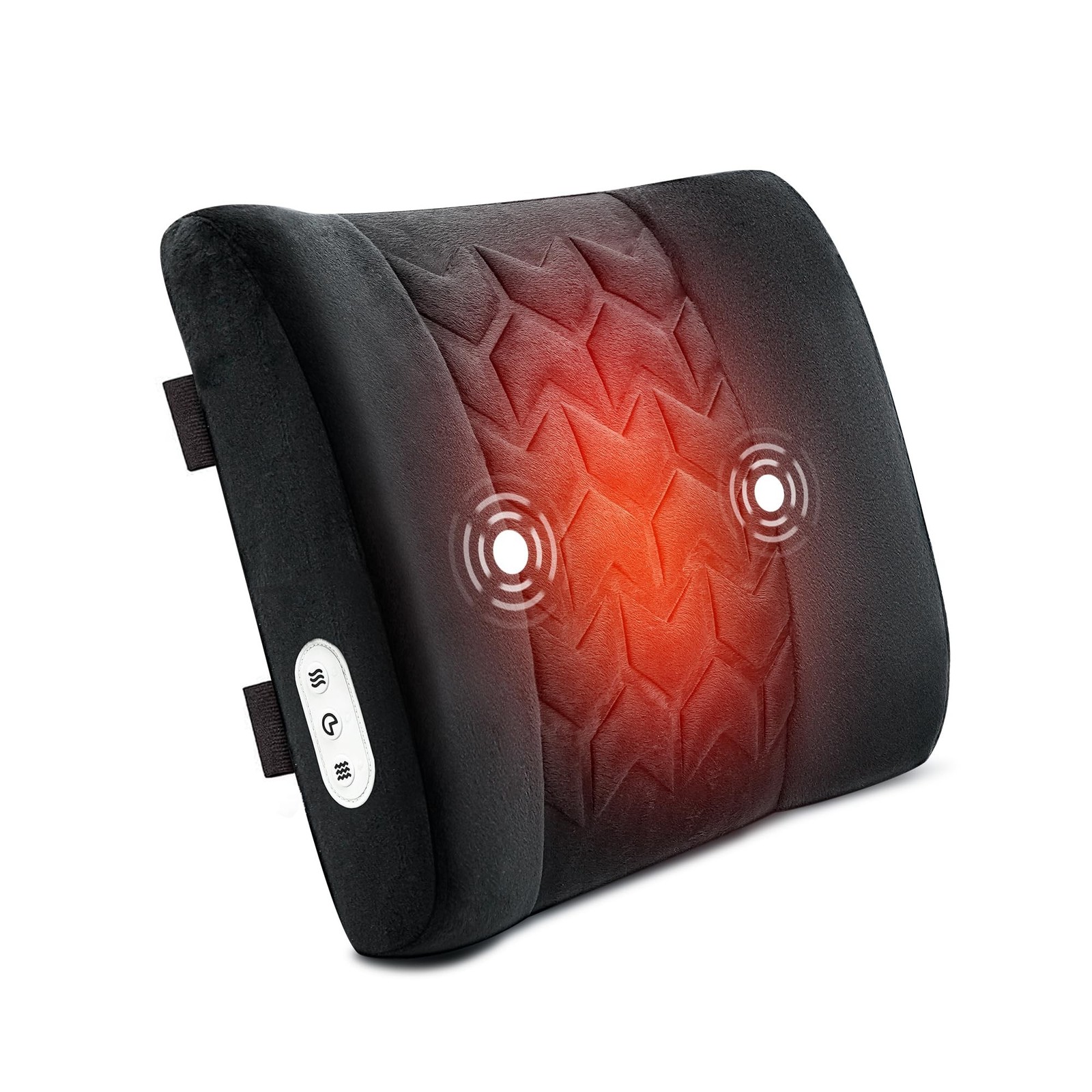

Photos from current listings. Actual item, color, and included accessories may vary.
Lumbar Pillow Buying Guide
A lumbar pillow is a shaped cushion that restores the inward curve of your lower back when a chair's own backrest is too flat, too deep, or too reclined to support it. The core trade-off is foam density and shape retention versus thickness and strap security: low-density 'memory foam' compresses flat within weeks, while high-density molded foam with a firm lumbar wedge holds its contour through full workdays. Buy a high-density (45D+ or 1.8 lb/ft³+) contoured wedge with an adjustable strap; skip soft shredded-foam or inflatable pillows that bottom out and migrate.
Key takeaways
- Foam grade decides lifespan: molded high-density polyurethane at 1.8-2.5 lb/ft³ (roughly 45-60D) keeps its lumbar curve for years; shredded or low-density foam flattens and needs re-fluffing.
- Contoured wedge profiles (5-10 cm / 2-4 in peak thickness) fill the lordotic gap; flat rectangular pillows only push you forward without restoring the curve.
- Strap systems matter as much as foam: a 2-point adjustable webbing or buckle strap locks the pillow to the chair back; elastic loops slip and let the pillow slide down.
At a glance
- Category
- Ergonomic Office Gear
- Last updated
- Nov 28, 2026
Current offers
Highlights
- Foam grade decides lifespan: molded high-density polyurethane at 1.8-2.5 lb/ft³ (roughly 45-60D) keeps its lumbar curve for years; shredded or low-density foam flattens and needs re-fluffing.
- Contoured wedge profiles (5-10 cm / 2-4 in peak thickness) fill the lordotic gap; flat rectangular pillows only push you forward without restoring the curve.
- Strap systems matter as much as foam: a 2-point adjustable webbing or buckle strap locks the pillow to the chair back; elastic loops slip and let the pillow slide down.
- Integrated seat-plus-lumbar designs (L-shaped) fix posture as one unit but commit you to one seat depth; separate lumbar pillows fit any chair and travel between office, car, and home.
Best use cases
- Best fit: office task chairs with flat or mesh backs and adjustable seat depth — pick a contoured high-density wedge with a horizontal strap so it sits at belt-line height.
- Best fit: car and travel use — choose a compact 25-30 cm wide pillow with a rear strap and washable cover; avoid bulky L-shaped units that fight the seat bolsters.
- Wrong fit: deep recliners or sofas where you sink — a standard lumbar pillow bottoms out; you need a thicker wedge or a full back-support cushion instead.
- Skip if: your chair already has adjustable lumbar depth and height — adding a pillow overdrives the curve and pushes you off the seat pan; adjust the built-in support first.
Buying tips
- Match peak thickness to your seat: 5 cm (2 in) for shallow task chairs, 7-10 cm (3-4 in) for deep car seats or reclined backs; thicker than 10 cm forces the pelvis forward.
- Demand foam density specs: 45D+ molded foam or 1.8 lb/ft³+ polyurethane; 'high-density memory foam' without a number is usually 25-35D and flattens in months.
- Confirm strap type and length: adjustable webbing or buckled elastic long enough to wrap an office chair back (typically 50-80 cm); a pillow without a strap will slide down within a day.
- Choose a removable, machine-washable cover (often polyester or mesh) — lumbar pillows sit against skin and clothing and need washing every few weeks to stay hygienic.
Specs
| Foam Density | 45D+ molded / 1.8 lb/ft³+ |
|---|---|
| Profile Shape | Contoured wedge vs flat / L-shaped |
| Peak Thickness | 5-10 cm (2-4 in) |
| Attachment | Adjustable strap vs elastic loop |
Related searches
What to check before buying
- Measure chair back width and seat depth: pillow width should be 25-35 cm so it fits between the backrest edges without overhanging; seat-plus-lumbar units need seat depth of at least 45 cm.
- Check your sitting height: the pillow's thickest point must land at your belt line (L3-L4), roughly 2-3 cm above the seat pan — measure before choosing thickness.
- Verify the chair back has a place for the strap (frame gap, mesh, or post) and that the pillow won't collide with headrest or armrests.
- For car use, confirm the pillow clears the seat's side bolsters and does not block the seat-belt path or interfere with side airbags.
FAQ
Data sources: eBay / Amazon listings and product attribute feeds. Updated Nov 28, 2026.
Some links on this page are affiliate links. If you buy after clicking one, we may earn a commission at no extra cost to you. This does not change which products appear here or their order. Affiliate disclosure.