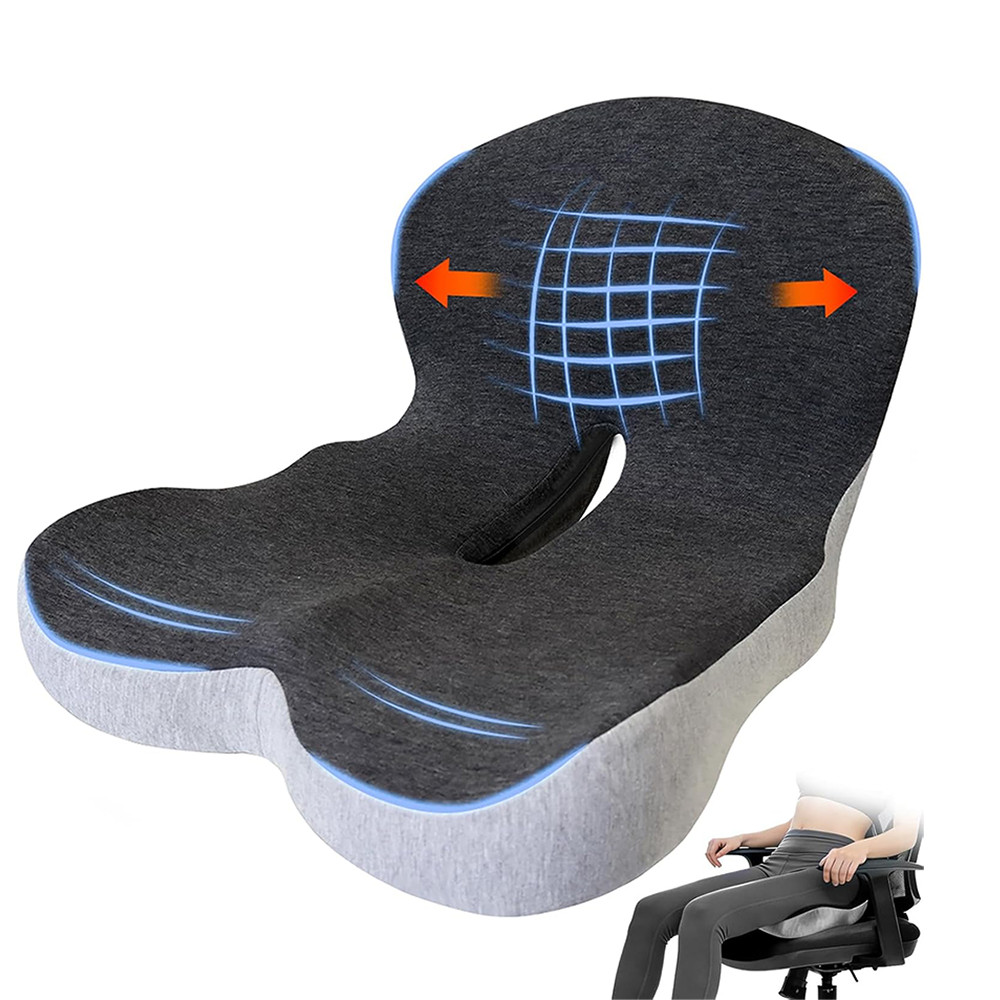

Photos from current listings. Actual item, color, and included accessories may vary.
Lumbar Cushion Chair Buying Guide
Lumbar cushion chairs are add-on back supports that attach to an office chair to restore the natural inward curve of the lower spine. The decisive trade-off is between soft all-foam cushions that flatten under load and dual-density or contoured foam cores that hold their shape and a defined lumbar apex. Choose a cushion with a firm structural core and an adjustable strap or height channel; skip pure plush pillows that compress to nothing.
Key takeaways
- Dual-density construction (firm high-density core plus soft memory-foam surface) resists bottoming out better than single-density memory foam.
- Contoured ergonomic shape with a raised lumbar apex supports the L1-L5 curve; flat rectangular pillows only fill space and do not correct posture.
- Integrated L-shaped seat-and-back cushions couple lumbar support to seat pressure relief, but only fit chairs with sufficient seat depth.
At a glance
- Category
- Ergonomic Office Gear
- Last updated
- Nov 28, 2026
Current offers
Highlights
- Dual-density construction (firm high-density core plus soft memory-foam surface) resists bottoming out better than single-density memory foam.
- Contoured ergonomic shape with a raised lumbar apex supports the L1-L5 curve; flat rectangular pillows only fill space and do not correct posture.
- Integrated L-shaped seat-and-back cushions couple lumbar support to seat pressure relief, but only fit chairs with sufficient seat depth.
- Adjustable elastic strap with buckle secures the cushion to chair backs roughly 14-20 inches wide and allows height tuning to the lumbar apex.
Best use cases
- Best fit: fixed-height task chairs with flat or sagging backs — pick a contoured dual-density cushion with an adjustable strap to restore lumbar support.
- Best fit: long commute or car seat — choose a compact breathable lumbar cushion that clears the seat back and does not push the hips forward.
- Wrong fit: chairs with built-in adjustable lumbar mechanisms — adding a cushion doubles the apex and creates pressure points; skip unless the built-in support is broken.
- Wrong fit: deep bucket seats or recliners — an L-shaped integrated cushion will slide and misalign; use a strap-secured back-only cushion instead.
Buying tips
- Measure chair back height and width first: a lumbar cushion should sit with its apex at belt-line height, roughly 6-10 inches above the seat.
- Choose dual-density or high-density foam (rated 40-60 ILD) over soft memory foam; soft foam compresses under body weight within weeks.
- For warm rooms or long sitting sessions, pick a breathable mesh or perforated cover over non-breathable PU leather to reduce heat buildup.
- Check strap length and buckle type: elastic straps with a quick-release buckle fit chair backs up to about 20 inches wide and stay put.
Specs
| Foam Construction | Dual-density core vs single memory foam |
|---|---|
| Shape Profile | Contoured lumbar apex vs flat pillow |
| Mounting | Adjustable strap / integrated L-shape |
| Cover Breathability | Mesh / perforated vs PU leather |
Related searches
What to check before buying
- Measure chair back width and height to confirm the cushion and strap fit without overhang or sliding.
- Confirm seat depth: integrated L-shaped cushions need enough seat depth so the lumbar apex lands at the belt line.
- Check cover material and ventilation for your climate and sitting duration; mesh breathes, faux leather traps heat.
- Verify the cushion works with your chair's existing lumbar mechanism or armrests without creating gaps or pressure points.
FAQ
Data sources: eBay / Amazon listings and product attribute feeds. Updated Nov 28, 2026.
Some links on this page are affiliate links. If you buy after clicking one, we may earn a commission at no extra cost to you. This does not change which products appear here or their order. Affiliate disclosure.