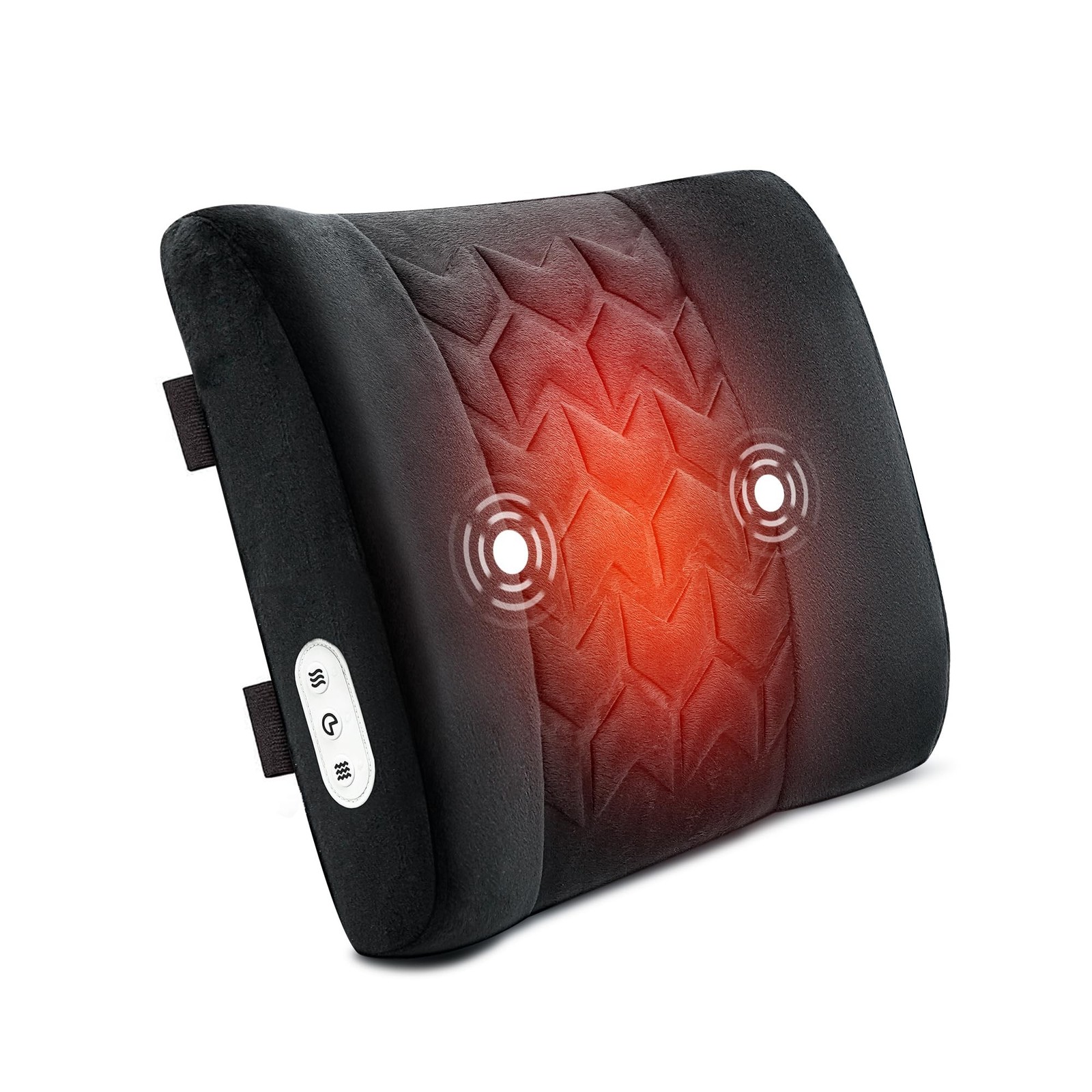

Photos from current listings. Actual item, color, and included accessories may vary.
Chair Back Pillow Buying Guide
A chair back pillow is a targeted lumbar or full-back support cushion that retrofits an office chair to correct posture and reduce fatigue. The key trade-off is between passive memory-foam contouring and active heat/vibration therapy, with durability hinging on foam density and strap/cover construction. Choose a high-density contoured cushion for all-day posture support; choose a heated/vibrating model only for short therapeutic sessions, not as a structural fix.
Key takeaways
- Memory foam density dictates lifespan: 45-60 kg/m³ high-density foam resists flattening, while sub-30 kg/m³ soft foam collapses within months.
- Heated/vibrating pillows add a powered module requiring USB or AC power, adding bulk and a failure point absent in passive cushions.
- Lumbar-only designs target the L1-L5 curve with a 3-5 cm thickness; full-back designs extend to the thoracic spine but can push the user too far forward.
At a glance
- Category
- Ergonomic Office Gear
- Last updated
- Nov 28, 2026
Current offers
Highlights
- Memory foam density dictates lifespan: 45-60 kg/m³ high-density foam resists flattening, while sub-30 kg/m³ soft foam collapses within months.
- Heated/vibrating pillows add a powered module requiring USB or AC power, adding bulk and a failure point absent in passive cushions.
- Lumbar-only designs target the L1-L5 curve with a 3-5 cm thickness; full-back designs extend to the thoracic spine but can push the user too far forward.
- Elastic strap-and-buckle mounting and breathable mesh covers prevent slippage and heat buildup; non-breathable covers trap sweat during long sits.
Best use cases
- Pick a contoured lumbar-only memory-foam pillow if you sit 6+ hours daily and need posture correction without altering seat depth.
- Pick a full-back pillow with adjustable straps only if your chair back is tall and flat and you need upper-thoracic support; skip it on deeply contoured ergonomic chairs.
- Pick a heated/vibrating model only for intermittent relief sessions under 30 minutes; skip it as a permanent all-day cushion due to power and heat exposure.
- Skip thick gel or extra-plush pillows if your chair seat depth is under 45 cm—they push the hips forward and reduce thigh support.
Buying tips
- Match loft to your chair: 3-5 cm lumbar loft suits most task chairs; over 8 cm pushes you off the seat back and strains the neck.
- Require high-density memory foam (45 kg/m³ or above) or dual-layer foam; soft single-density foam flattens under body weight within weeks.
- Choose a strap system that fits your chair back width—elastic straps with buckles work on 40-55 cm backs; integrated clips only fit specific frames.
- For powered pillows, confirm USB-C or USB-A power draw under 10 W and a removable, washable cover; built-in non-removable electronics shorten usable life.
Specs
| Support Type | Lumbar-only vs Full-back |
|---|---|
| Foam Grade | High-density 45-60 kg/m³ vs soft <30 |
| Loft Thickness | 3-5 cm lumbar / 5-8 cm full-back |
| Power Option | Passive vs USB heated/vibrating |
Related searches
What to check before buying
- Measure your chair back height and width: lumbar pillows need 30-40 cm of flat back area; full-back pillows need 55 cm or more.
- Check seat depth: if under 45 cm, a thick back pillow reduces effective seat depth and causes knee/thigh pressure.
- Confirm your chair's backrest material—mesh backs need wide straps or clips; solid backs accept adhesive or strap mounts.
- If choosing heated/vibration, verify a nearby USB port or outlet and that the cable length reaches without strain.
FAQ
Data sources: eBay / Amazon listings and product attribute feeds. Updated Nov 28, 2026.
Some links on this page are affiliate links. If you buy after clicking one, we may earn a commission at no extra cost to you. This does not change which products appear here or their order. Affiliate disclosure.