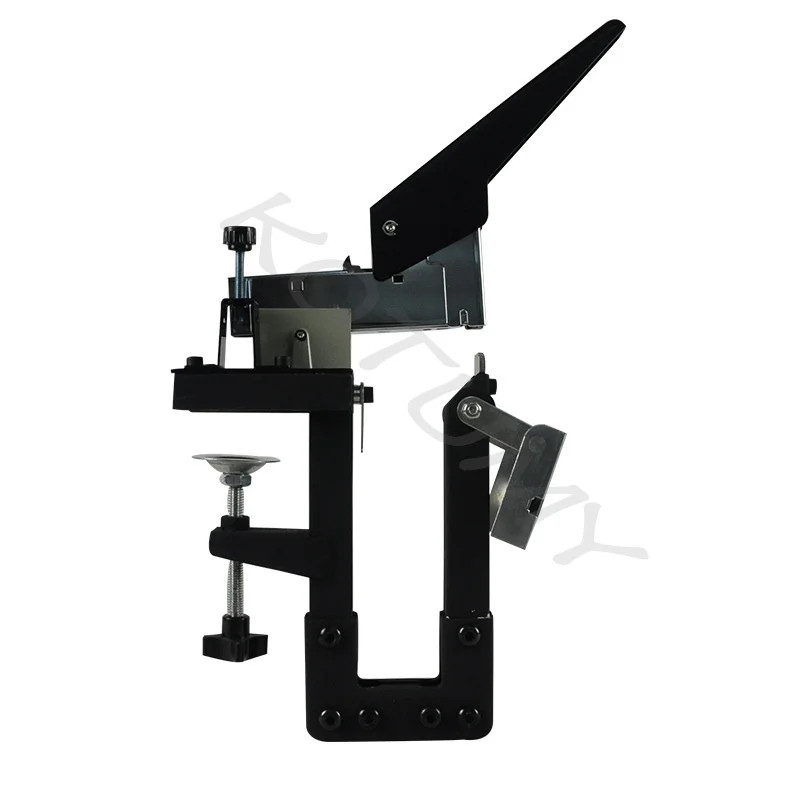

Photos from current listings. Actual item, color, and included accessories may vary.
Saddle Stitch Machine Buying Guide
A saddle stitch machine drives staples through the folded spine of a collated booklet, creating a flat-lying spine stronger and more professional than edge-stapled or perfect-bound alternatives. The primary trade-off is between manual benchtop units, which rely on the operator for folding and feeding, and semi-automatic or fully automatic lines that add air suction feeders, inline folding, and loop-head stapling at a steep cost and footprint premium. The decision rule: buy a manual or semi-auto unit only if your monthly volume stays under a few thousand booklets and your finished spine length is 12 inches or less; step up to an automatic line only when consistent daily output and variable thickness control justify the floor space and power requirements.
Median $654.55 · New listings
Key takeaways
- Staple capacity and leg length determine maximum booklet thickness; standard units handle 2-8 sheets (8-32 pages) while heavy-duty heads accept up to 12 sheets of 20 lb bond and require 0.5-inch leg staples.
- Manual saddle stitchers use a foot-pedal or lever-driven clincher with a fixed staple head that must be repositioned along the spine; semi-automatic models add a movable stapling head for 2-4 stapling positions along the fold.
- Flat-lying spine quality depends on the folding roller durometer and the crease pressure; machines with steel or hardened rubber rollers produce a tighter fold than those with soft foam rollers, preventing staple pull-through.
At a glance
- Category
- Bindery & Print Finishing
- Last updated
- Nov 28, 2026
Current offers
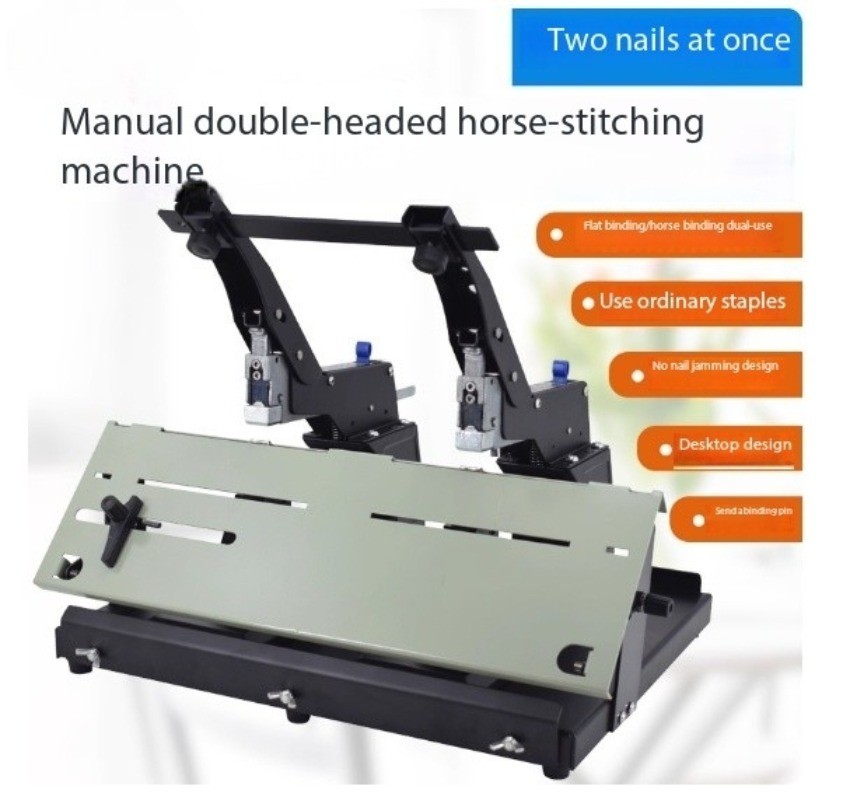
Highlights
- Staple capacity and leg length determine maximum booklet thickness; standard units handle 2-8 sheets (8-32 pages) while heavy-duty heads accept up to 12 sheets of 20 lb bond and require 0.5-inch leg staples.
- Manual saddle stitchers use a foot-pedal or lever-driven clincher with a fixed staple head that must be repositioned along the spine; semi-automatic models add a movable stapling head for 2-4 stapling positions along the fold.
- Flat-lying spine quality depends on the folding roller durometer and the crease pressure; machines with steel or hardened rubber rollers produce a tighter fold than those with soft foam rollers, preventing staple pull-through.
- Automatic inline saddle stitchers use air-suction or friction feeders that require 220-240V single-phase power and a compressed-air supply, while manual benchtop units run on standard 110-120V and need no air.
Best use cases
- Best fit: a small print shop or church bulletin team producing 50-500 booklets per week from 8.5x11 sheets folded to 5.5x8.5 — pick a manual foot-pedal saddle stitcher with an adjustable fold guide and 0.5-inch staple capacity.
- Best fit: a mid-volume in-plant print department running 1,000-5,000 booklets per month with variable page counts — choose a semi-automatic unit with a movable staple head and a roller folder, not a benchtop lever model.
- Wrong fit: a bindery running 20,000+ booklets per shift or needing variable-thickness stitching without manual collation — skip manual and semi-auto entirely and specify a fully automatic saddle stitcher with suction feeders and a trimmer.
- Wrong fit: a home crafter making 10-page zines — a manual saddle stitch machine is overkill; a long-arm stapler and bone folder cost less and handle low volume without a dedicated table footprint.
Buying tips
- Match staple leg length to sheet count: 0.25-inch legs for 2-4 sheets, 0.375-inch for 5-8 sheets, and 0.5-inch for 9-12 sheets of 20 lb bond; a machine rated for 8 sheets will jam if you feed 12-sheet signatures.
- Confirm the maximum spine length the stapling head supports; most manual units top out at 12 inches, so a 12x18 sheet folded to 9x12 exceeds the throat on compact models.
- Check whether the stapling head is fixed or movable: fixed single-head units require you to slide the work for two staples, while movable heads let you set 2-4 positions along the fold for consistent stitch placement.
- Verify the fold roller type: hardened steel or high-durometer rubber rollers produce a sharp crease that holds staples tight, while soft foam rollers let thick booklets spring open and loosen staples.
Specs
| Staple Capacity | 2-12 sheets (20 lb bond) |
|---|---|
| Fold Roller Type | Steel vs high-durometer rubber |
| Power Requirement | 110-120V manual / 220-240V auto |
| Staple Leg Length | 0.25-0.5 inch (26/6 to 21/4) |
Related searches
What to check before buying
- Measure your folded booklet trim size (width x height) and confirm it fits under the stapling head throat and within the fold guide range — typically 4x6 to 8.5x11 folded.
- Check your electrical supply: manual and semi-automatic benchtop units run on 110-120V; automatic inline stitchers need 220-240V single-phase and often a compressed-air line at 80-100 PSI.
- Verify table or stand footprint: manual units need about 24x18 inches of clear bench space, while semi-automatic units with a roller folder need 36x24 inches plus clearance for sheet infeed and booklet catch.
- Confirm staple compatibility: standard units use 26/6 or 24/6 wire staples, heavy-duty heads use 0.5-inch leg 21/4 or 23/6 staples — buy a box of the correct leg length before your first run.
FAQ
Data sources: eBay / Amazon listings and product attribute feeds. Updated Nov 28, 2026.
Some links on this page are affiliate links. If you buy after clicking one, we may earn a commission at no extra cost to you. This does not change which products appear here or their order. Affiliate disclosure.