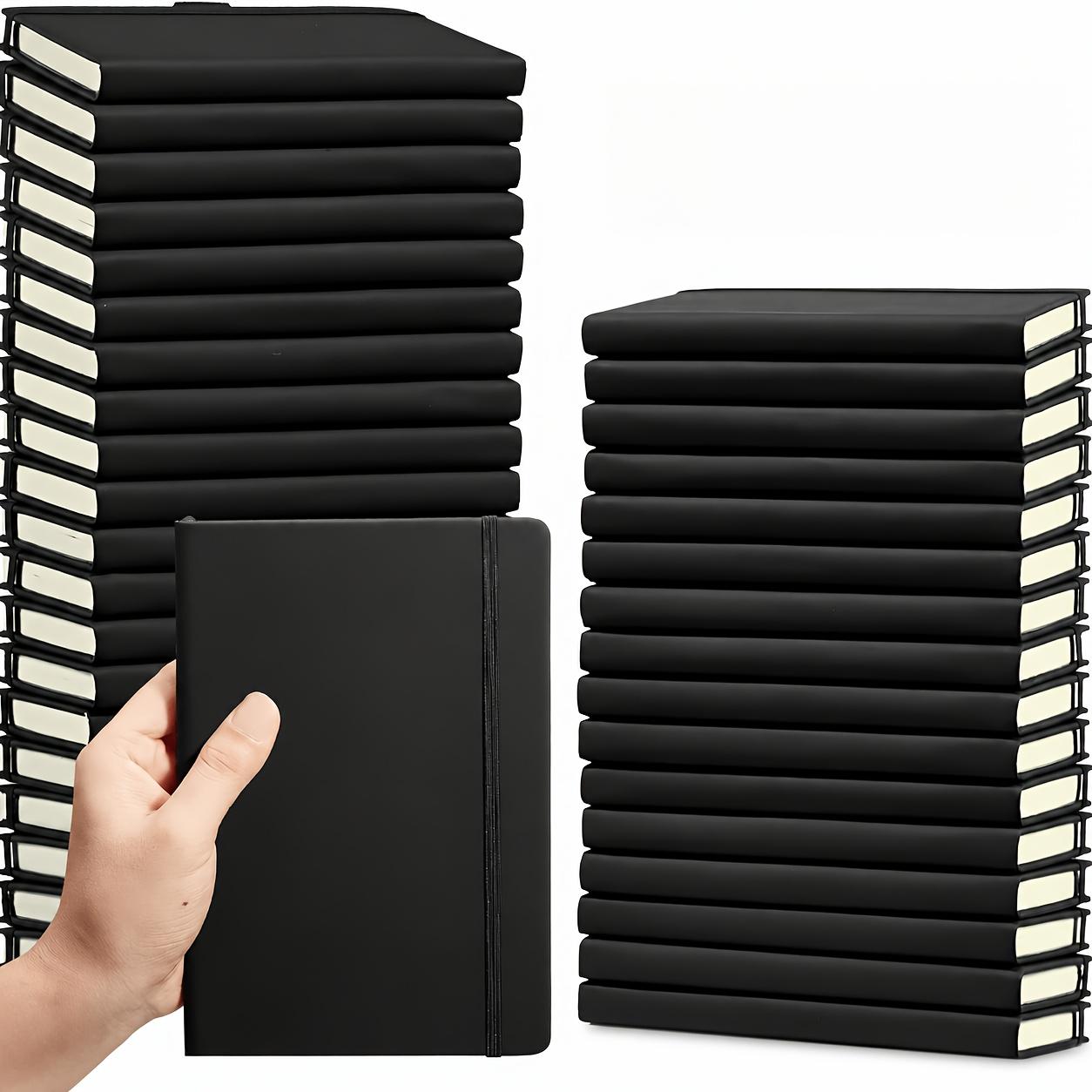

Photos from current listings. Actual item, color, and included accessories may vary.
Hardcover Notebook Buying Guide
Hardcover notebooks are bound journals with rigid board covers that protect pages during transport, and the key trade-off is between paper quality (GSM, bleed resistance) and binding construction (sewn vs glued, board thickness). The decision rule: choose sewn binding with 100+ GSM paper for daily carry; skip glued-spine thin-paper pads for anything beyond light note-taking.
Key takeaways
- Sewn signatures (thread-bound) allow the book to lie flat and survive years of use; glued perfect binding cracks and sheds pages under repeated opening.
- Paper weight of 100-120 GSM resists fountain-pen bleed and ghosting; 70-80 GSM is fine only for pencil or ballpoint.
- Cover board thickness of 2-3 mm with a paper or cloth wrap protects pages; thinner 1 mm board dents easily in bags.
At a glance
- Category
- Stationery, School & Office Consumables
- Last updated
- Nov 28, 2026
Current offers
Highlights
- Sewn signatures (thread-bound) allow the book to lie flat and survive years of use; glued perfect binding cracks and sheds pages under repeated opening.
- Paper weight of 100-120 GSM resists fountain-pen bleed and ghosting; 70-80 GSM is fine only for pencil or ballpoint.
- Cover board thickness of 2-3 mm with a paper or cloth wrap protects pages; thinner 1 mm board dents easily in bags.
- Elastic closure band and ribbon marker are functional durability features, not decoration—they prevent page curling and lost place.
Best use cases
- Best fit: A5 (148×210 mm) sewn-bound 120 GSM notebook with elastic band for daily carry, bullet journaling, and office meeting notes—skip bulk 24-packs unless you need identical giveaway or classroom stock.
- Best fit: A4 (210×297 mm) hardcover with 100+ GSM paper for architecture/design sketching and lab recording; wrong fit: pocket-size A6 for extensive note-taking—page count runs out fast.
- Best fit: Bulk 24-pack lined hardcover notebooks for team onboarding, conference swag, or school supply drives; wrong fit: expecting premium 120 GSM paper—bulk packs typically use 70-80 GSM.
- Best fit: Dot-grid or blank pages for bullet journals and sketching; wrong fit: lined-only interiors for users who need layout flexibility—check interior ruling before committing.
Buying tips
- Match paper weight to pen: 70-80 GSM for pencil/ballpoint, 100-120 GSM for gel/fountain, 160+ GSM for watercolor or marker—bleed-through ruins the reverse page.
- Verify binding type in the spec: sewn (thread) binding lies flat and lasts; glued spine is cheaper but fails at the hinge after months of daily opening.
- Size formula: A5 fits jacket pockets and most bag side pockets; A4 needs a laptop sleeve or tote; A6 is pocket-only—measure your carry method before choosing.
- Bulk packs trade paper quality for unit cost—if the listing does not state GSM, assume 70-80 GSM and use ballpoint only.
Specs
| Binding Type | Sewn thread vs glued perfect |
|---|---|
| Paper Weight | 70-80 GSM vs 100-120 GSM |
| Standard Sizes | A6 / A5 / A4 (pocket to desk) |
| Page Ruling | Lined / blank / dot-grid / squared |
Related searches
What to check before buying
- Measure your bag or desk space: A5 (148×210 mm) is the most portable standard; A4 (210×297 mm) requires a larger compartment.
- Confirm pen type and ink: gel and fountain pens need 100+ GSM paper to prevent bleed-through to the back side.
- Check binding construction in the listing: sewn binding for longevity, glued binding only for light or short-term use.
- If buying a bulk pack, verify page ruling (lined, blank, dot-grid) and paper weight, as these are the most common compromises.
FAQ
Data sources: eBay / Amazon listings and product attribute feeds. Updated Nov 28, 2026.
Some links on this page are affiliate links. If you buy after clicking one, we may earn a commission at no extra cost to you. This does not change which products appear here or their order. Affiliate disclosure.