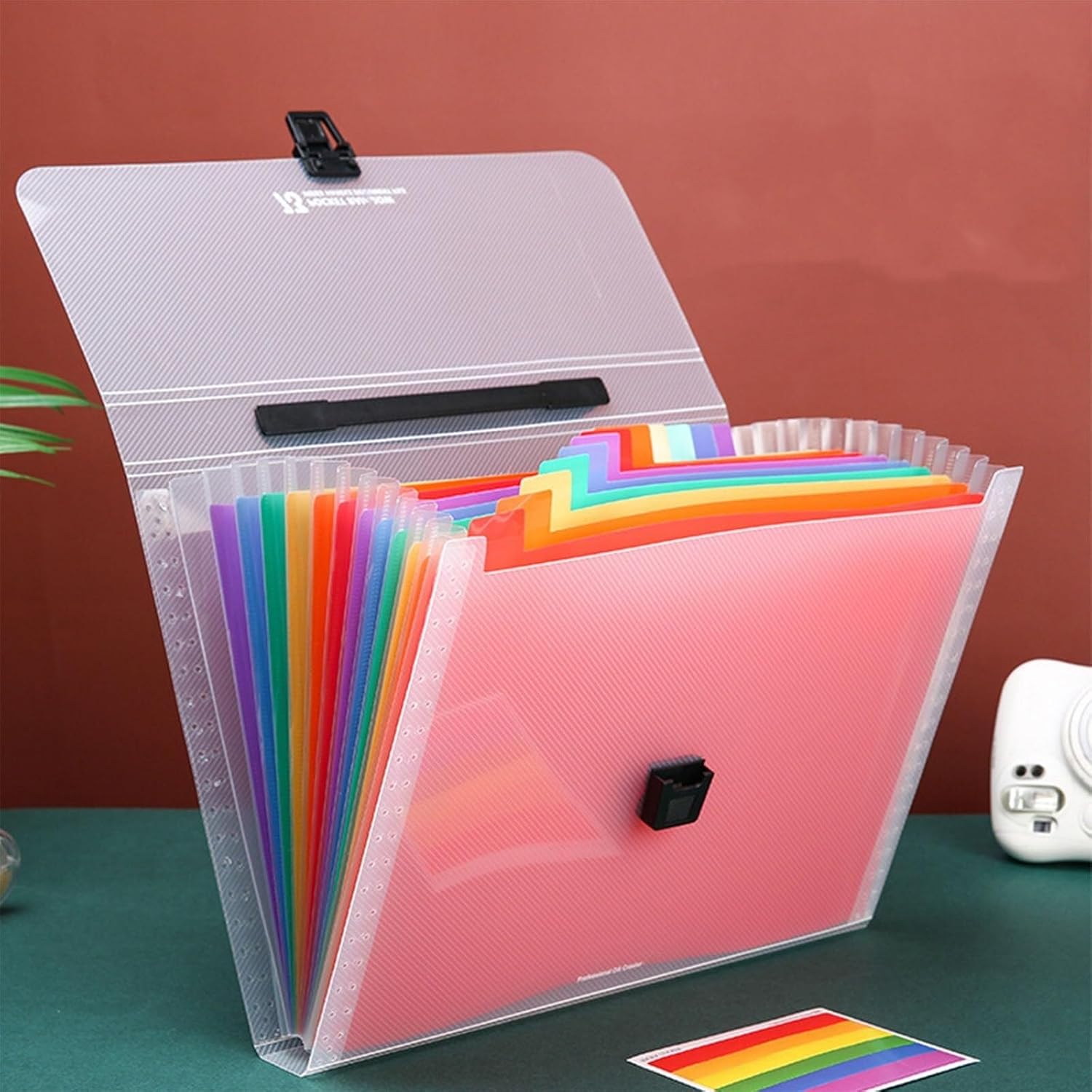

Photos from current listings. Actual item, color, and included accessories may vary.
Heavy Duty Pocket Folder Buying Guide
Heavy-duty pocket folders are file organizers built to survive repeated handling, overstuffing, and daily transport without splitting seams or tearing punched holes. The core trade-off is material gauge and reinforcement: standard 11–14 pt paperboard folders fail at the pocket seam, while true heavy-duty models use 25–32 pt pressboard, polypropylene, or laminated cardstock with double-reinforced spines and tear-resistant gussets. Buy pressboard or poly if the folder will travel or hold more than 50 sheets; skip paperboard for anything beyond desk-bound light filing.
Key takeaways
- Pressboard folders at 25–32 pt thickness resist bending and edge wear far better than 11–14 pt manila paperboard, which creases permanently under load.
- Polypropylene folders (0.5–1.0 mm / 20–40 mil) are waterproof and tear-proof, but only 3-hole-punched poly survives repeated binder transfer without hole elongation.
- Reinforced spine and gusset construction—double-scored, cloth-taped, or heat-welded—determines pocket life more than overall sheet thickness alone.
At a glance
- Category
- Office Organization
- Last updated
- Nov 28, 2026
Current offers
Highlights
- Pressboard folders at 25–32 pt thickness resist bending and edge wear far better than 11–14 pt manila paperboard, which creases permanently under load.
- Polypropylene folders (0.5–1.0 mm / 20–40 mil) are waterproof and tear-proof, but only 3-hole-punched poly survives repeated binder transfer without hole elongation.
- Reinforced spine and gusset construction—double-scored, cloth-taped, or heat-welded—determines pocket life more than overall sheet thickness alone.
- Expansion capacity tiers separate products: standard pockets hold 50–80 sheets, gusseted heavy-duty pockets hold 150–300 sheets, and expanding wallets with accordion gussets exceed 500 sheets.
Best use cases
- Best fit: field sales, site inspections, or commuting with 100+ sheets—choose 25–32 pt pressboard or 0.7 mm+ poly with a reinforced gusset pocket.
- Wrong fit: color-coded desktop filing of under 30 sheets per folder—standard 11 pt manila is cheaper and adequate; heavy-duty stock adds cost without benefit.
- Best fit: wet, greasy, or humid environments (kitchens, workshops, outdoor crews)—pick polypropylene, which won't delaminate or stain like coated pressboard.
- Wrong fit: archival or long-term document storage—use acid-free buffered folders; standard heavy-duty pressboard is not archival-grade and can migrate acidity.
Buying tips
- Match pocket capacity to sheet count: under 80 sheets, a single-scored pocket suffices; 80–200 sheets needs a gusseted pocket; 200+ requires an accordion expanding wallet.
- Check punched-hole reinforcement: 3-hole-punched folders should have mylar or poly film hole reinforcements, or the holes will tear within weeks of binder use.
- Verify spine construction: a double-scored or cloth-taped spine adds years of life; single-score spines crack at the fold after repeated opening.
- For letter-size documents, confirm the folder is 8.5 x 11 in with at least 9.5 x 11.75 in cover dimensions to prevent edge exposure; legal size needs 8.5 x 14 in documents and a 9.5 x 14.75 in cover.
Specs
| Material Grade | 25–32 pt pressboard / 0.5–1.0 mm poly |
|---|---|
| Pocket Capacity | 80–300 sheets (gusseted vs standard) |
| Spine Construction | Double-scored / cloth-taped vs single-score |
| Hole Reinforcement | Mylar or poly film vs unreinforced |
Related searches
What to check before buying
- Measure your thickest document stack (in inches) and pick a folder pocket depth at least 1/4 in larger to avoid bulging seams.
- Confirm your filing system: letter vs legal document size, and whether the folder must fit a standard file drawer (typically 9.5 in tall) or a hanging rail.
- Check hole-punch pattern: standard 3-hole (8.5 in centers) vs 2-hole or 5-hole systems; poly folders may need reinforced hole edges for binder use.
- For travel and field use, verify the cover material is poly or coated pressboard, since uncoated pressboard absorbs moisture and stains.
FAQ
Data sources: eBay / Amazon listings and product attribute feeds. Updated Nov 28, 2026.
Some links on this page are affiliate links. If you buy after clicking one, we may earn a commission at no extra cost to you. This does not change which products appear here or their order. Affiliate disclosure.