
Photos from current listings. Actual item, color, and included accessories may vary.
Heavy Duty Home Shredder Buying Guide
A heavy-duty home shredder is defined by continuous runtime, cut security level, and sheet capacity—not by marketing labels. The core trade-off is between cross-cut P-4 units with moderate duty cycles and micro-cut P-5 auto-feed machines built for sustained operation. Buy the tier that matches your weekly volume and security need; skip anything with a duty cycle under 10 minutes for a home office.
Median $52.49
Key takeaways
- Security levels follow DIN 66399: P-4 cross-cut (4x35mm particles) suits general documents; P-5 micro-cut (2x15mm) is required for sensitive data.
- Duty cycle is the real limiter: budget units run 3-5 minutes on/30 off; heavy-duty home models sustain 20-40 minutes continuous before thermal cutoff.
- Auto-feed capacity (e.g., 200 sheets) is separate from manual sheet capacity (e.g., 14 sheets); auto-feed trays accept stacks but shred slower per pass.
At a glance
- Category
- Office Organization
- Last updated
- Nov 29, 2026
Current offers
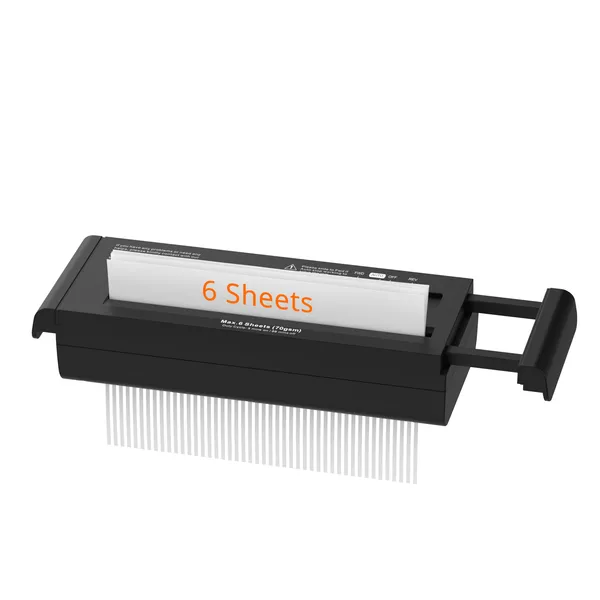 Small Paper Shredder For Home, 6 Sheet Strip Cut Without Basket,Portable Extendable Arm Design With Overheat Protection For Office$34.99View on Mallflare
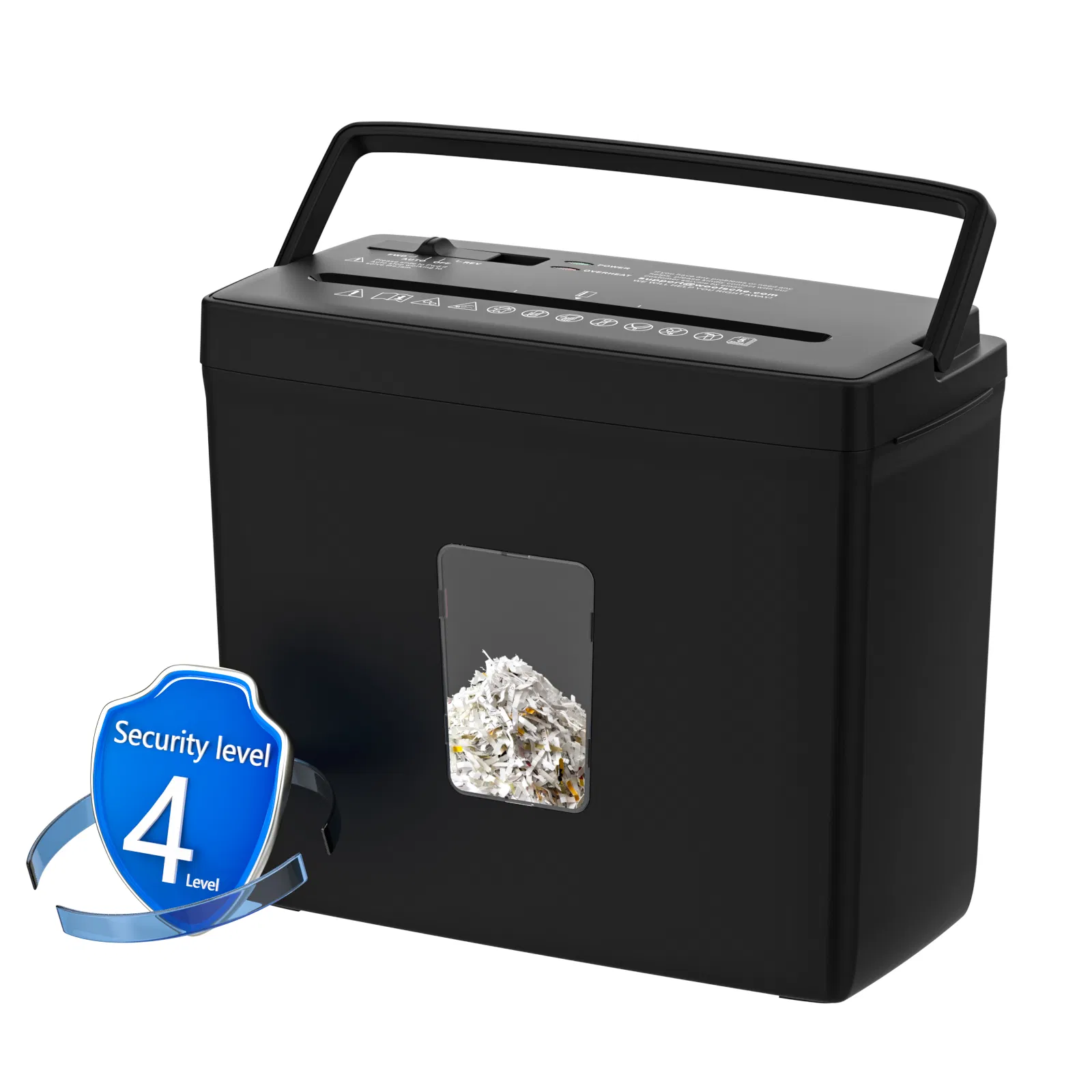 Paper Shredder for Home Use,5 Sheets Small Crosscut Shredder,P-4 Security Level with 2.38-Gallon Basket, 4-Mode Design-Durable & Fast and Jam Proof for Office Utilization$46.99View on Mallflare
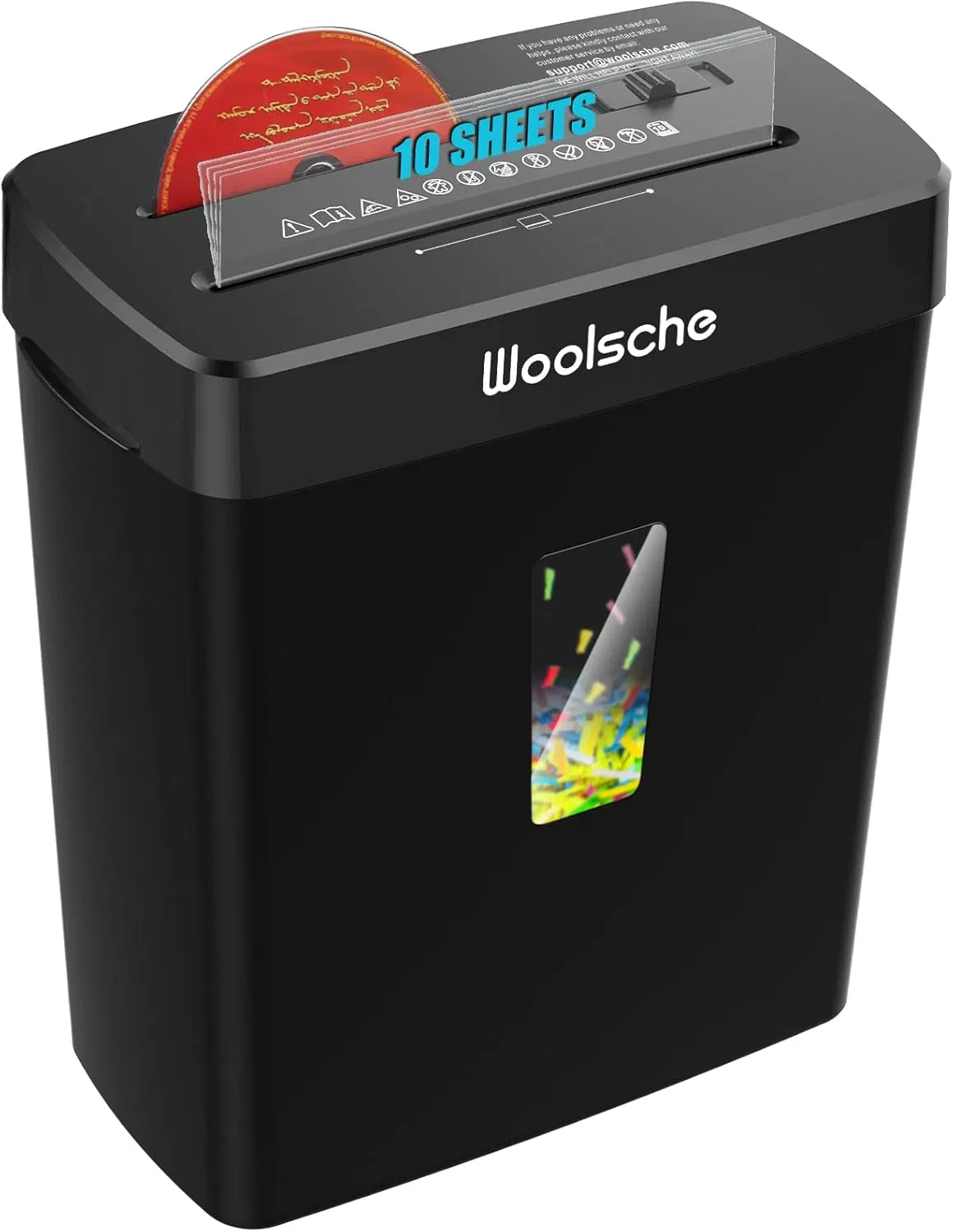 Paper Shredder for Home- 10-Sheet Cross Cut with 3.43-Gallon Basket - P-4 Security Level - 3-Mode Design - Shreds CD and Credit Card - Durable, Fast, and Jam Proof for Office$57.99View on Mallflare
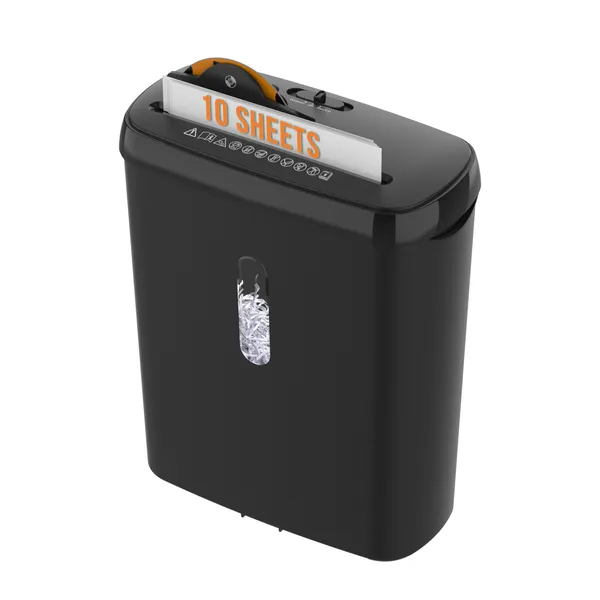 10-Sheet Strip Cut Paper Shredder, P-2 Security Level With 3.17-Gallon Basket, CD & Credit Card - Durable & Fast - Jam Proof System -ETL Certified Home Office Shredders - FBAShipping$67.99View on Mallflare
Highlights
- Security levels follow DIN 66399: P-4 cross-cut (4x35mm particles) suits general documents; P-5 micro-cut (2x15mm) is required for sensitive data.
- Duty cycle is the real limiter: budget units run 3-5 minutes on/30 off; heavy-duty home models sustain 20-40 minutes continuous before thermal cutoff.
- Auto-feed capacity (e.g., 200 sheets) is separate from manual sheet capacity (e.g., 14 sheets); auto-feed trays accept stacks but shred slower per pass.
- Bin volume (5.8-6.6 gal) determines empty frequency; cross-cut produces bulkier waste than micro-cut, so P-4 units fill faster at equal sheet counts.
Best use cases
- Best fit: weekly shredding of 50-200 sheets including bills and statements—choose a P-4 cross-cut with 10-20 minute runtime and a 6+ gallon bin.
- Best fit: sustained shredding of 500+ sheets or sensitive financial/medical records—choose a P-5 micro-cut auto-feed unit with 30-40 minute continuous runtime and casters.
- Wrong fit: shredding cardboard, glossy catalogs, or continuous-feed stacks beyond the stated auto-feed capacity—these jam thermal-protected home motors; use a commercial shredder or recycle instead.
- Wrong fit: expecting quiet operation from a high-capacity unit—sub-60 dB ratings apply to micro-cut auto-feed models; standard cross-cut units run louder and need a dedicated room.
Buying tips
- Match runtime to volume: 10-15 min suits 1-2 people; 30-40 min continuous is the minimum for a home office shredding daily.
- Choose P-5 micro-cut for tax, medical, or financial records; P-4 cross-cut is adequate for junk mail and general paperwork.
- Verify auto-feed capacity separately from manual capacity—a 200-sheet tray still shreds at a slower rate per pass than manual feeding.
- Check bin size against cut type: micro-cut compacts waste, so a 5.8 gal bin holds more shreds than a 6.6 gal bin on a P-4 cross-cut.
Specs
| Security Level | P-4 cross-cut vs P-5 micro-cut |
|---|---|
| Duty Cycle | 10-40 min continuous runtime |
| Sheet Capacity | 14 manual / 200 auto-feed sheets |
| Bin Volume | 5.8-6.6 gallon collection bin |
Related searches
What to check before buying
- Measure floor space and door width: auto-feed units with casters need clearance to move; confirm the unit fits under or beside your desk.
- Confirm electrical outlet location and cord length—heavy-duty motors draw more current and should plug directly into a wall outlet, not a power strip.
- Check stated sheet capacity against your actual paper weight; 20 lb bond is standard, but heavier paper reduces capacity by roughly 1-2 sheets per pass.
- Confirm bin access and bag compatibility: front-door bins are easier to empty than lift-off tops, and standard kitchen bags fit 5-6 gallon bins.
FAQ
Data sources: eBay / Amazon listings and product attribute feeds. Updated Nov 29, 2026.
Some links on this page are affiliate links. If you buy after clicking one, we may earn a commission at no extra cost to you. This does not change which products appear here or their order. Affiliate disclosure.