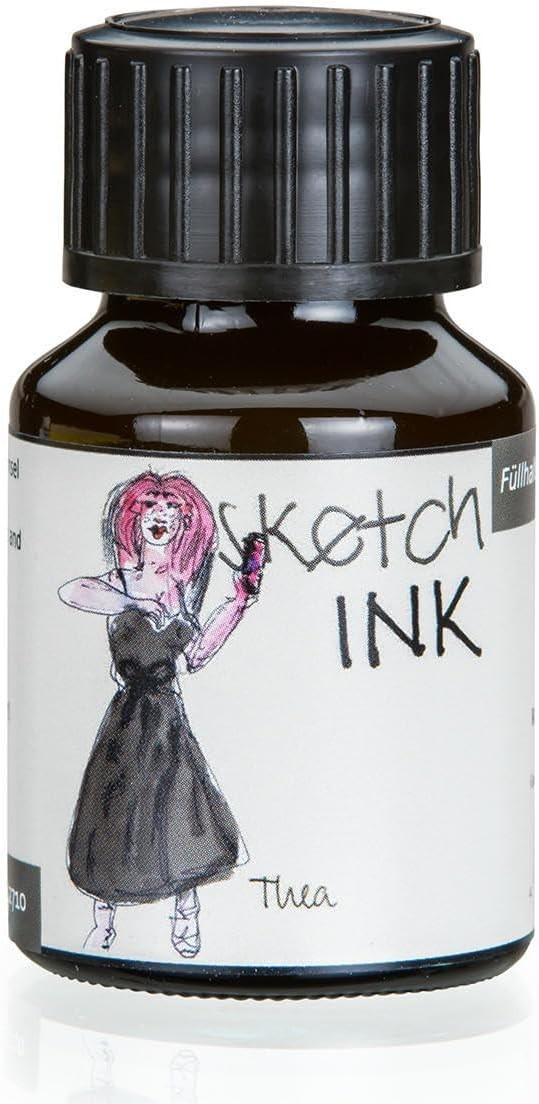

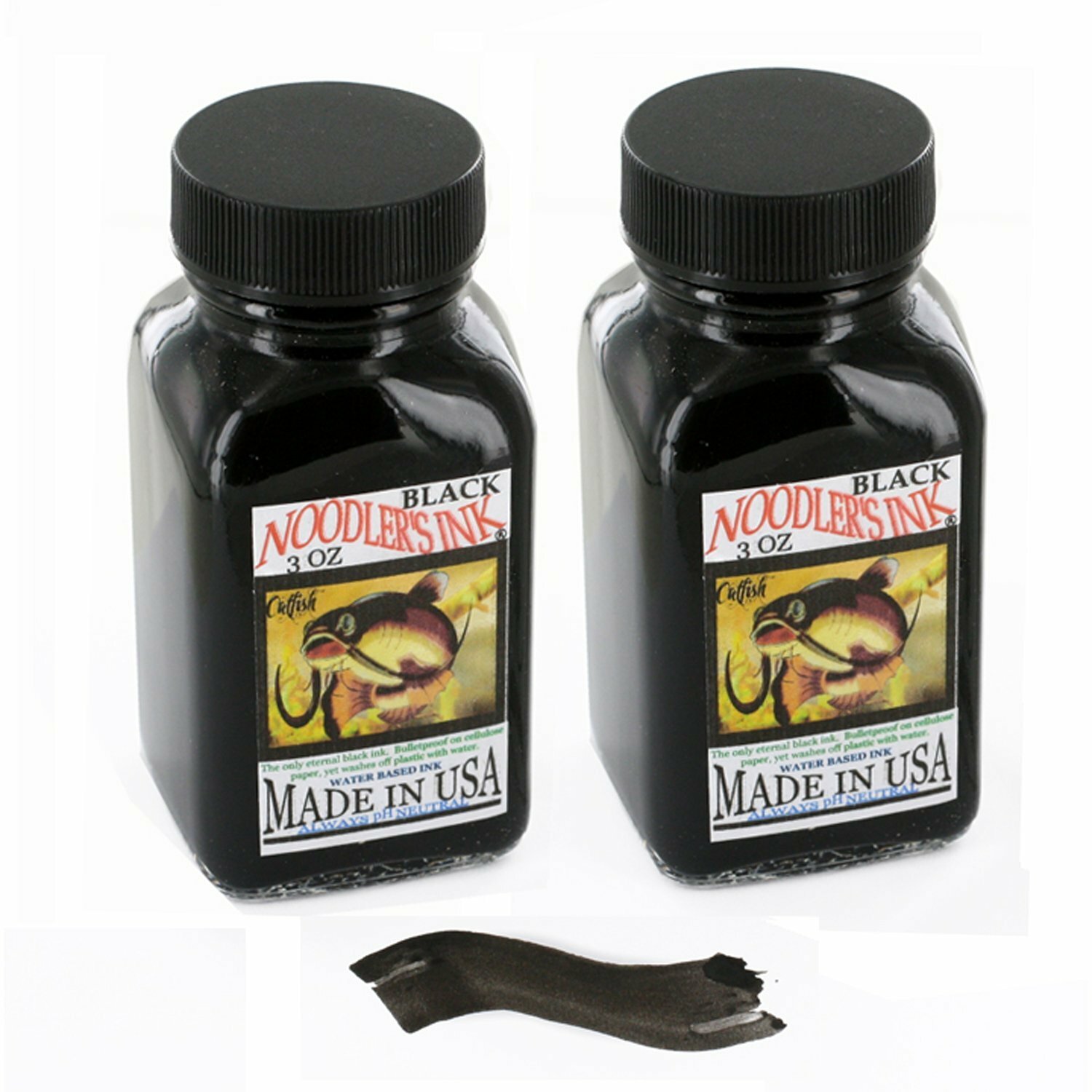
Photos from current listings. Actual item, color, and included accessories may vary.
Waterproof Fountain Pen Ink Buying Guide
Waterproof fountain pen ink is a specialty writing fluid engineered to resist water, smudging, and fading after drying on paper, typically via pigment particles, iron-gall chemistry, or cellulose-reactive dyes. The core trade-off is permanence versus maintenance: pigment and iron-gall inks deliver true water resistance but demand more frequent flushing to prevent clogging, while dye-based 'water-resistant' inks flow more freely but may smear under soaking. The decision rule is simple: choose a pigment or cellulose-reactive ink if archival permanence is non-negotiable, and a dye-based water-resistant ink only if you prioritize low-maintenance flow over absolute waterproofing.
Median $31.58
Key takeaways
- Pigment inks (Sailor Seiboku, Rohrer & Klingner SketchINK) suspend solid color particles that bond to paper fibers for true waterproofing, but particles can settle and clog feeds if left unused for weeks.
- Cellulose-reactive 'bulletproof' inks (Noodler's Black) chemically bond with paper cellulose for permanent, forgery-resistant results on standard wood-pulp paper, but do not bond to synthetic or coated papers.
- Iron-gall inks achieve water resistance through oxidation over time; they are permanent but acidic and can corrode steel nibs, so they require gold or stainless-steel nibs rated for iron-gall use.
At a glance
- Category
- Fountain Pen Inks
- Last updated
- Nov 29, 2026
Current offers
Highlights
- Pigment inks (Sailor Seiboku, Rohrer & Klingner SketchINK) suspend solid color particles that bond to paper fibers for true waterproofing, but particles can settle and clog feeds if left unused for weeks.
- Cellulose-reactive 'bulletproof' inks (Noodler's Black) chemically bond with paper cellulose for permanent, forgery-resistant results on standard wood-pulp paper, but do not bond to synthetic or coated papers.
- Iron-gall inks achieve water resistance through oxidation over time; they are permanent but acidic and can corrode steel nibs, so they require gold or stainless-steel nibs rated for iron-gall use.
- Water resistance is graded in tiers: 'waterproof' means no smearing under soaking, 'water-resistant' means legible but slight color lift, and 'bulletproof' denotes resistance to water, solvents, and bleaching agents.
Best use cases
- Choose a pigment ink like Sailor Seiboku or Rohrer & Klingner SketchINK for archival journaling, sketching, and documents that must survive accidental soaking — and commit to flushing the pen every two to three weeks.
- Choose a cellulose-reactive bulletproof ink like Noodler's Black for signing contracts, checks, or legal documents on standard paper where forgery resistance matters; skip it for coated or synthetic papers where it cannot bond.
- Skip waterproof pigment inks entirely for vintage or flex-nib pens with exposed feeds and tight tolerances, where particle buildup is hard to clean; use a dye-based water-resistant ink instead and accept partial water resistance.
Buying tips
- Match ink chemistry to nib material: avoid acidic iron-gall inks in steel-nib pens unless the nib is explicitly iron-gall-rated; gold nibs and modern stainless alloys are safer for permanent inks.
- Select pigment inks only for pens with removable nib units and converter access, since effective cleaning requires flushing the feed channel directly rather than just rinsing the converter.
- For archival documents, prioritize 'bulletproof' or ISO 12757-2 document-proof ratings over generic 'waterproof' labels, which may only resist light water exposure.
- Buy the smallest bottle size when first trying a permanent ink; a 50 ml bottle of pigment ink lasts months, and committing to a large bottle before confirming flow behavior in your pen risks waste.
Specs
| Ink Chemistry | Pigment / Iron-gall / Cellulose-reactive |
|---|---|
| Water Resistance | Waterproof / Water-resistant / Bulletproof |
| Nib Compatibility | Gold / Stainless / Iron-gall-rated |
| Maintenance Level | High (pigment) to Low (dye-based) |
Related searches
What to check before buying
- Confirm your pen's nib and feed can be fully disassembled or at least flushed with a bulb syringe; pigment inks demand thorough cleaning access.
- Verify your paper is standard uncoated wood-pulp stock if relying on cellulose-reactive bulletproof inks, which cannot bond to coated, synthetic, or glossy surfaces.
- Check that your pen is not a vintage sac-filler or eyedropper with inaccessible ink channels, where pigment particles can trap and permanently stain.
- Confirm you have a dedicated pen for permanent ink or are willing to reserve one, since pigment and iron-gall inks can stain demonstrator barrels and light-colored converters.
FAQ
Data sources: eBay / Amazon listings and product attribute feeds. Updated Nov 29, 2026.
Some links on this page are affiliate links. If you buy after clicking one, we may earn a commission at no extra cost to you. This does not change which products appear here or their order. Affiliate disclosure.