
Photos from current listings. Actual item, color, and included accessories may vary.
Bottled Fountain Pen Ink Buying Guide
Bottled fountain pen ink is a dye- or pigment-based liquid formulated for capillary-fed nibs, and the core trade-off is flow behavior versus permanence: dye inks flow freely and clean easily, while pigment and iron-gall inks resist water but demand stricter pen hygiene. Choose dye-based ink for everyday writing and vintage or valuable pens, and reserve pigment, iron-gall, or shimmer inks for dedicated pens you flush on a schedule.
Median $34.99
Key takeaways
- Dye-based inks dissolve fully and stay in suspension indefinitely; pigment inks carry solid particles that settle and can clog feeds if a pen sits unused for weeks.
- Iron-gall inks bond into paper fibers for permanent documents but are acidic and corrode steel nibs over time; gold or gold-plated nibs are the safe pairing.
- Shimmer and sheen inks load mica or high-dye concentrations that need broader/wetter nibs and, for shimmer, a pen you can disassemble for cleaning.
At a glance
- Category
- Fountain Pen Inks
- Last updated
- Nov 23, 2026
Current offers
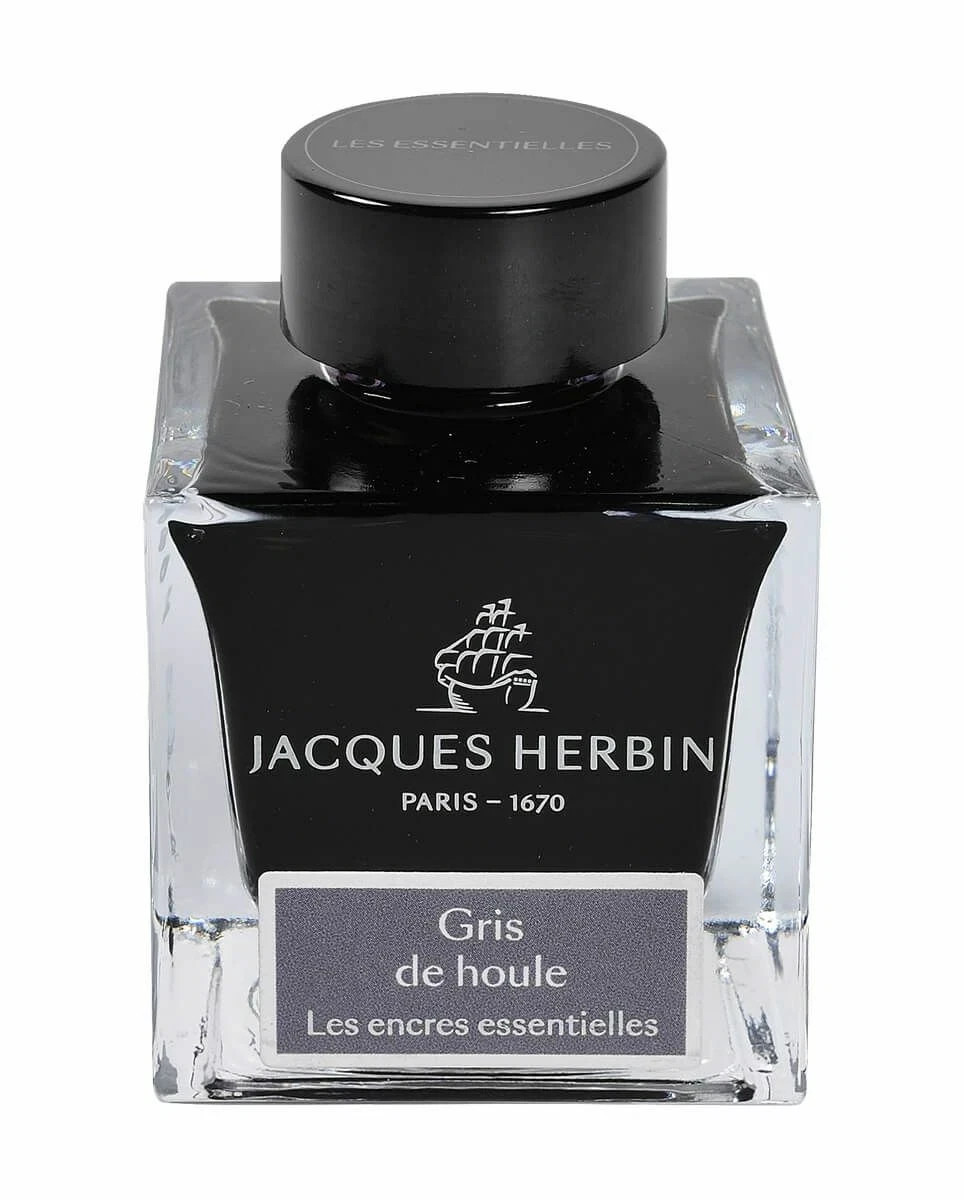 J. Herbin Essential Bottled Ink for Fountain Pens in Gris de Houle - 50mL NEW$29.99View on eBay
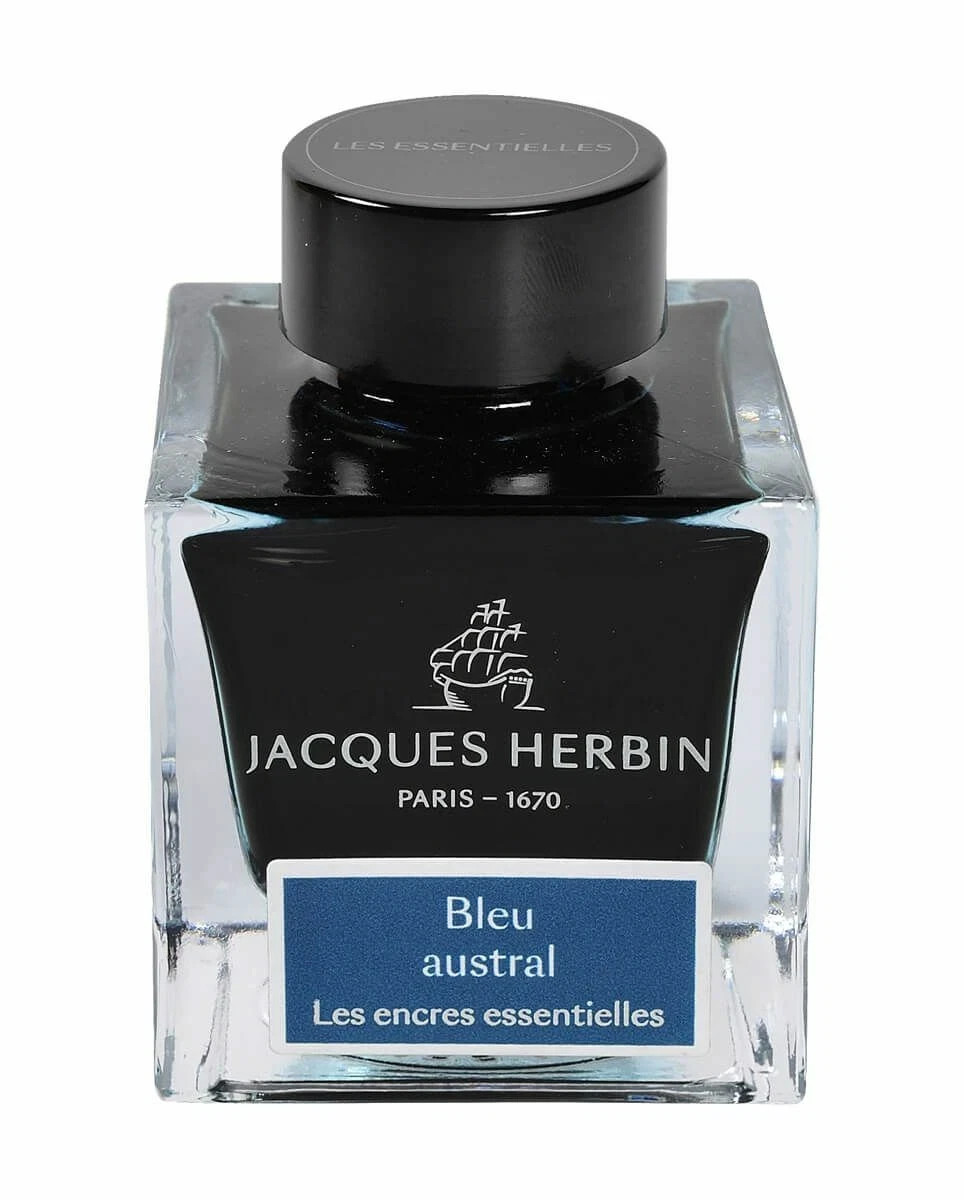 J. Herbin Essential Bottled Ink for Fountain Pens in Bleu austral - 50mL NEW$34.99View on eBay
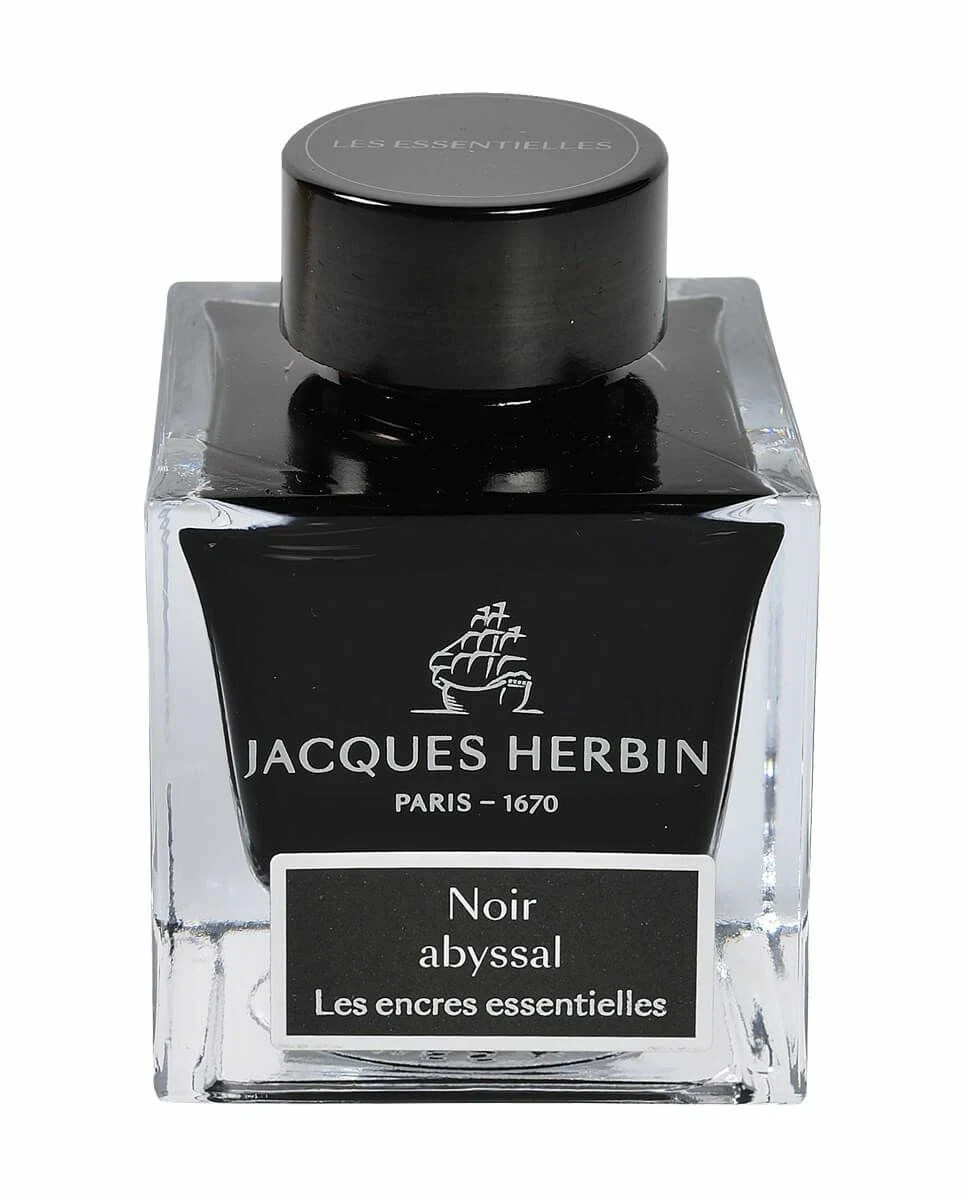 J. Herbin Essential Bottled Ink for Fountain Pens in Noir Abyssal - 50mL NEW$34.99View on eBay
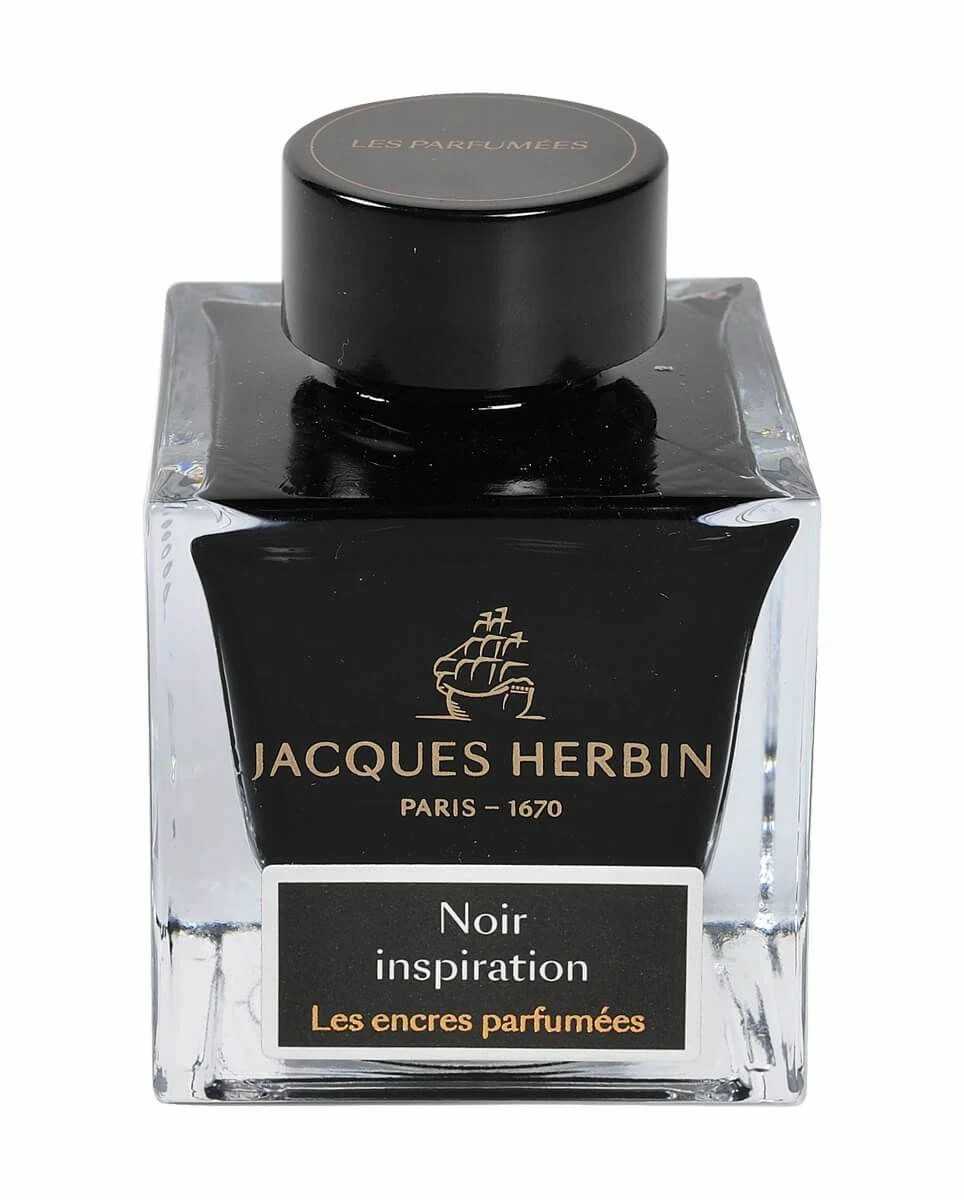 J. Herbin Scented Bottled Ink for Fountain Pen in Noir Inspiration (Black) -50mL$44.99View on eBay
Highlights
- Dye-based inks dissolve fully and stay in suspension indefinitely; pigment inks carry solid particles that settle and can clog feeds if a pen sits unused for weeks.
- Iron-gall inks bond into paper fibers for permanent documents but are acidic and corrode steel nibs over time; gold or gold-plated nibs are the safe pairing.
- Shimmer and sheen inks load mica or high-dye concentrations that need broader/wetter nibs and, for shimmer, a pen you can disassemble for cleaning.
- Standard international short cartridges hold about 0.7-0.8 ml and long cartridges about 1.4 ml; a 50 ml bottle equals roughly 60 short-cartridge refills, the practical value benchmark.
Best use cases
- Best fit: students and office writers who refill daily — pick a 50 ml dye-based bottle in blue or black and convert your pen to a converter; skip shimmer and iron-gall until you own a pen you are willing to flush weekly.
- Best fit: journalers and letter writers who want character — choose sheen or shading dye inks in a fine-to-medium nib; skip pigment inks in pens that sit capped for more than two weeks.
- Best fit: archival and legal document signing — select an iron-gall or pigment document ink in a pen with a gold nib or a dedicated inexpensive steel-nib pen; skip these inks in vintage pens with unknown sacs or seals.
- Wrong fit: shimmer inks in piston fillers or vintage sac pens, and pigment inks in demonstrator pens where staining ruins the look — use those inks only in cartridge/converter pens you can fully dismantle.
Buying tips
- Start with 50 ml bottles: at roughly 0.7-0.8 ml per short cartridge, one bottle covers about 60 refills, so 30 ml bottles only make sense for sampling colors you are unsure about.
- Match ink type to nib width: shimmer and heavy sheen inks need medium, broad, or stub nibs; fine and extra-fine nibs perform best with standard dye inks and will clog on shimmer particles.
- For permanence, choose iron-gall (blue-black document inks) or pigment-based document inks; for everyday smoothness and easy cleaning, choose standard dye inks in blue, black, or blue-black.
- Confirm the filling system before buying: bottled ink requires a converter (standard international or brand-specific) or a piston/vacuum filler; cartridge-only pens need a converter purchase or a syringe-refilled cartridge.
Specs
| Ink Chemistry | Dye / Pigment / Iron-gall |
|---|---|
| Bottle Volume | 30 ml / 50 ml standard |
| Filling Method | Converter / Piston / Cartridge |
| Special Effect | Standard / Sheen / Shimmer |
Related searches
What to check before buying
- Confirm your pen accepts a converter or is a piston/vacuum filler; cartridge-only pens need a matching converter (standard international or brand-specific) before bottled ink is usable.
- Check nib material: steel nibs pair safely with dye and most pigment inks, but iron-gall inks belong on gold or gold-plated nibs to avoid corrosion.
- Verify bottle volume and neck width for your filling method: 50 ml bottles are the refill-value standard, and narrow necks make piston fillers harder to submerge.
- Plan a cleaning routine: pigment inks need flushing every 2-4 weeks, shimmer inks after every fill, and iron-gall inks monthly to prevent feed deposits.
FAQ
Data sources: eBay / Amazon listings and product attribute feeds. Updated Nov 23, 2026.
Some links on this page are affiliate links. If you buy after clicking one, we may earn a commission at no extra cost to you. This does not change which products appear here or their order. Affiliate disclosure.